
Culture and HCI: Decoding the "Slow-Motion" Growth of Global Interaction Research
Culture and HCI: A still slowly growing field of research. Findings from a systematic, comparative mapping review
This paper presents a systematic mapping review of culture-related research in seven top-tier HCI journals and conferences (2010, 2016-2020). It benchmarks these findings against a historical baseline (1990-2005) to track the field's evolution, revealing a steady but insufficient growth in how culture is integrated into mainstream HCI.
TL;DR
Is Human-Computer Interaction truly "human," or just "Western"? This systematic review analyzes nearly 6,000 papers to conclude that while interest in cultural factors has doubled over the last 15 years, it still represents a meager 1.9% of the field's output. The study highlights a troubling "theoretical void" where nearly half of the papers discussing culture do so without any clear conceptual framework.
The "Blind Spot" in Modern HCI
In the early 1990s, the "social and historical bands" of human action—including culture—were defined as critical layers for understanding technology. Yet, most HCI research remains hyper-focused on the "cognitive band" (milliseconds to seconds). The authors argue that by ignoring culture, we aren't just missing context; we are producing systems that fail a global audience.
The motivation behind this review is critical: as technology becomes ubiquitous across different continents, the HCI community's failure to systematically study culture leads to "simplified accounts" that ignore how national identity, ethnic background, and social norms affect search efficiency, privacy management, and UI preference.
Methodology: Mapping Two Decades of Research
The researchers replicated and expanded a 2006 landmark study by Kamppuri et al. They looked at seven high-profile outlets, including CHI, ToCHI, and IJHCS, covering the year 2010 and the period from 2016 to 2020.
From a massive pool of 5,669 articles, they filtered for papers where "culture" or "cultural" was a central theme, eventually distilling a core set of 109 articles for deep analysis.
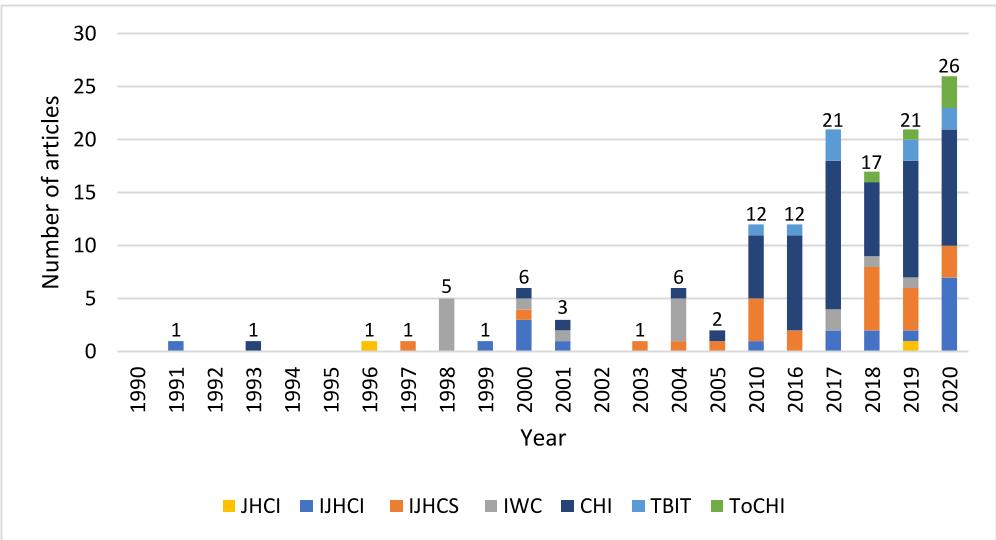 Figure 1: Comparison of culture-related articles per year between the historical baseline (1990-2005) and the current study's timeframe.
Key Findings: The Rise of CHI and the Shadow of Hofstede
1. The Venue Shift
In the 1990s, the journal Interacting with Computers (IWC) was the leader in cultural research. Today, the ACM CHI Conference has taken the throne, publishing over 53% of all culture-related papers in the sample. However, relative to its total volume, only 1.6% of CHI papers focus on culture.
2. The Theoretical Crisis
Perhaps the most shocking finding is the lack of theoretical scaffolding.
- 45% of papers do not cite a specific concept or theory of culture.
- For those that do, Hofstede's "Software of the Mind" (largely based on 1970s IBM data) remains the dominant, and often unchallenged, framework.
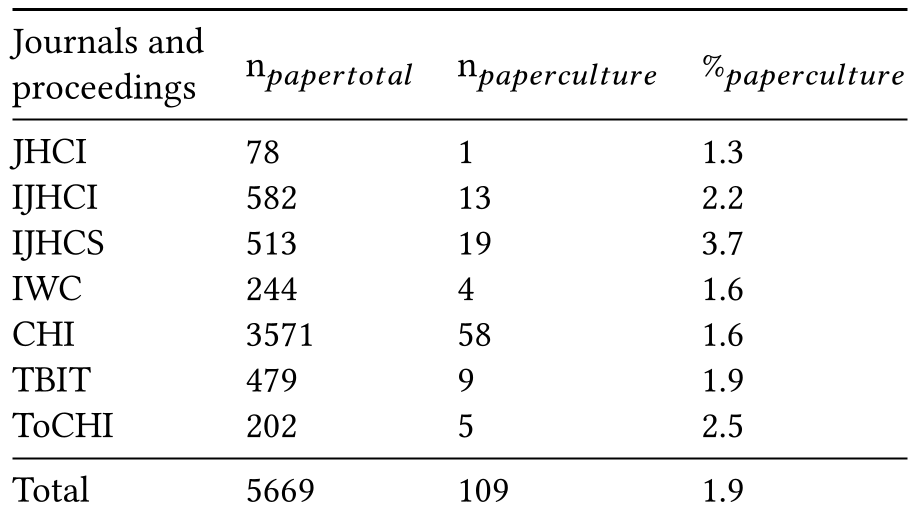 Table 1: Relative percentage of cultural papers across different HCI outlets. Note that IJHCS actually has a higher "concentration" of cultural studies (3.7%) than CHI (1.6%).
3. Emerging Tech Areas
While "General Design" remains the top category, Interface Agents (AI assistants, avatars) have seen a spike in interest, reflecting the industry's push toward culturally-aware AI.
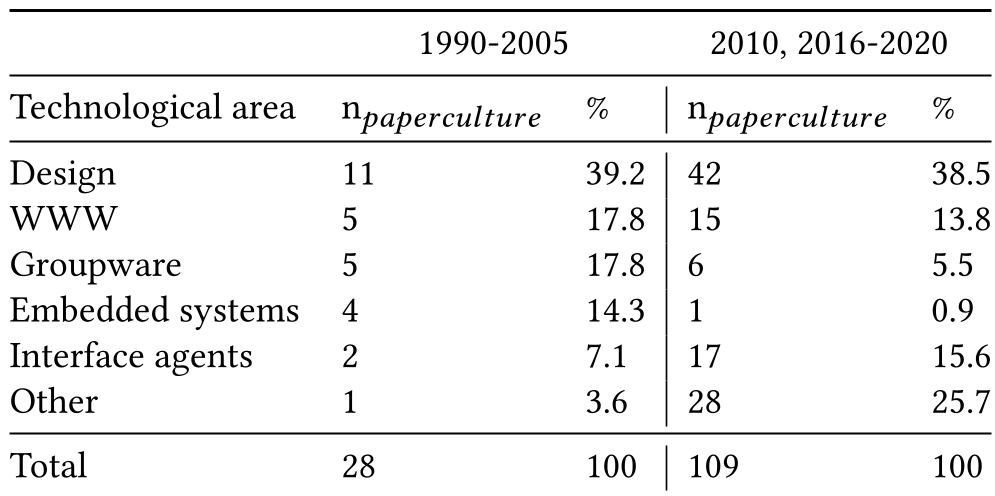 Table 2: Comparison of technology focus between the two eras. Interface Agents moved from 7.1% to 15.6%.
Critical Insight: Beyond "National" Labels
The paper identifies a positive trend: the diversity of countries studied has increased (from 24 to 44 countries). However, US, Chinese, British, and South Korean samples still dominate. The authors warn that treating culture essentially as a "country tag" is a reductionist mistake.
If we continue to view culture only as a "user characteristic" (like age or eye color) rather than a dynamic "system" or "context," our designs will never truly resonate with the complexities of human identity.
Conclusion & Future Outlook
The growth from 0.9% to 1.9% is progress, but it is inadequate given that technology is now global by default. To move forward, the authors advocate for:
- Theoretical Rigor: Stop using culture as a buzzword; define it using established sociological or psychological sources.
- Methodological Diversity: Increase qualitative, in-depth explorations beyond simple Likert-scale questionnaires.
- Labels Matter: Authors should explicitly label cultural variables even in indirect studies to increase the visibility of these findings.
The "social and historical bands" of HCI are no longer optional—they are the next frontier for a field that claims to be centered on all humans.