
The Illustrator Effect: How Perceived Value Drives Fan Loyalty and Sales on Facebook
The effect of customer perceived value on relationship quality between illustrator and fans to recommendation on facebook
This study investigates the influence of customer perceived value and relationship quality on recommendations and purchase intentions within Facebook illustrator fan pages. Using Structural Equation Modeling (SEM) on data from 341 fans, the research validates a model where perceived value significantly drives relationship quality, online word-of-mouth (eWOM), and direct purchase intention.
TL;DR
In the era of viral social media marketing, Facebook illustrators have shifted from mere content creators to powerful brand endorsers. This study reveals that Relationship Quality and Perceived Value (especially emotional/hedonic value) are the primary engines driving fans to share word-of-mouth and ultimately purchase recommended products.
Context & Motivation
The transition from traditional blogs (like Wretch) to interactive social platforms like Facebook has transformed the "hit rate" into a tangible "number of fans." While businesses frequently collaborate with illustrators to boost sales, the academic understanding of why fans follow these recommendations remained thin. Most prior work focused on corporate advertising or general celebrity endorsements, leaving a gap in understanding the unique, friend-like bond between illustrators and their audiences.
The Core Mechanism: Perceived Value & Relationship Quality
The researchers posited that the decision-making process isn't just about the product—it's about the relationship dynamics. They broke down the path to purchase into four pillars:
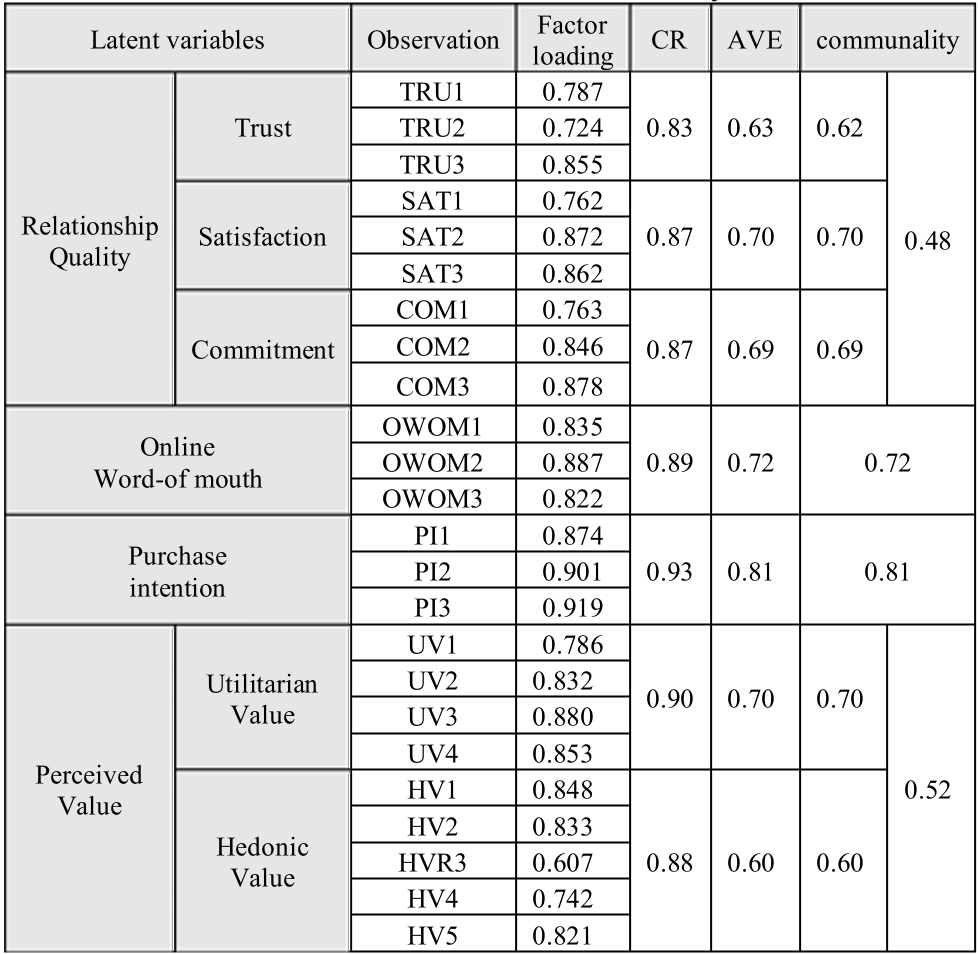
- Relationship Quality: Measured through Trust, Satisfaction, and Commitment.
- Perceived Value: Split into Utilitarian (functional) and Hedonic (aesthetic/emotional enjoyment).
- Online Word-of-Mouth (eWOM): The viral sharing mechanism.
- Purchase Intention: The final conversion.
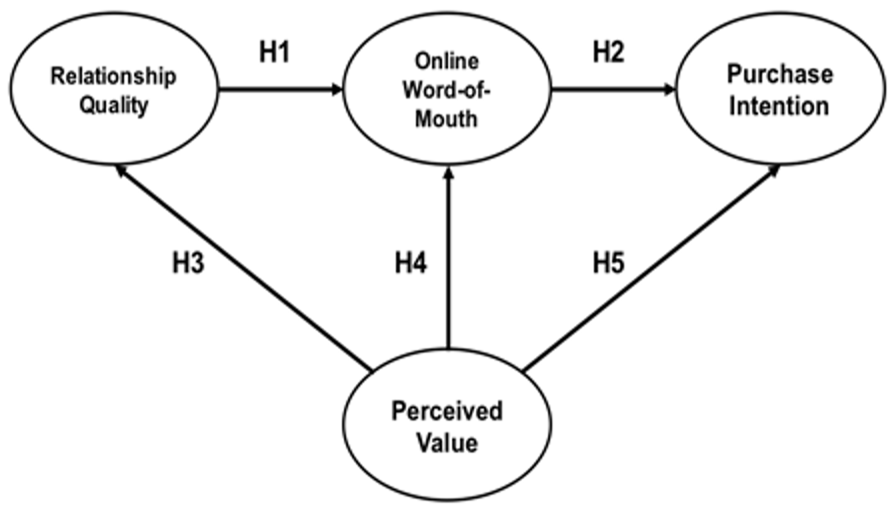
The Research Model
The authors established five hypotheses to test the interactions between these variables, emphasizing that value isn't just about price, but about the subjective experience of the fan.
Methodology & Analysis
Through a survey of 341 valid respondents (predominantly female, aged 20-29), the study utilized Structural Equation Modeling (SEM). This allowed the authors to not only see if a connection existed but to measure the strength of the influence.
Key Findings
- Perceived Value is King: It has a massive direct impact on Relationship Quality (Path: 0.516). If fans don't find value in the content/products, the relationship stagnates.
- The Power of Hedonism: For illustrators, the "Hedonic Value" (fun, aesthetics, and excitement) was the most impactful variable in driving purchase intent.
- The Word-of-Mouth Bridge: Relationship quality doesn't always lead directly to a sale; it often acts through eWOM. Fans recommend things first, and that community buzz triggers the intent to buy.
Strategic Insight: Purchasers vs. Non-Purchasers
A fascinating aspect of this study is the comparison between fans who have bought products before and those who haven't.
- For Experienced Buyers: Perceived value (the actual quality of the product) is the main driver of continued loyalty.
- For Non-Buyers: Electronic Word-of-Mouth (eWOM) is far more influential. They rely on the community's collective voice to mitigate the perceived risk of a first purchase.
Critical Analysis & Takeaways
The research clearly demonstrates that for community-based marketing, interaction is equity.
Takeaway for Brands:
Don't just pick an illustrator with high "likes"; pick one who creates high Hedonic Value. The aesthetic alignment between the illustrator's style and the product is what triggers the "viral" sharing that converts casual followers into customers.
Limitations:
The study is heavily skewed toward a younger, female demographic in Northern Taiwan. Future research should look at how these dynamics play out across different age groups or platforms like Instagram and TikTok, where the visual "Perceived Value" might be even higher.
Conclusion
The bond between an illustrator and their fans is built on shared aesthetics and emotional satisfaction. By focusing on perceived value and fostering high-quality relationships, illustrators can transform a "Like" into a "Buy."