
Cyber-Social Systems: Decoupling Rank and Connectivity for Optimal Distributed Inference
Cyber-Social Systems: Modeling, Inference, and Optimal Design
This paper introduces a comprehensive framework for modeling and performing distributed inference in Cyber-Social Systems (CSS) using Linear Structure-Invariant (LSI) models. It proposes a novel inference protocol and agent classification system—distinguishing between Type-α and Type-β agents—that ensures global state tracking even in rank-deficient community networks.
TL;DR
This research addresses the challenge of monitoring complex social networks using a distributed "cyber-network" of agents. By leveraging Structural Systems Theory, the authors develop an inference protocol that works regardless of whether the social network is "full-rank." They introduce a cost-effective design that classifies agents into two types (Type-α and Type-β), significantly reducing the communication burden while ensuring that every agent can accurately track the global state of the community.
Problem & Motivation: The "Rank" Trap
In the world of Cyber-Physical Systems (CPS), the "Cyber-Social" variant is particularly messy. Social interactions—opinions, epidemics, or information flow—are often modeled as Linear Structure-Invariant (LSI) systems.
The fatal flaw in most existing distributed estimation research is the Rank Assumption. Most protocols assume the system matrix is full-rank, meaning the network has a very specific, high-density connectivity. In reality, social networks are often rank-deficient. If you apply a standard observer to a rank-deficient system, the estimation error explodes. Furthermore, previous works often demanded that every agent be "globally observable" or that the communication network be an "all-to-all" mesh, which is economically and technically unfeasible for large-scale deployments.
Methodology: The Anatomy of Observability
The authors use graph-theoretic "scalpels" to dissect the social network into three critical components:
- Contractions: These represent the "hidden" parts of the network that cause rank deficiency. Monitoring these requires Type-α agents (Measurement Sharing).
- Parent SCCs (Strongly Connected Components): These are the roots of information flow. Accessibility to these requires Type-β agents (Prediction Sharing).
- The Two-Step Protocol:
- Prediction Sharing (Eq. 6): Agents exchange their "guesses" about the next state over a strongly connected network.
- Measurement Sharing (Eq. 7): Agents update these guesses using real-time measurement data received directly from specific measurement hubs.
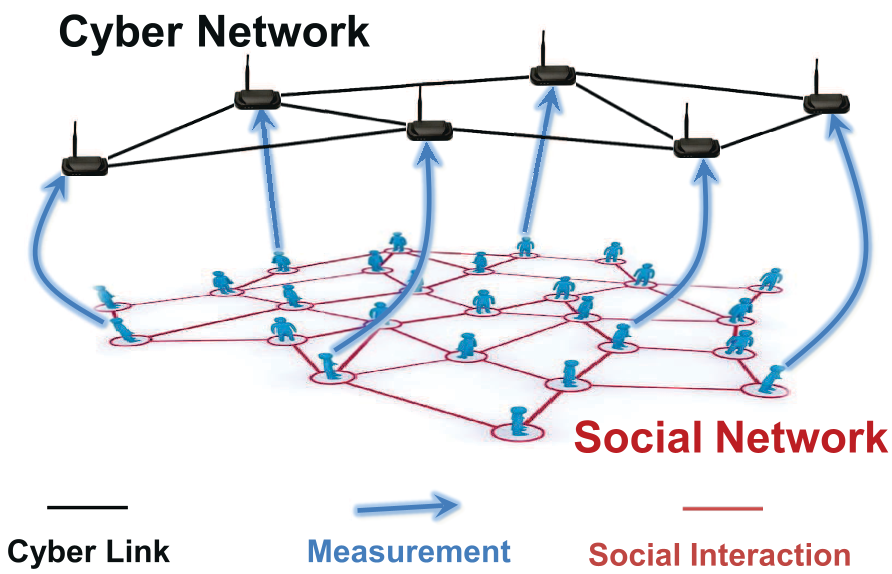 Fig 1. The Cyber-Social Architecture: A cyber-network of agents (top) monitoring a social digraph (bottom).
Cost-Optimal Design: Beyond NP-Hardness
One of the boldest claims of the paper is providing polynomial-order solutions for problems previously labeled as NP-hard.
- Sensing Cost: How do we choose which nodes to measure to minimize cost? By focusing on "Matched Digraphs" (where every node is part of a cycle), the authors transform the problem into a Linear Sum Assignment Problem (LSAP), solvable in via the Hungarian Method.
- Networking Cost: How do we connect agents cheaply? By assuming bidirectional links, the problem becomes a Minimum Spanning Tree (MST) task, solvable in using Prim’s or Kruskal’s algorithms.
Experiments & Results
The authors simulated an 8-state social network that was deliberately made rank-deficient and unstable ().
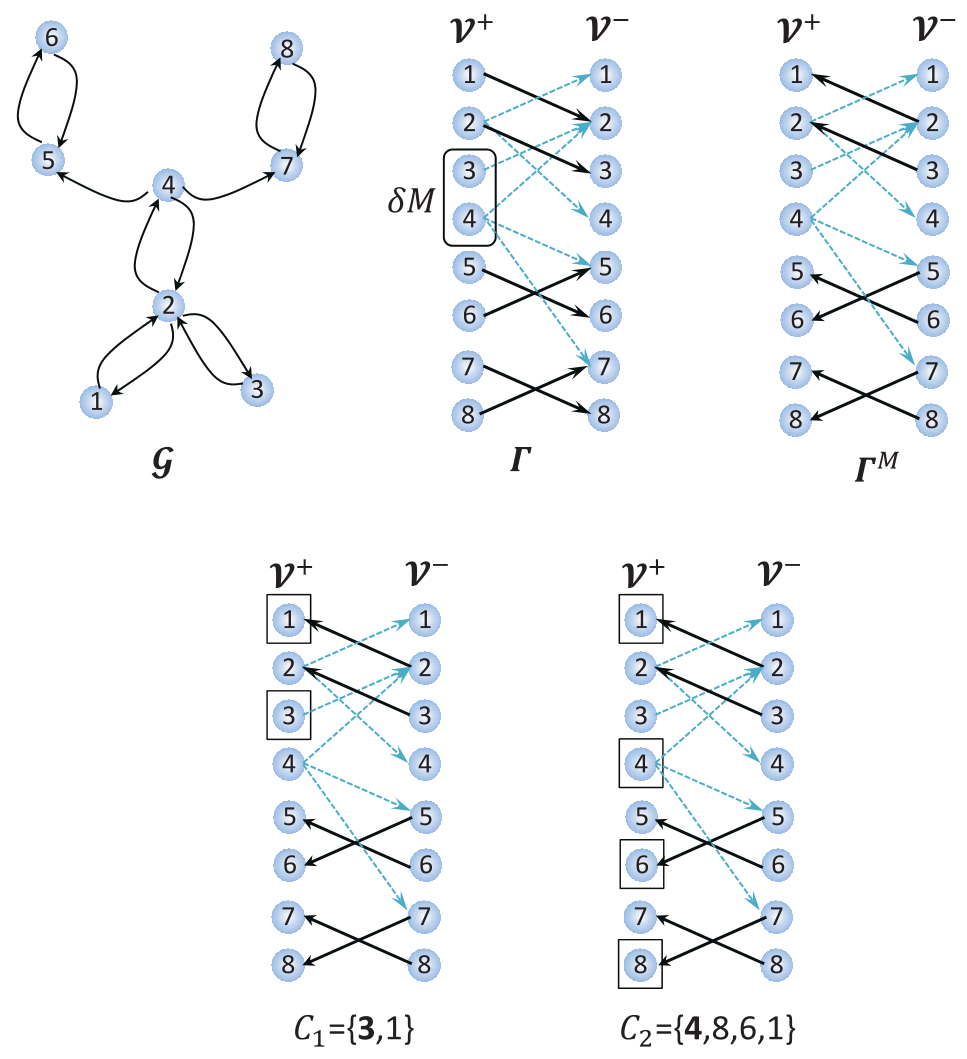 Fig 2. Mean Squared Estimation Error (MSEE) over time. Note how the distributed agents reach a stable, bounded error, trailing only slightly behind the centralized Kalman Filter (KF).
The distributed protocol successfully bounded the error for all agents. Crucially, the communication load was significantly lower than semi-centralized methods because Type-β agents only needed to share predictions over a path, not direct links to every other node.
Critical Analysis & Conclusion
This paper is a masterclass in applying Structural Systems Theory to modern networking. By shifting from numerical analysis (LTI) to structural analysis (LSI), the authors achieve two things:
- Genericity: The results hold for almost all numerical values of social influence weights, as long as the "who-talks-to-whom" structure remains.
- Scalability: and algorithms mean this can actually be used for city-scale social monitoring.
Limitations: The model assumes a fixed social structure. In the real world, social links are volatile. Future iterations must account for link failures or "cyber-attacks" where malicious agents inject false opinions into the prediction-sharing phase.
Final Takeaway: If you want to monitor a complex system, don't just add more sensors; use graph theory to find the "Contractions" and "Parent SCCs." It’s the difference between a brute-force mesh and an elegant, optimized cyber-backbone.