
Cybersecurity as an Economic Strategy: Beyond the Firewall
11548_Cybersecurity Economic Issues Clearing the Path to Good Practice.
The paper "Cybersecurity Economic Issues: Clearing the Path to Good Practice" provides a comprehensive framework for evaluating economic models of cybersecurity investment. It synthesizes disparate survey data and research streams—including software quality, market interventions, and enterprise decision-making—to help project managers align security resources with organizational goals.
TL;DR
Cybersecurity is no longer just a "tech problem"—it is a complex economic challenge involving trade-offs, market incentives, and resource allocation. This paper by Pfleeger and Rue provides a vital framework for navigating the "hodgepodge" of inconsistent data and diverse economic models, aiming to give project managers the tools to treat security as a rigorous business investment.
Problem & Motivation: The Data Chaos
For years, software managers have flown blind. When asked "How much should we spend on security?", the answer is usually based on "gut feeling" or "last year's budget plus 10%."
The authors identify two fundamental obstacles:
- Terminological Fragmentation: What one survey calls a "security breach," another calls "unauthorized use." This makes it impossible to compare data across different sectors or countries.
- Invisibility of Costs: Direct costs (fixing a server) are easy to track, but indirect costs (loss of customer trust, intellectual property theft, operational downtime) are often underestimated by a factor of 7x to 10x.
Without a standard way to measure the consequences of an attack, organizations cannot determine if a specific security measure is "worth it."
Methodology: The Framework for Evaluation
The core of this work is a systematic framework designed to help managers choose the right economic model for their unique needs. Instead of proposing a single "perfect" formula, the authors suggest evaluating any model—whether it's based on Game Theory, ROSI, or Stock Market Impact—against critical dimensions.
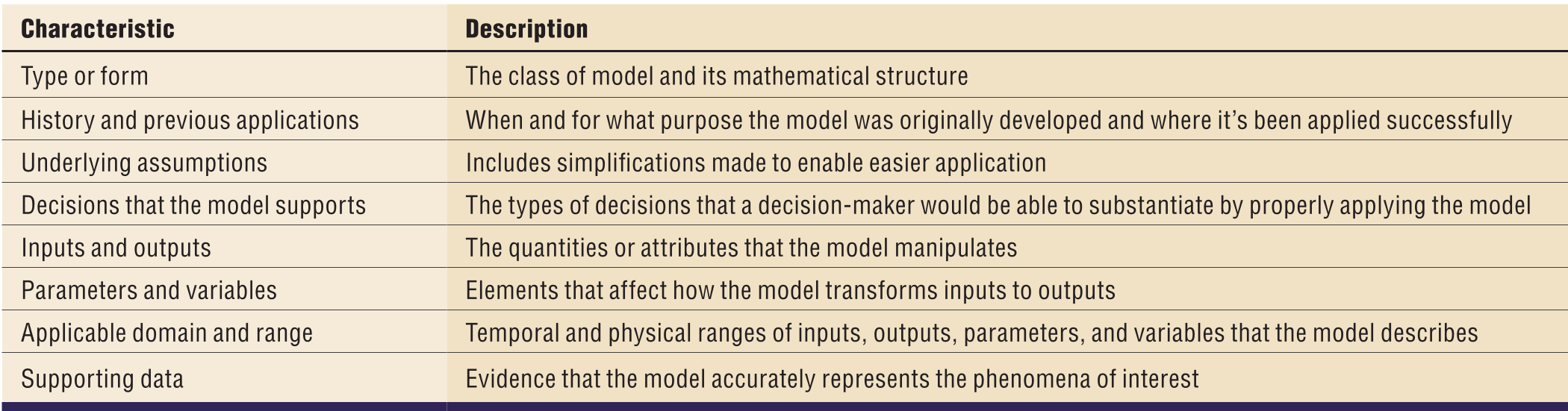
Key dimensions include:
- Transparency: Can a reviewer assess the credibility of the underlying logic?
- Conservativeness: When data is uncertain, does the model avoid overestimating the benefits of a security tool?
- Insight: Does it help the manager understand the attractiveness of the organization to an attacker (the "Return on Attack" concept)?
Key Research Streams in Cybersecurity Economics
The paper synthesizes several fascinating areas of research that go beyond traditional engineering:
- The "Sell First, Fix Later" Incentive: Research shows vendors are economically incentivized to release buggy software and patch it later.
- Negative Externalities: Much like environmental pollution, one company's poor security can harm the entire network (e.g., a botnet forming from insecure devices to attack a third party).
- Market for Vulnerabilities: The emergence of "bug auctions" and credits as a way to benchmark security strength.
Experimental Insights: SOTA Comparisons
The authors compare results from major global surveys (ACC, CSI/FBI, ISBS), revealing a startling lack of consensus. For instance, while some sectors saw a decrease in total damage, specific types of attacks like "Unauthorized Access" saw a massive surge in cost.
 Note: The chart highlights the divergence in attack trends across different geographic regions.
The paper notes that the most effective "defense" often isn't a better firewall, but better information sharing (via ISACs). Sharing vulnerability data shrinks the "window of exposure," forcing vendors to act before attackers can exploit a hole at scale.
Critical Analysis & Conclusion
Takeaway
The value of this paper lies in its movement away from "security through obscurity" toward "security through transparency." It provides a bridge between the CFO's office and the IT department.
Limitations
While the framework is robust, the authors acknowledge that empirical data is still the weak link. Even with a perfect model, "garbage in, garbage out" applies; if companies are hesitant to report the true extent of their losses for fear of stock price drops, the models will remain theoretical.
Future Outlook
The authors predict that the Insurance Industry will eventually become the de facto regulator of cybersecurity. Much like the "Basel II" agreement for banks, insurance companies will require organizations to meet "standardized benchmarks of security" before they can be insured, effectively creating a market-driven standard for "good practice."