
The Power of the Blue Check: Can Celebrities Fix a Broken Corporate Reputation?
Damaged corporate reputation: Can celebrity Tweets repair it?
This study investigates the efficacy of celebrity Tweets as a strategic tool for Corporate Reputation Repair. Through a 2x2 experimental design, the authors demonstrate that Tweets from "intelligent" celebrities outperfrom those from "attractive" ones in restoring public trust following a corporate crisis.
TL;DR
When a corporation faces a scandal, it isn't just about what is said, but who says it. This study reveals that celebrity Tweets can significantly repair damaged corporate reputations. Crucially, "intelligent" celebrities (like news anchors) are far more effective at this than "attractive" celebrities (like actors), because they provide a better perceived "fit" for serious corporate matters.
Background: The Credibility Gap
In the digital age, a single fraud scandal can tank a company’s reputation in hours. While companies try to defend themselves, the public rarely trusts the "official story." This paper enters the arena of Electronic Word of Mouth (eWOM), exploring whether corporations can bridge the credibility gap by borrowing the voices of celebrities to shift public sentiment.
Problem & Motivation: Why Traditional PR Fails
The authors identify a core tension: Information from secondary sources is seen as more reliable than corporate self-reporting. While much research exists on using celebrities to sell products, there is a theoretical void regarding their use in repairing damage. The researchers suspected that the "Source Characteristics" (intelligence vs. attractiveness) and "Message Framing" (personal vs. informational) would play a decisive role in whether a Tweet actually changes minds.
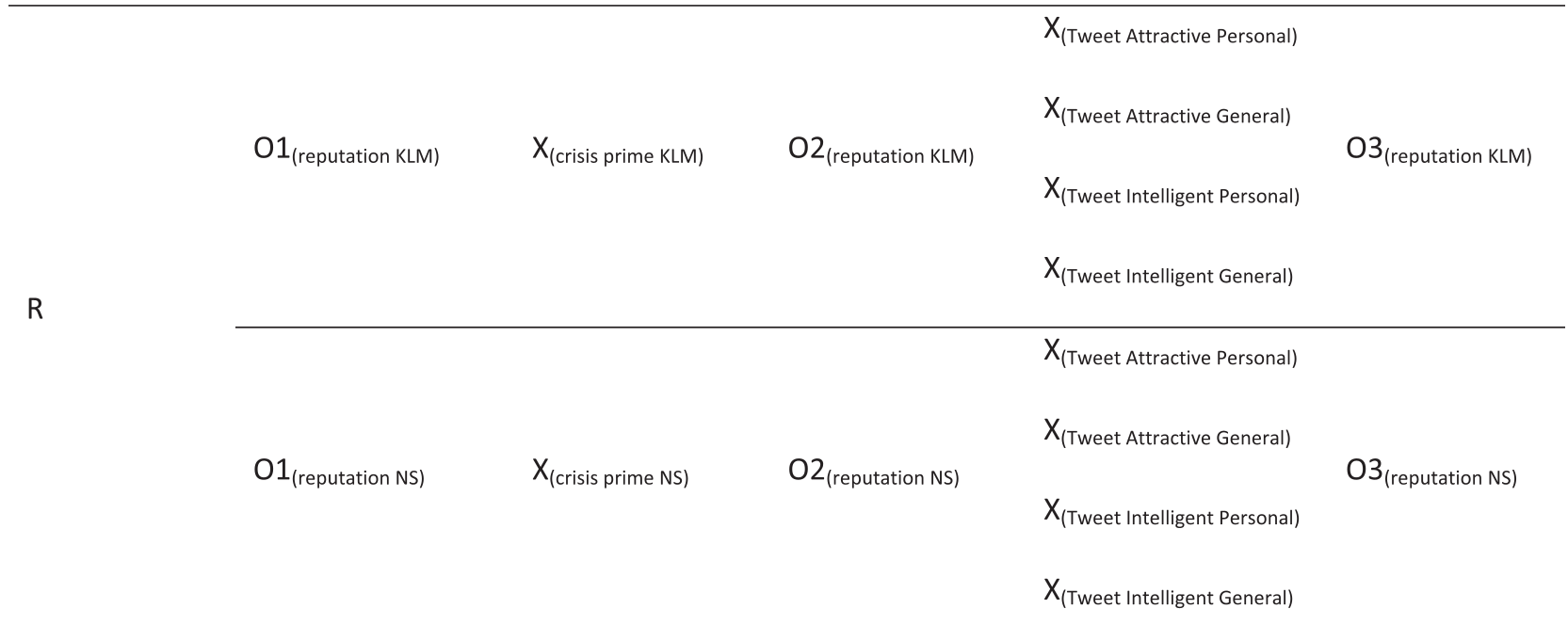
Methodology: The 2x2 Experimental Framework
The study used a rigorous three-step measurement process:
- Baseline (O1): Measuring initial reputation of KLM (Airline) and NS (Railroad).
- Crisis Prime (O2): Exposing subjects to a news report about massive fraud and the arrest of a CEO.
- Intervention (O3): Showing a repair Tweet from one of four conditions.
The celebrities were carefully selected via a Q-sort study to ensure they represent distinct archetypes:
- The Intelligent Source: A Dutch news anchor (Frits Wester).
- The Attractive Source: A Dutch actor/host (Chris Zegers).
Key Results: Brains Over Beauty
The findings were striking. While the crisis significantly dropped reputation scores (p < .000), a single Tweet was enough to spark a recovery.
- The Intelligence Advantage: The intelligent celebrity recovered reputation scores by 0.40, whereas the attractive celebrity managed only 0.26.
- The Fit Factor: Participants rated it more "likely" that an intelligent celebrity would tweet about a corporate issue, proving that Source-Topic Fit is a stronger driver of credibility than charisma.
- Message Type: Surprisingly, it didn't matter if the Tweet was a personal story ("They returned my lost coat!") or a general fact ("They won an award"). The sender was the dominant variable.

Critical Insight & Managerial Takeaway
This research challenges the "halo effect" of physical beauty in advertising. When things go wrong—fraud, mismanagement, or scandal—the public looks for authoritative, "serious" voices.
Strategic Guidance:
- Target the "Brain": For crisis management, avoid the standard "Instagram Influencer" look. Seek out opinion leaders with perceived intellectual weight.
- The Training Requirement: Celebrities must be educated on the topic to maintain their status as credible spokespeople.
- Ethical Clouds: The study found a negative sentiment toward "paid-for" Tweets. In markets like the US, the mandatory use of
#ador#sponcould diminish these repair effects, a factor brands must navigate carefully.
Conclusion
Social media is no longer just a megaphone for brands; it is a collaborative ecosystem where third-party voices hold the keys to trust. This study proves that while a damaged reputation is hard to fix, the right celebrity—chosen for their mind rather than their face—can be a powerful catalyst for corporate redemption.