
The UVSR Model: Decoding the Stochastic Pulse of WeChat Information Diffusion
Data Driven Modeling of Continuous Time Information Diffusion in Social Networks
This paper introduces the Unknown-View-Share-Removed (UVSR) model, a stochastic, heterogeneous, continuous-time framework for modeling information diffusion. Validated using over 220,000 real-world WeChat cascades, the model achieves a realistic simulation of both topological and temporal dynamics by incorporating data-driven probability distributions for user behaviors.
TL;DR
Understanding how a single post becomes a viral sensation requires more than just graph theory; it requires a deep dive into human behavioral timing. This paper proposes the UVSR (Unknown-View-Share-Removed) model, a data-driven framework that treats information diffusion as a series of stochastic transitions with continuous-time delays. By analyzing 229,021 WeChat cascades, the authors proved that the "speed" of virality is governed by specific mathematical distributions: log-normal for viewing and power-law for sharing.
Problem & Motivation: Beyond Discrete Steps
Most classical models (like the Independent Cascade or SIR models) assume information spreads in discrete "rounds" or with uniform rates. However, humans don't check their phones at fixed intervals. Prior work often ignored the heterogeneity of delay: some users react in seconds, others in days.
The authors argue that to truly model virality, we must distinguish between two fundamental behaviors:
- Viewing: The act of consuming the content.
- Sharing: The act of redistributing the content.
The gap between these actions—the "delay"—is where the realism of current models falls short.
Methodology: The UVSR Framework
The UVSR model transitions users through four states: Unknown (U) View (V) Share (S), or to a Removed (R) state if they ignore the message.
The Four Pillars of Diffusion
The model relies on four critical parameters, which the authors grounded in empirical WeChat data:
- Viewing Delay (): Follows a Log-normal distribution ().
- Sharing Delay (): Follows a Power-law distribution ().
- Sharing Probability (): Follows a Gaussian distribution (mean 0.09).
- Viewing Probability (): Influenced by node degree (information overload).
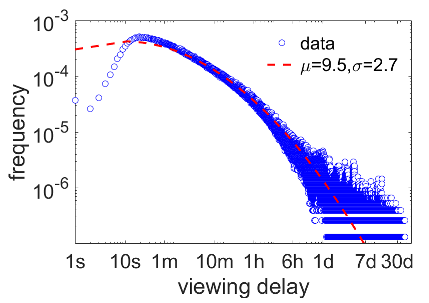 Figure 1: The state transition logic of the UVSR model, highlighting the branching paths to the Removed (R) state.
Experiments & Results: Matching WeChat's DNA
The authors validated the model against a massive dataset from FiboData, covering 45 days of WeChat activities.
1. Structural Virality & Cascade Size
The UVSR model correctly predicted that cascade sizes follow a power-law distribution. Furthermore, it captured Structural Virality (the average path length between nodes), showing that as the viewing probability increases, the model's output aligns almost perfectly with the "deeper" trees observed in real WeChat data.
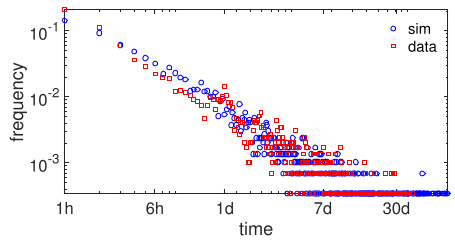 Figure 2: Comparison of structural virality between WeChat data and UVSR simulations at different levels.
2. Temporal Dynamics: The Speed of Spread
One of the model's biggest wins is its ability to simulate relative propagation speed. By using continuous-time delays rather than discrete steps, the model accurately mirrors the time required for a cascade to reach specific sizes (e.g., reaching 200 views or surviving for 24 hours).
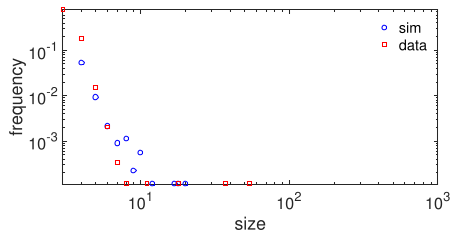 Figure 3: Time required to reach fixed cascade sizes, validating the model's temporal accuracy.
Critical Analysis & Conclusion
Takeaway
The UVSR model provides a statistically rigorous bridge between simple epidemic models and complex human behavior. It proves that heterogeneity in timing is not just noise—it is a defining characteristic of social networks.
Limitations
- Unknown Topology: The authors had to assume a scale-free underlying network because the actual WeChat social graph is private.
- Content Neutrality: The model treats all "messages" as statistically similar, whereas real-world virality is highly dependent on content sentiment (e.g., outrage vs. joy).
Future Work
Expanding this model to include Dynamic Viewing Probabilities (where changes over the message's lifespan) or applying it to cross-platform diffusion (Twitter to WeChat) would be the next frontier in digital epidemiology.