
Optimizing Agricultural E-Commerce: Data Mining and 6G IoT in Logistics Distribution
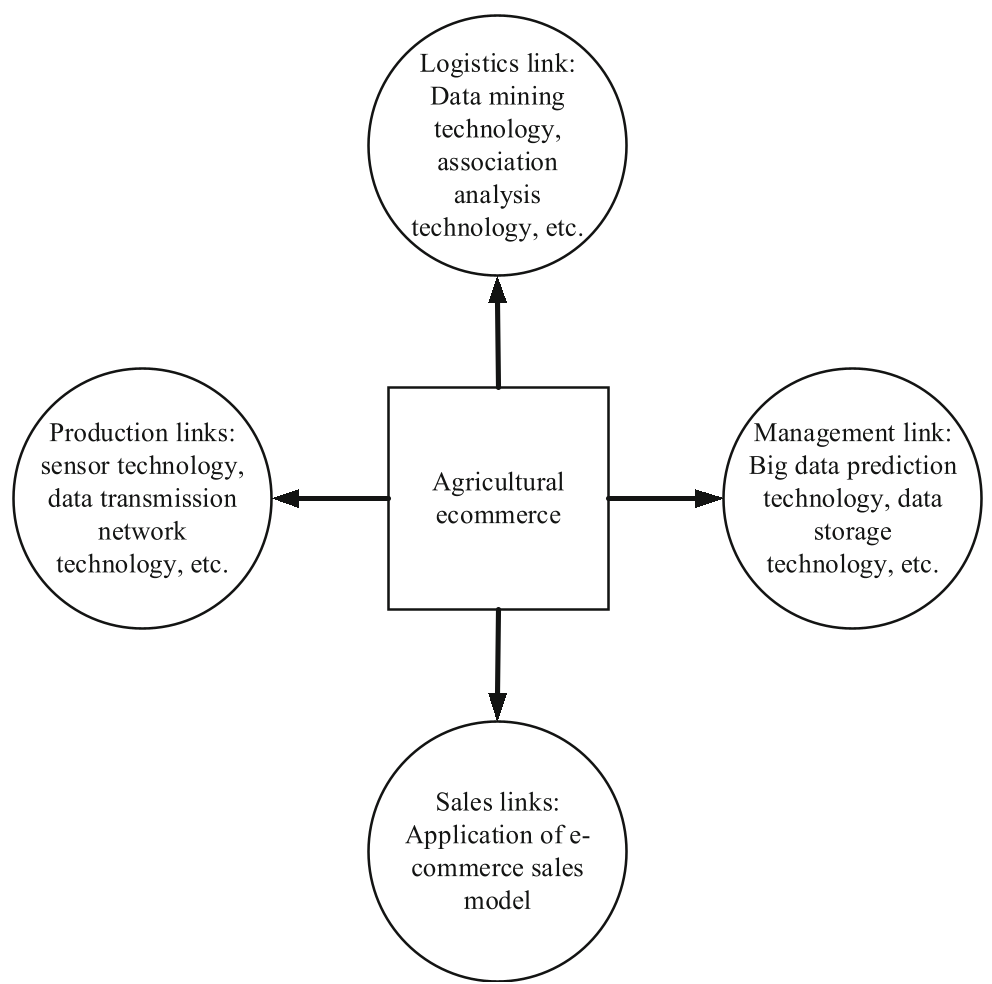
The use of data mining technology in agricultural e-commerce under the background of 6G Internet of things communication
2021-04-18
Summary
Problem
Method
Results
Takeaways
Abstract
This paper proposes an optimized "Common Delivery" logistics mode for agricultural e-commerce, integrating Data Mining (Genetic Algorithms) and 6G-enabled IoT. The method seeks to reduce high logistics costs and improve customer satisfaction by centralizing resources and optimizing distribution paths using MATLAB-based simulations.
## TL;DR
Agricultural products face a unique challenge: they are perishable, highly seasonal, and often geographically scattered. This paper tackles these inefficiencies by proposing a **Common Delivery Mode** powered by **Genetic Algorithms (GA)** and future **6G IoT** infrastructures. The result is a significant reduction in operational costs—notably a ~30% drop in refrigeration and loss costs—while maintaining nearly perfect customer satisfaction.
## The Agricultural Logistics Bottleneck
Traditional e-commerce logistics models (Self-operated, Third-party, and Common) each have fatal flaws in the agricultural sector:
* **Self-operated**: High stability but extremely high fixed costs and low utilization rates.
* **Third-party**: Lacks professional cold-chain sensitivity, leading to product damage.
* **Existing Common Delivery**: Often limited by regional advantages and high initial capital for infrastructure.
The core problem is the **Information Gap** and **Resource Fragmentation**. Without a unified way to coordinate "multi-variety, small-amount" orders, vehicles either run empty or take inefficient routes, leading to delays that ruin fresh produce.
## Methodology: Genetic Algorithms & 6G Connectivity
The author's solution is two-fold: an organizational shift to a "Logistics Cloud" and a mathematical shift to heuristic optimization.
### 1. The 6G IoT Paradigm
While 5G connected people and things, **6G** (aiming for 100Gbps–1Tbps and 0.1ms delay) enables "All-knowing Immersive Intelligence." In this paper, 6G provides the backbone for:
* **Seamless Global Coverage**: Essential for remote rural farms.
* **Ultra-low Latency**: Real-time tracking of refrigeration temperatures and vehicle locations.
### 2. Genetic Algorithm (GA) Path Optimization
The heart of the system is a GA that solves the Vehicle Routing Problem (VRP). The objective function (Min Z) balances:
* Fixed leasing costs of distribution centers.
* Unit distribution costs ($d_{ij}$).
* Variable express delivery volume coefficients.
## Experimental Results: Cost & Satisfaction
Using MATLAB simulations for Hexin Agricultural Co., Ltd., the researchers compared the "Before" and "After" of implementing the common delivery mode.
### Efficiency Gains
The optimization ratio was stark across all metrics:
| Cost Type | Optimization Ratio (%) |
| :--- | :--- |
| **Oil Consumption** | 26.7% |
| **Refrigeration** | 30.3% |
| **Penalty (Delay)** | 31.7% |
| **Product Damage** | 19.6% |
### The Satisfaction Curve
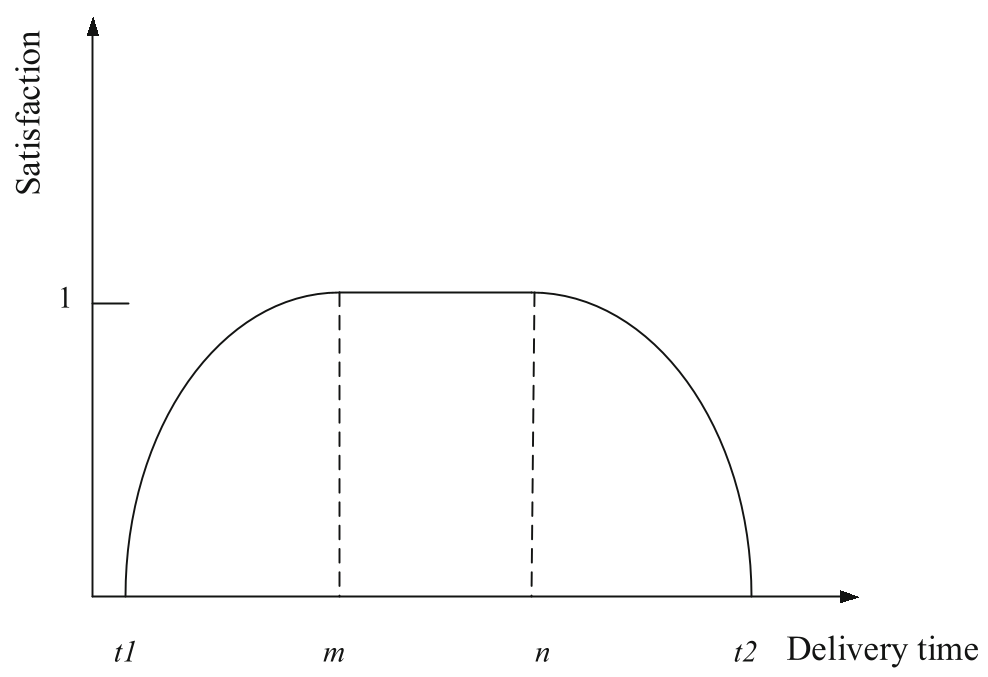
The researchers established a functional relationship between delivery time and satisfaction. Remarkably, the GA-optimized path ensured that **95% of customers fell within the 100% satisfaction window**.
## Deep Insight: Why Does This Work?
The effectiveness of this work lies in **Dynamic Resource Sharing**. By treating logistics as a "Virtual Resource Pool" (enabled by RFID and 6G), the system moves away from rigid schedules. The Genetic Algorithm allows the system to converge on a "Global Optimum" rather than a "Local Optimum" that 3rd-party providers might choose to maximize their own (rather than the farmer's) profit.
## Conclusion
This paper demonstrates that the "last mile" of agricultural e-commerce isn't just a transport problem—it's a data mining problem. By integrating 6G's high-density connectivity with heuristic search algorithms, the "Common Delivery" mode transforms from a conceptual framework into a viable, cost-saving reality.
**Future Perspective**: While the GA is effective, future research could explore **Deep Reinforcement Learning (DRL)** for even more dynamic, real-time routing adjustments as 6G networks become a reality.