
Regional PV Data Mining: Solving the Intermittency Challenge in Power Grids
Research on Data Mining Algorithm for Regional Photovoltaic Generation
The paper proposes a specialized data mining algorithm for regional photovoltaic (PV) power generation that utilizes direct prediction methods and fuzzy classification. By combining K-means clustering with grey correlation theory and time-series analysis, the method achieves stable and efficient hidden data extraction to support power system security.
TL;DR
To address the instability caused by connecting large-scale solar arrays to the power grid, this paper introduces a specialized data mining algorithm. By skipping traditional irradiance modeling and moving directly to meteorological data clustering and time-series feature extraction, the authors provide a stable, scalable method for predicting PV output and maintaining grid security.
Background: The Grid's Dilemma
Photovoltaic (PV) power is notoriously intermittent, influenced by shifting wind speeds, humidity, and cloud cover. For grid operators, this uncertainty requires keeping a "rotating standby" capacity—essentially keeping conventional power plants idling—which is both wasteful and expensive. Traditional data mining often falls short, yielding high false-alert rates or failing to handle the massive influx of real-time sensor data.
Methodology: From Direct Prediction to Dynamic Clustering
The core innovation lies in a "Direct Prediction" framework. Unlike indirect methods that predict sunlight first and then calculate power, this algorithm maps weather factors directly to power output.
1. Data Source Classification
The researchers utilize K-means clustering to categorize two years of historical data into "similar weather types." This ignores the noise of individual days and focuses on broader patterns.
2. Gray Correlation & Matrix Relations
To refine the precision, the authors use Grey Correlation Theory to match current weather forecasts with the most relevant historical clusters. This ensures that the data used for mining is high-quality and contextually accurate.
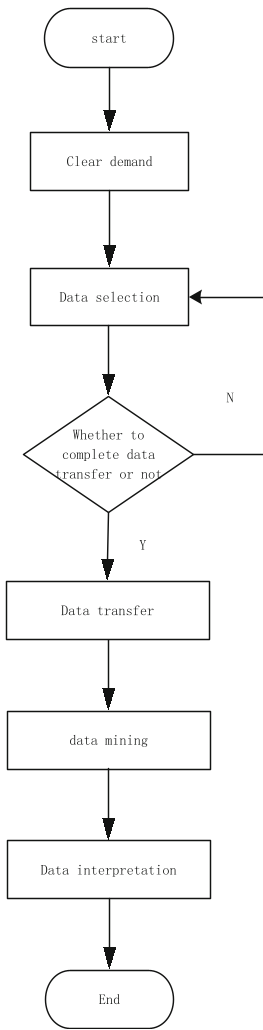 Figure 1: The systemic flow of the data mining process, from requirement clarification to knowledge expression.
3. Implicit Data Extraction
The algorithm constructs a cluster tree and uses time-series analysis to find hidden patterns. The mathematical backbone relies on hierarchical decomposition, where the distance between data samples determines similarity, allowing the system to output "Association Rules" that govern how the grid should respond to specific weather triggers.
Experimental Validation
The algorithm was tested against traditional frequent item set mining using a simulated environment of approximately 2,000 attack/anomaly packets to measure system stability and runtime.
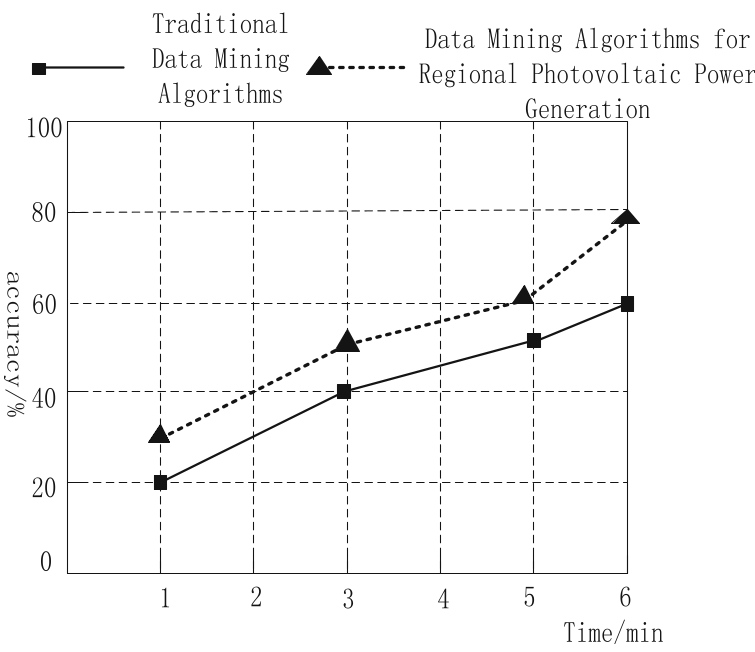 Figure 2: Runtime comparison between Traditional Mining and the Proposed Regional PV Algorithm.
Key Findings:
- Scalability: While traditional algorithms struggle or fail horizontally as data volume grows, the proposed algorithm maintains a near-linear time complexity.
- Stability: The system effectively filters "data noise," reducing the false positive rate that typically plagues power system management.
Critical Insight & Future Outlook
The strength of this work lies in its Inductive Bias—the assumption that similar meteorological clusters will yield similar power generation patterns across a region. By partitioning the database into smaller, manageable "chunks" for parallel processing, it overcomes the bottleneck of massive dataset scanning.
However, the paper's reliance on "Resolution Coefficients" and specific fuzzy assignments suggests that the model might need manual recalibration if deployed in geographically diverse regions (e.g., moving from a desert climate to a tropical one). Future research could integrate AutoML to dynamically adjust these classification tags without human intervention.
Conclusion
This regional PV data mining algorithm offers a robust solution for the "green energy transition," proving that sophisticated data preprocessing and hierarchical clustering can turn unpredictable solar fluctuations into manageable, predictable grid assets.