
Mining the Pulse of Green Buildings: Data-Driven Energy Optimization in Cultural Complexes
Data Mining and Analysis of the Operational Energy Consumption Mode of Green Buildings in a Large Cultural Complex
This paper presents a data mining framework for optimizing energy consumption in green buildings using the K-means clustering algorithm and monotonic sequence logic for anomaly detection. Focused on a library within a large cultural complex, the study identifies four distinct operational modes for air-conditioning systems to drive energy-saving strategies.
TL;DR
Researchers have developed a data mining workflow to decode the energy consumption patterns of a large library. By using K-means clustering and Functional Data Analysis, they identified four distinct operational "fingerprints," pinpointing exact moments where air conditioning was wasted and providing a roadmap for smarter, seasonal energy management.
Background: The "Dark Data" Problem in Green Infrastructure
Modern "Green Buildings" are equipped with sophisticated IoT platforms, yet 32% of total societal energy is still consumed by the building sector. The bottleneck isn't a lack of data; it's the lack of insight. Typical Building Management Systems (BMS) are often reactive or bound to rigid schedules that don't adapt to actual human behavior or seasonal shifts.
Methodology: From Raw Sensors to Actionable Clusters
The authors propose a rigorous 4-step research route to transform noisy sensor data into intelligence.
1. The "Cleaning" Phase
Data from over 10,000 points (Jan 2018 - March 2019) was first processed. Using monotonic sequence logic, the system identified sensor failures (where data should increase/remain steady but drops unexpectedly). These gaps were filled using mean imputation to ensure the clustering algorithm had a continuous "signal" to work with.
2. Functional Data Clustering
Instead of looking at a single hour in isolation, the study treates a 24-hour period as a continuous curve. This "Functional Data" approach allows the model to see the "shape" of energy use.
- Algorithm: K-means Clustering.
- Validation: The Davies-Bouldin (DB) Index was used to mathematically determine that "4" was the optimal number of operational categories.
 Figure 1: The technical workflow from data acquisition to smart application.
Cracking the Code: The Four Operational Modes
The study’s core value lies in the interpretation of the resulting clusters. By aligning these clusters with the library's actual opening hours (e.g., Mondays closing until 14:00) and seasonal weather data, four patterns emerged:
- Mode 1 (Cooling Season): A "convex" curve. The insight? AC was starting far too early before patrons arrived. Action: Delay startup to save energy.
- Mode 2 (Heating Season): A "flat" high-consumption curve. The insight? The system was running at a constant high rate with zero modulation. Action: Implement dynamic control.
- Mode 3 (Transition Season): Convex energy use despite mild weather. The insight? AC was running during non-peak hours unnecessarily.
- Mode 4 (Efficient Heating): A "weakly convex" curve. This represented the most optimized current state, showing managed consumption between 800-1600 kWh.
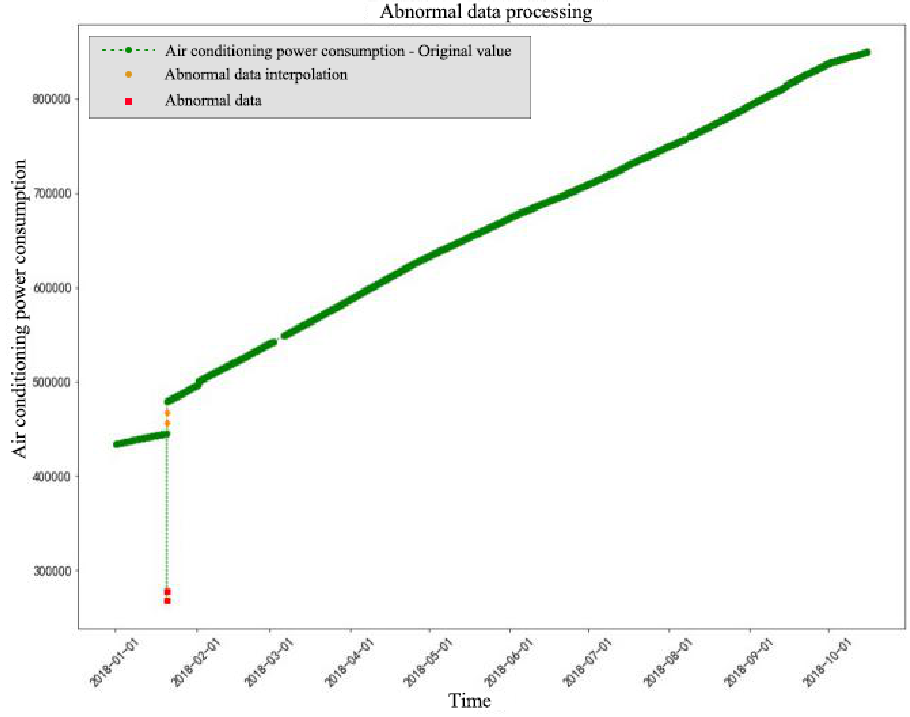 Figure 2: Visualization of the 4 operational modes, showing the distinct "energy signatures" of the building.
Final Analysis: Why This Matters
This research moves building management from intuition to evidence. By identifying that "Mode 2" was essentially a "run-away" consumption state and "Mode 1" had a timing mismatch, facility managers can now write specific code into their Intelligent Integrated Platforms to automate savings.
Key Limitation: The current model uses mean imputation for missing data; in highly volatile environments, more advanced "Generative Adversarial Networks (GANs)" or "K-Nearest Neighbor (KNN)" imputation might provide even higher accuracy.
Future Outlook: Integrating Real-time Occupancy Data (passenger flow) with these energy clusters could lead to a truly "living" building that breathes and cools only where and when people are actually present.