
DM-CSOP: Bridging the Gap Between Economic Cost and Diagnostic Accuracy
A data mining-constraint satisfaction optimization problem for cost effective classification
This paper introduces the Data Mining-Constraint Satisfaction Optimization Problem (DM-CSOP), a framework that integrates information acquisition costs into binary classification. It utilizes a hybrid heuristic combining Simulated Annealing (SA) and Artificial Neural Networks (ANN) to maximize accuracy while minimizing feature costs.
TL;DR
In real-world applications like medicine, data isn't free—each test has a price tag. This paper proposes DM-CSOP, a hybrid framework that treats classification as a Constraint Satisfaction Optimization Problem. By combining Simulated Annealing with Neural Networks, the author demonstrates that we can actually achieve higher accuracy by using fewer, less expensive features, reducing costs by up to 75% in heart disease diagnosis.
Contextual Positioning: Beyond "Accuracy at All Costs"
Most machine learning research operates in a vacuum where the "cost" of a feature is zero. However, in clinical settings, a Maximum Heart Rate test (high cost) might yield similar predictive power to a simple blood pressure reading (low cost). This work moves classification from a pure data science problem to an Operations Research problem, specifically targeting the NP-hard 0-1 Knapsack Problem structure inherent in feature selection.
The Core Motivation: The Information Acquisition Bottleneck
The author identifies a critical flaw in prior SOTA: feature selection (dimensionality reduction) usually only cares about model generalization. It ignores the Information Acquisition Cost ().
The intuition here is twofold:
- Economic Efficiency: Healthcare providers are under immense pressure to lower costs without sacrificing quality.
- The Noise Paradox: Including all available features often introduces noise and increases search space complexity, which can actually degrade the performance of algorithms like Back-propagation.
Methodology: The SA-ANN Hybrid
The problem is modeled as:
Because the functional form of (the classification accuracy) is unknown, we cannot solve this using standard linear programming.
1. The Strategy
The system solves multiple knapsack problems sequentially, iterating through different cost thresholds (). For each threshold, it uses a Simulated Annealing (SA) loop to navigate the possible feature combinations.
2. The Evaluator
For every feature subset picked by SA, a three-layer Artificial Neural Network (ANN) is trained to determine the "fitness" (correct classifications).
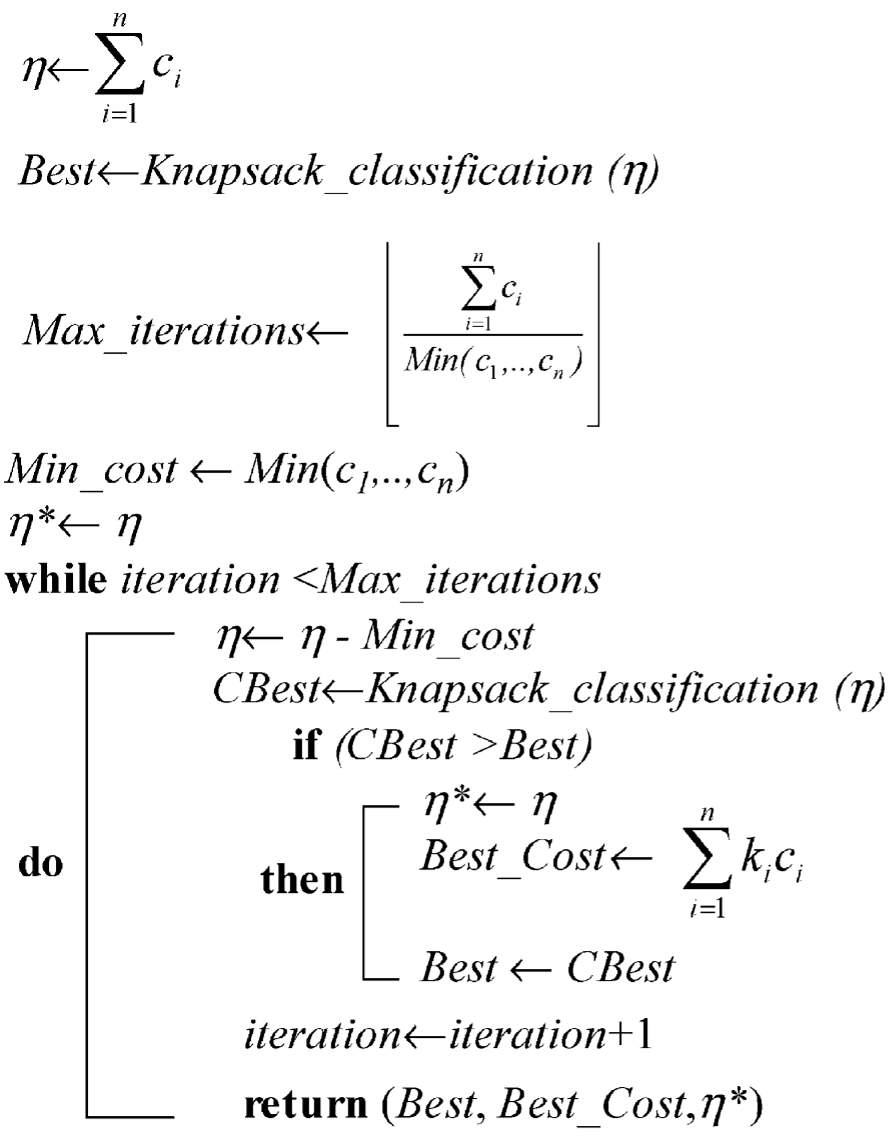 Figure 1: The DM-CSOP iterative procedure for varying cost constraints.
Experiments: Heart Disease Diagnosis
The model was tested on the Cleveland Clinic Heart Disease dataset (13 attributes). The costs varied wildly—from 102.90 for a Thallium scan.
Key Findings:
- Performance Leap: The DM-CSOP achieved an average of 148.9 correct classifications vs. 122.4 for traditional ANN.
- Cost Reduction: Average cost plummeted from 167.37.
- Redundancy Identification: Through a conjunction procedure, the author proved that attributes like "Serum Cholesterol" and "Maximum Heart Rate" were often unnecessary noise-makers in this specific diagnostic context.
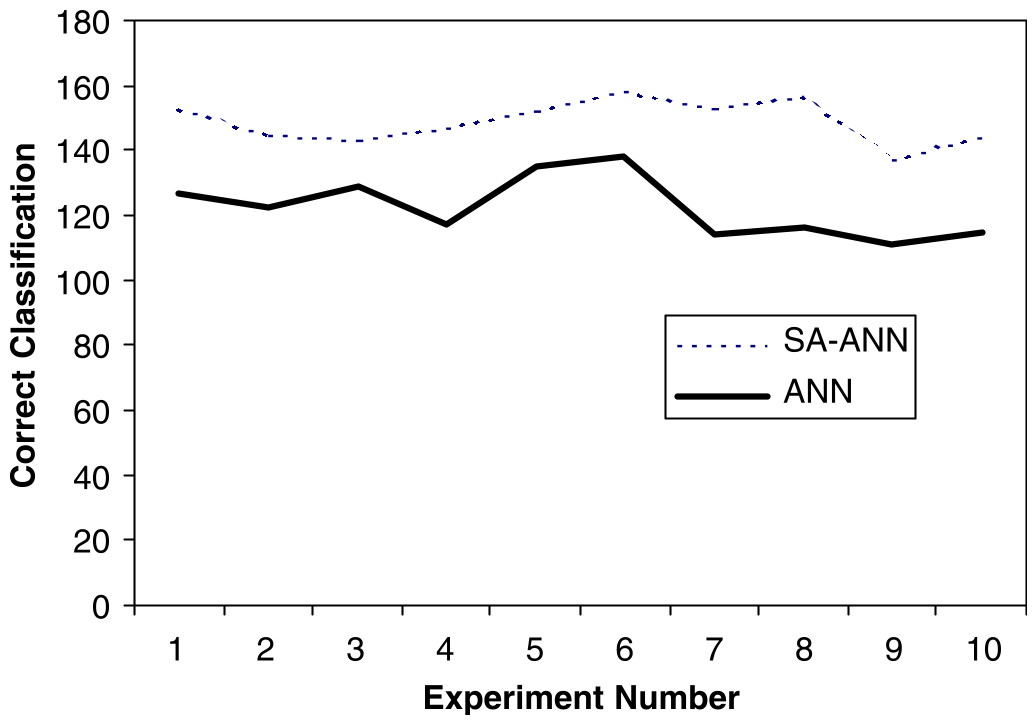 Figure 2: Visualizing the performance gain of DM-CSOP over traditional full-feature ANN.
Critical Insight: The Conjunction Procedure
One of the most valuable "hidden gems" in this paper is the Conjunction Procedure (). Since different data splits might yield different "optimal" feature sets, the author suggests taking the intersection of selected features across multiple experiments. This provides a robust, "safe-to-drop" list for clinicians, ensuring that the cost-cutting measures are statistically sound rather than artifacts of a single training run.
Conclusion & Future Directions
The DM-CSOP framework proves that less is more. By imposing economic constraints, we force the model to find the most "information-dense" features.
Limitations: The reliance on back-propagation (a local search) means the "fitness" evaluation might still get stuck in local optima. Future Work: Integrating Genetic Algorithms or Global Search mechanisms for the weight learning phase could further refine the accuracy-cost curve, potentially leading to even more efficient diagnostic protocols.