
Beyond Raw Numbers: Optimizing Public Health Through Integrated Data Mining and Decision Support
Data Mining for Decision Support: An Application in Public Health Care
The paper proposes a framework integrating data mining and multi-criteria decision support to optimize public health resource planning. Using the Celje region in Slovenia as a case study, it introduces the MediMap project, which identifies healthcare underserved areas by modeling accessibility and availability through advanced outlier detection and visualization.
TL;DR
Strategizing healthcare delivery is often hampered by "data fog"—plenty of numbers, but little clarity on where to build the next clinic. This paper introduces a framework from the MediMap project that combines descriptive data mining with migration-aware decision models. Tested in Slovenia’s Celje region, it successfully identified staffing shortages and uncovered hidden healthcare "deserts" by accounting for how patients actually move across regional borders.
Background: The Hierarchy of Public Health
In Slovenia, public health follows a three-tier hierarchy: Strategic (Ministry), Managerial (Regional PHIs), and Operational (Hospitals/Clinics). The challenge lies in the flow of knowledge. While the front lines collect massive amounts of data, this information is often aggregated too early, losing the "local flavor" necessary for effective regional management.
The Problem: The Myth of Static Accessibility
The primary motivation for this research was the realization that traditional planning metrics are often misleading. If a small community has zero local clinics, a naive statistical model flags it as having "zero accessibility." However, in reality, residents might be perfectly well-served by a facility five kilometers away in the next town.
The authors identified two major pain points:
- Data Aggregation Bias: Over-simplifying data hides specific inefficiencies in patient directing.
- Static Metrics: Traditional ratios of "Doctors per Capita" ignore that patients are mobile and boundaries are porous.
Methodology: The AHSPm Breakthrough
The core of the paper lies in its transition from simple data mining to a nuanced decision support model.
1. The Similarity Phase
Using several clustering methods (Agglomerative, PCA, Kolmogorov-Smirnov), the researchers grouped Community Health Centers (CHCs) based on patient demographics and employment structure. This allowed them to detect "Atypical CHCs"—those whose staffing levels didn't match their actual workload capacity.
2. The Migration-Aware Model
The most significant technical contribution is the AHSPm (Availability of Health Services for Patients, adjusted for migration).
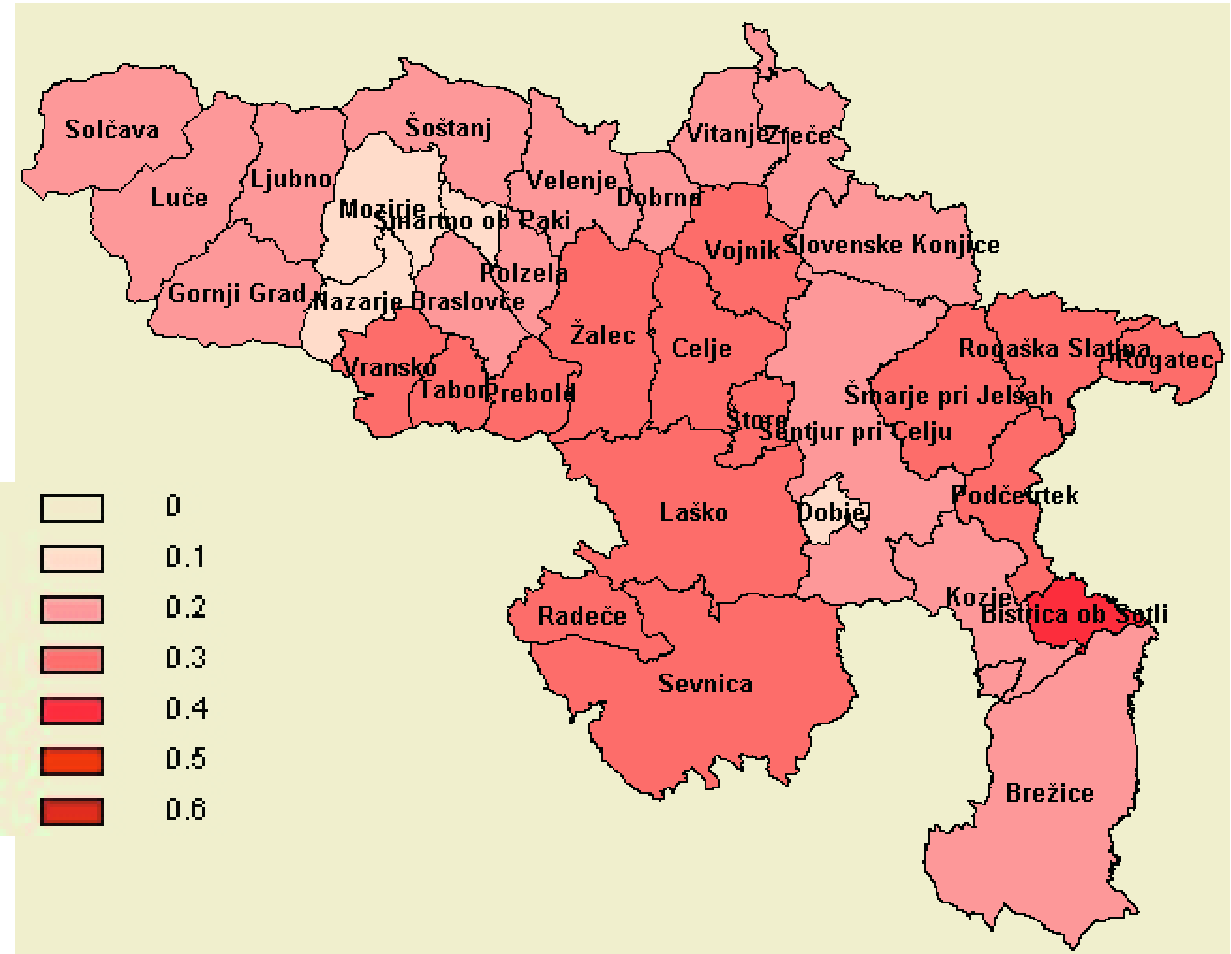
The formula for AHSPm effectively weights the availability of services by the actual probability of a community member visiting a specific facility: Where is availability at service , and is the count of accesses from community to service .
Experimental Insights: Identifying the "Outliers"
By plotting Availability (AHS) against the Rate of Accesses (RAHS), the authors created a four-quadrant "Information Fusion" tool.
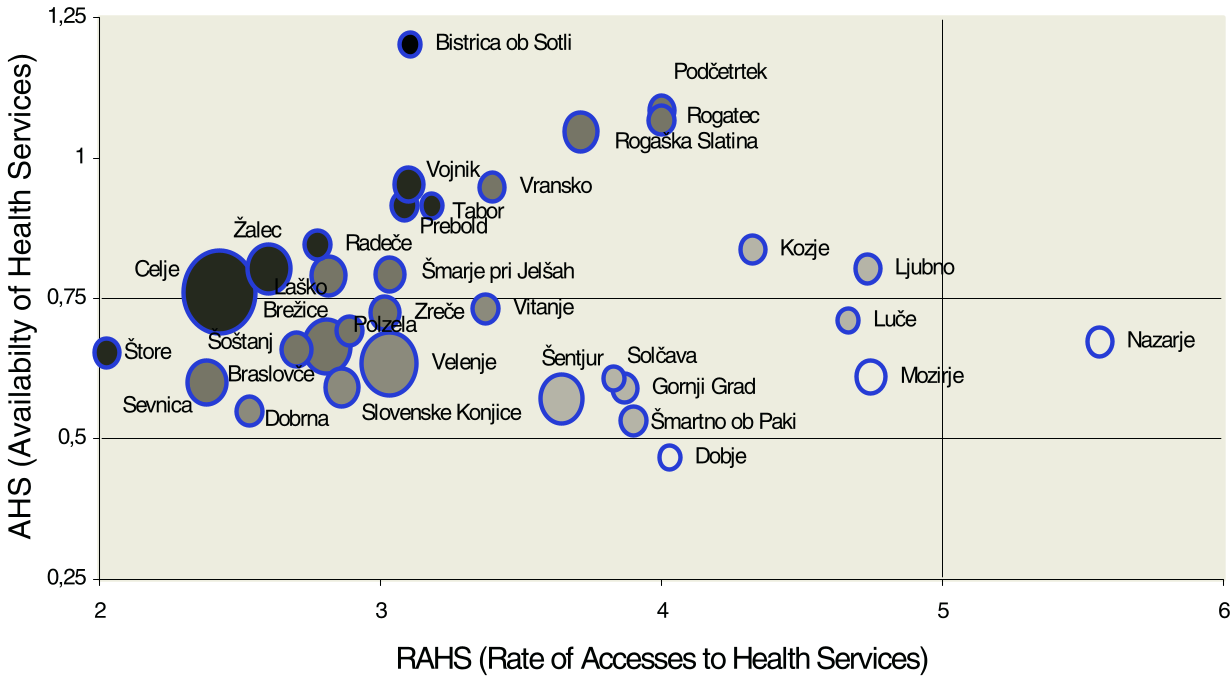
- High Access/Low Availability: Areas on the right/bottom of the chart (e.g., Nazarje, Mozirje) were identified as having significantly overworked staff.
- Low Access/High Availability: Areas on the left (e.g., Štore) suggested potential issues with "quality of care," where people had access but chose not to utilize the services due to perceived poor outcomes.
Critical Analysis & Conclusion
Takeaway
The MediMap project proves that Decision Support (DS) is the necessary bridge between Data Mining (DM) and real-world policy. DM finds the pattern; DS determines if the pattern matters for the citizen.
Limitations
While the migration-aware model is a vast improvement, it still relies on "working time" as a proxy for capacity. It doesn't account for the "intensity" of different medical cases or the qualitative expertise of the staff involved.
Future Outlook
The next step for this technology is Automatic Modeling. Instead of human-driven phase switches, future systems could use Data Mining to autonomously adjust parameters in Decision Support models as healthcare trends (like pandemics or demographic shifts) evolve in real-time. This paper serves as an early blueprint for what we now call Healthcare Business Intelligence.