
Decoding Problem Behavior: Integrating Heart Rate and Environment via Rough Set Data Mining
Analyzing the relation between heart rate, problem behavior, and environmental events using data mining system LERS
This study utilizes the LERS (Learning from Examples based on Rough Sets) data mining system to analyze the complex relationship between heart rate (HR), environmental factors, and problem behaviors (e.g., self-injury, aggression) in an adult with severe mental retardation. It successfully identifies predictive rules that link physiological arousal states and external triggers to behavioral occurrences.
TL;DR
Can we predict a behavioral crisis before it happens? This research explores the intersection of physiology and psychology by using the LERS (Learning from Examples based on Rough Sets) system. By analyzing heart rate spikes alongside environmental stressors (like staff demands), the authors induced logical rules that explain the "Why" and "When" of problem behaviors in individuals with developmental disabilities.
Background: Beyond Simple Observation
In the field of disability research, Functional Assessment is the gold standard for understanding why problem behaviors—like self-injury or aggression—occur. Historically, this has focused on the environment: Does the behavior happen when a task is too hard?
However, behavior is also driven by internal physiological states. The challenge is that physiological data (like heart rate) is "noisy" and "inconsistent." Two moments might look identical on the outside, but the internal state makes the difference. Traditional statistics often fail to capture these nuanced "if-then" transitions, which is where Data Mining and Rough Set Theory enter the picture.
The Problem: The Messiness of Human Data
Existing methods struggle with "conflicting cases"—situations where the same environmental stimuli lead to different behavioral outcomes. This inconsistency makes it hard to create a reliable predictive model. The authors argue that we need a system that doesn't just average out these outliers but understands the boundaries of what we certainly know versus what we possibly know.
Methodology: The Power of Rough Sets
The core of this study is the LERS system, which utilizes Rough Set Theory. Instead of relying on probability (which requires massive datasets), Rough Sets deal with Indiscernibility.
1. Lower and Upper Approximations
LERS categorizes data into:
- Lower Approximation (Certain Rules): Cases that strictly belong to a specific behavior (e.g., "If HR is VH and Demand is present, then Self-Bite always occurs").
- Upper Approximation (Possible Rules): Cases that might belong to that behavior, capturing the uncertainty inherent in human actions.
2. The LEM2 Algorithm
The researchers used the LEM2 algorithm to find the smallest set of rules that describe the behavior. This is crucial for clinicians—they don't need a "black box" neural network; they need a readable list of triggers.
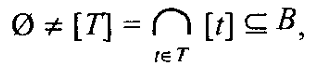 Note: The formula above represents the intersection of attribute-value pairs used to define a behavior concept.
Key Results and Insights
The analysis yielded fascinating specificities that manual observation might miss:
- The "Heart Rate Precursor": Self-biting was most likely when the heart rate was "Very High" (79-83 bpm) and had been climbing in the previous 15-30 seconds.
- The Environmental Shield: Interestingly, the data showed that even when the heart rate was high, if there was an "absence of external stimulus" (no demands or corrections), the problem behavior was unlikely to occur.
- Discriminant Power: The system could distinguish between "Self-Biting" (R) and "Aggression" (Q) based on specific heart rate intervals and the timing of staff interactions.
| Behavior Type | Specificity | Strength | Key Predictors |
|---|---|---|---|
| Self-Bite (R) | 5 | 6 | Demand (I) + High HR + VH HR in sequence |
| No Activity (A) | 1 | 175 | Heart Rate-15 is Very High |
Critical Analysis & Conclusion
This study is a pioneer in "Physiological Data Mining" for behavioral health.
Takeaway: The real value of LERS here is its ability to turn "low-level" sensor data into "high-level" clinical knowledge. It validates the hypothesis that heart rate is a "setting event"—it sets the stage, but the environment often pulls the trigger.
Limitations:
- Sample Size: The study focused on a single subject, making generalization difficult.
- Sensitivity: 15-second heart rate averaging is relatively coarse; future work should use "Interbeat Intervals" (IBI) for higher resolution.
Future Outlook: As wearable technology (like Apple Watches or specialized medical sensors) becomes ubiquitous, Rough Set-based systems could provide real-time alerts to caregivers, transitioning behavioral support from reactive (stopping a fight) to proactive (calming the individual before the heart rate spike leads to an outburst).