
Wildlife Research Trend Analysis: Mapping the Conservation Landscape in Sri Lanka
17255_A Data Mining and Ontology-Based Approach for Predicting the Research Ideas in the Wildlife Sector of Sri Lanka.
This paper introduces a semi-automated framework for wildlife research trend analysis in Sri Lanka using Latent Dirichlet Allocation (LDA) for topic modeling and Ontology for knowledge structuring. The system aims to bridge the gap between academic research and practical conservation by automatically classifying past studies and identifying emerging research themes.
TL;DR
Wildlife conservation in Sri Lanka faces a digital bottleneck: decades of research exist, but they are underutilized due to fragmentation. This paper presents a semi-automated pipeline that uses Latent Dirichlet Allocation (LDA) and Ontologies to categorize past research (1990-2015), achieving an 82% accuracy in identifying core conservation themes and "hidden" keywords.
Problem & Motivation: The Knowledge-Action Gap
Sri Lanka is a biodiversity hotspot, yet much of its wildlife research remains trapped in traditional archives or unstructured PDFs. The authors identify a critical "Research-SOTA gap"—practitioners cannot easily find relevant data, and researchers often lack a clear view of which topics have been over-studied versus which remain neglected. The challenge lies in the massive volume of textual data and the lack of a standardized vocabulary (Ontology) to organize these findings.
Methodology: The Fusion of Topics and Structures
The research moves beyond simple keyword searching by implementing a two-stage technical framework:
1. LDA Topic Modeling
Using an unsupervised learning approach, the authors applied LDA (Latent Dirichlet Allocation). They pre-processed abstracts through tokenization, stop-word removal, and lemmatization. LDA then treats each document as a mixture of various topics, allowing the model to find underlying clusters without manual labeling.
2. Ontology Engineering
To provide the "Inductive Bias" necessary for scientific rigor, the authors used Protégé to build a Wildlife Ontology. This acts as a semantic backbone, ensuring that the clusters found by the LDA model are mapped to meaningful biological and ecological classes (e.g., ThreatOnSpecies, Permaculture, Biodiversity).
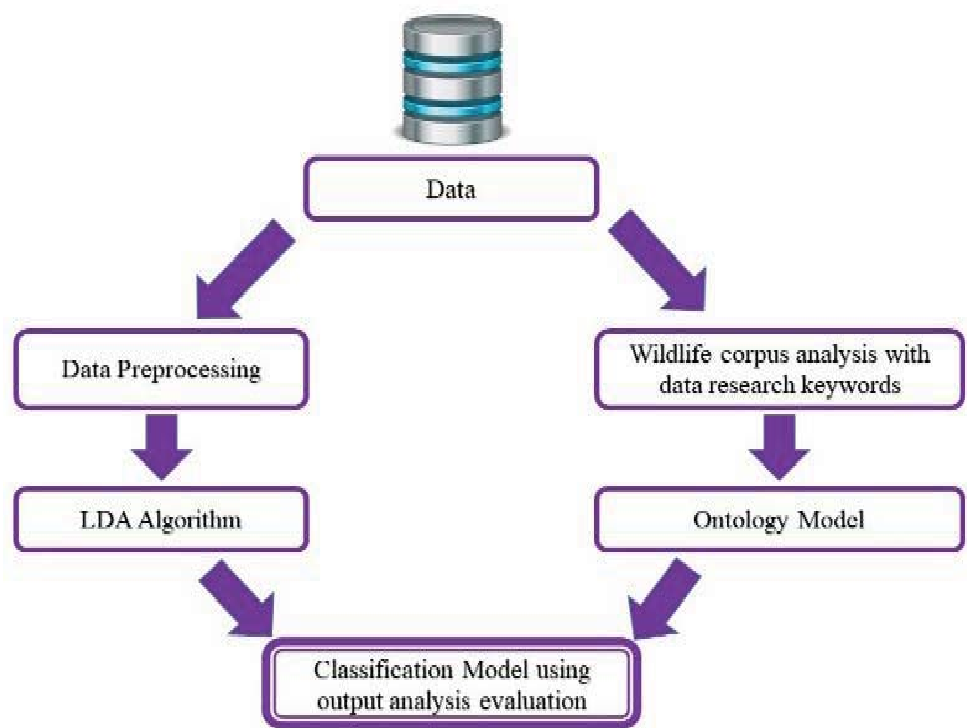 Figure 1: The dual-path pipeline involving text data processing and ontology development.
Experiments & Results
The system analyzed papers covering a wide range of topics, from snake venom neutralization to soil carbon stocks. By calculating Saliency and Relevance scores (see formulas below), the model identified the most distinct keywords for every topic.
This mathematical approach ensures that common words are penalized, while words that are highly specific to a topic (like "Venom" or "Anthropogenic") are promoted.
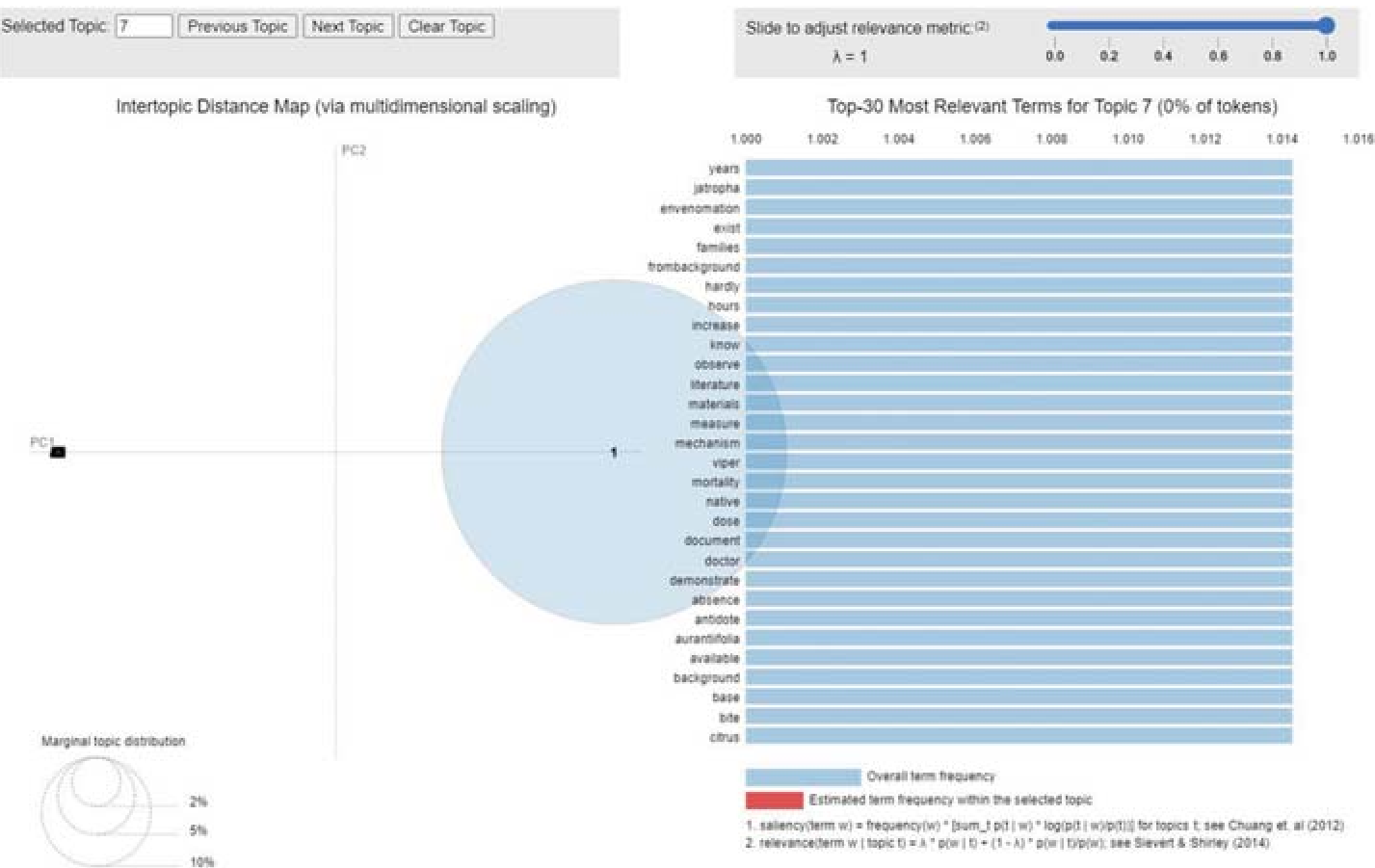 Figure 2: LDA Visualization showing keyword distribution across the wildlife corpus.
Key Performance Metrics:
- Accuracy: 82% compared to manual expert classification.
- Inter-topic Distance: The model successfully separated distinct fields, such as "Reptile Diversity" from "Marine Fungi Bio-compounds," as evidenced in the topic clusters.
Critical Analysis & Conclusion
Takeaway
The paper proves that a semi-automated framework can drastically reduce the complexity of literature review in specialized scientific domains. By leveraging unsupervised learning to find the "What" and Ontologies to define the "How," the framework offers a scalable solution for regional conservation bodies.
Limitations & Future Work
The current approach has a minor bottleneck in Ontology Classification. Because some research topics overlap across multiple paths in a hierarchy, a simple tree structure sometimes results in "collapsed" paths in the graph. Future work should explore more flexible Knowledge Graph architectures and fully automated labeling to eliminate the remaining manual comparison steps.
Ultimately, this work serves as a high-tech "compass" for future researchers in Sri Lanka, ensuring that the next generation of conservation efforts is built on a structured understanding of the past.