
Data Mining for Direct Marketing: Shifting from Mass Calls to Precision Targeting
Data Mining Solutions for Direct Marketing Campaign
This paper evaluates the performance of Decision Trees (DT), Random Forests, and Artificial Neural Networks (ANN) in predicting the success of direct bank marketing campaigns. By integrating Principal Component Analysis (PCA) and Cluster Analysis for preprocessing, the authors achieved a peak prediction accuracy of 91% using the RStudio platform.
TL;DR
This research investigates the efficacy of various Data Mining (DM) techniques—specifically Decision Trees (DT), Random Forests, and Artificial Neural Networks (ANN)—in optimizing bank marketing campaigns. By utilizing RStudio for rigorous experimentation on benchmark data, the authors achieved a 91% accuracy rate, demonstrating how localized preprocessing like Cluster Analysis and PCA significantly enhances model reliability.
Background & Motivation: The Cost of "No"
In direct marketing, the "rejection rate" typically dwarfs the "acceptance rate." For a bank, calling every customer is prohibitively expensive and leads to "marketing fatigue." The challenge lies in the data's complexity: customer profiles include diverse variables like job type, education, and previous contact outcomes.
The authors argue that the problem isn't just about having a model, but about handling data inconsistency. Prior works often ignored outliers or failed to balance the trade-off between model interpretability (knowing why a customer says yes) and raw predictive power.
Methodology: The DM Pipeline
The authors propose a structured workflow using the R ecosystem (specifically rpart for trees and nnet for neural networks).
1. Data Cleaning and Cluster Analysis
Before training, the authors used Euclidean distance to identify patterns and abnormal observations. By filtering out inconsistent data points that deviate from the normal probability distribution, they grounded the models on more "reliable" signals.
2. Dimensionality Management
For ANNs, which are notoriously sensitive to the "curse of dimensionality," the authors applied Principal Component Analysis (PCA) via the prcomp package. This step is critical to prevent overfitting and to ensure the hidden layers of the ANN capture global features rather than local noise.
3. Structural Optimization
The study emphasizes manual control over model complexity:
- Decision Trees: Adjusted through
Complexity Parameter (cp),Split Size, andDepthto find the "sweet spot" where the model is complex enough to learn but simple enough to generalize. - ANNs: Experimented with the number of hidden neurons to maximize performance.
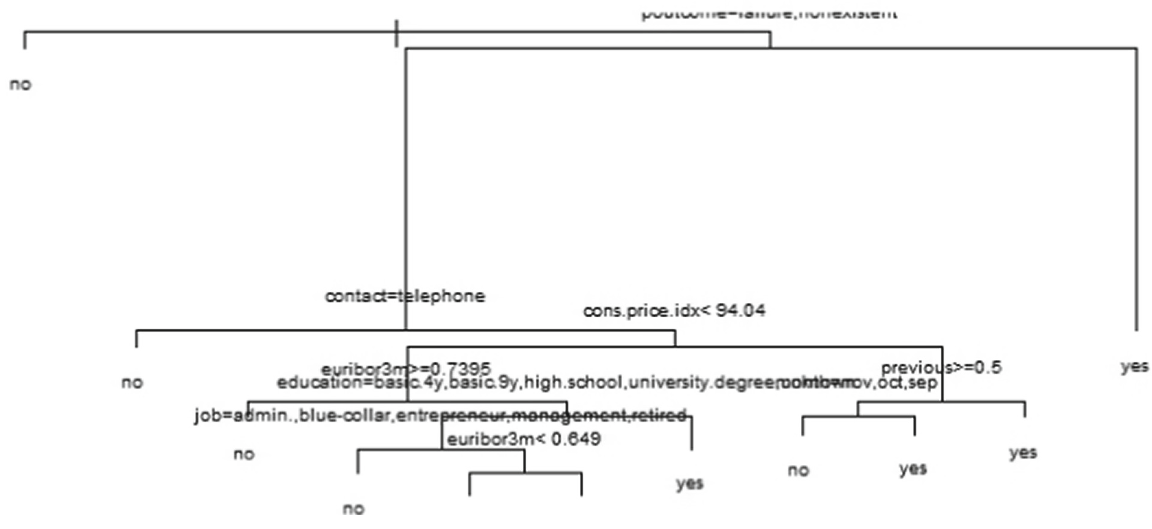 Fig 1. Fine-tuning the Complexity of Decision Tree models at 0.005 to prevent overfitting.
Experiments & Results: Accuracy vs. Interpretability
The benchmarking was performed on the well-known Bank Marketing dataset. Key observations include:
- Class Imbalance: The data showed a significantly higher rate of rejected calls vs. accepted ones.
- Job Category Influence: Statistical analysis revealed that "Admin" and "Blue-collar" workers were the most frequent targets, suggesting job type as a high-weight feature.
- Performance Metrics: Using a Confusion Matrix, the authors validated that their approach effectively minimized "False Positives" (targeting a customer who won't buy), which is the primary driver of marketing costs.
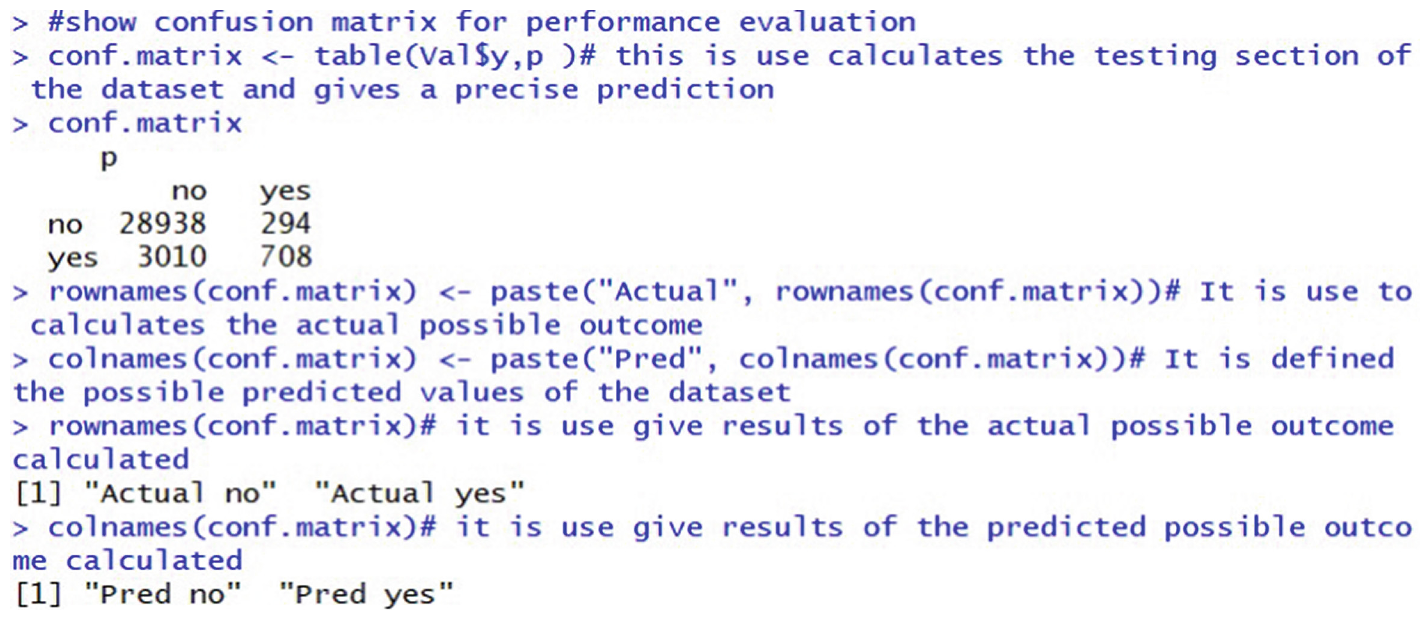 Fig 2. The Confusion Matrix used to evaluate the true/false acceptance rates.
The "Winner" Depends on the User
- ANNs provided the highest raw accuracy (hitting the 91% mark), making them ideal for automated backend scoring systems.
- Decision Trees were found to be more "readable." For a campaign manager, a DT provides a clear logical path (e.g., if Job=Admin & Age > 30, then Call), which is essential for strategic planning.
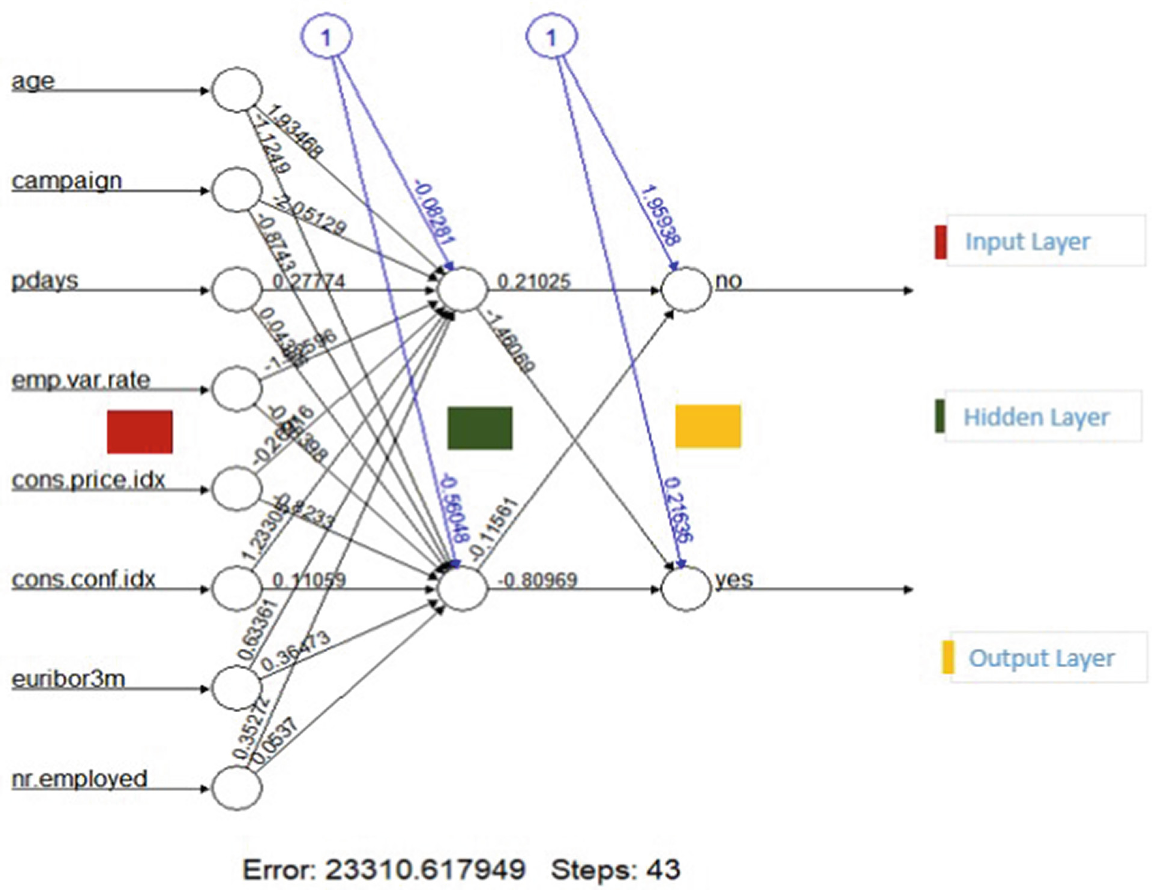 Fig 3. An ANN model with two hidden neurons used for high-accuracy prediction.
Critical Insight & Conclusion
The true value of this paper lies in its holistic approach to the DM lifecycle. Instead of simply throwing a complex algorithm at a raw dataset, the authors demonstrate that:
- Preprocessing (PCA/Clustering) is just as important as the model itself.
- Boosting is a highly effective tool for reducing residual errors in marketing data.
- RStudio remains a powerful, transparent platform for iterative experimental study.
Limitations: The study primarily focuses on traditional DM techniques. Modern approaches like XGBoost or LightGBM, which automate much of the "boosting" and "split size" logic explored here, could potentially push the accuracy beyond 91%. Additionally, the paper does not explicitly detail the "cost-benefit" ratio of the 9% error rate in actual financial terms.
Future Outlook: As direct marketing moves toward real-time personalization, the integration of these DM models into live CRM systems will be the next frontier, allowing banks to calculate "propensity to buy" in milliseconds during a customer interaction.