
Automated Moderation vs. Human Reality: Bridging the Discrepancy in Content Filtering
9375_Data mining Twitter during the UK floods Investigating the potential use of social media in emergency management.
This paper presents a systematic evaluation of automated moderation and geolocation detection systems used in social media platforms. It focuses on the alignment between automated labels and manual expert annotations to identify specific failure modes in spam filtering and location metadata extraction.
TL;DR
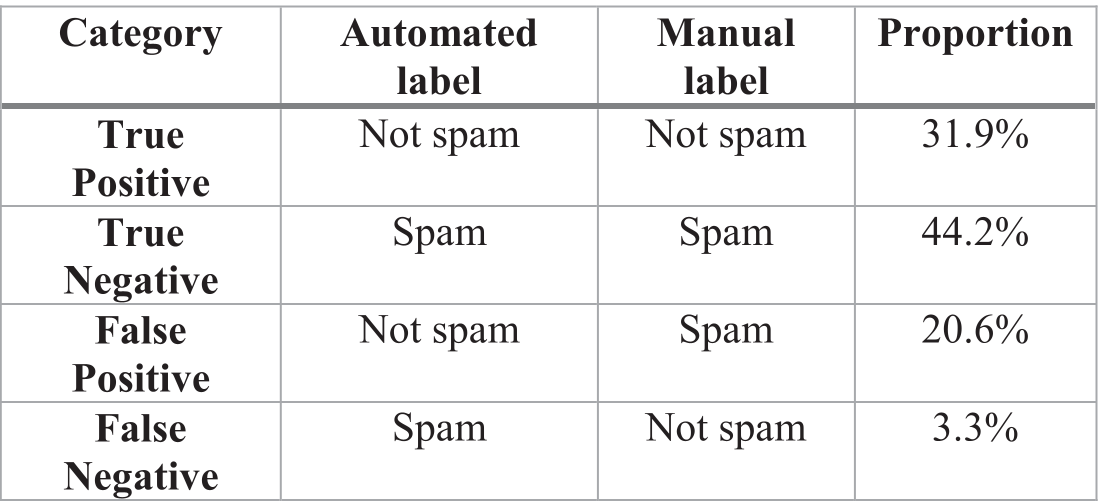
Automated content moderation is the backbone of modern social media, yet its reliability remains a "black box." This study dissects the performance of automated spam filters and geolocation detectors, revealing a concerning 20.6% False Positive rate in spam classification. While geolocation detection proves more stable, the gap between automated logic and manual verification suggests a need for more robust semantic understanding in moderation pipelines.
The Motivation: Why Rules-Based Filters Fail
The scalability of social media requires automation, but "spam" is a moving target. Prior works often focus on high-level accuracy metrics, masking underlying failures in nuanced cases. The authors argue that the current bottleneck isn't just "detecting" spam, but avoiding the misclassification of edge cases (False Positives) that degrade the dataset's quality.
Methodology: Quantifying the Machine-Human Gap
The researchers established a comparative framework between Automated Labels and Manual Expert Labels. By categorizing results into a standard confusion matrix, they isolated where the "Inductive Bias" of the automated system diverged from human intuition.
1. Spam Detection Performance
The most striking finding lies in the spam filtering category. The system was highly efficient at identifying "True Negatives" (Spam correctly identified), but struggled significantly with content that was actually spam but labeled as "Not spam" by the automation—a critical vulnerability for platform safety.
Geolocation: A Higher Precision Frontier
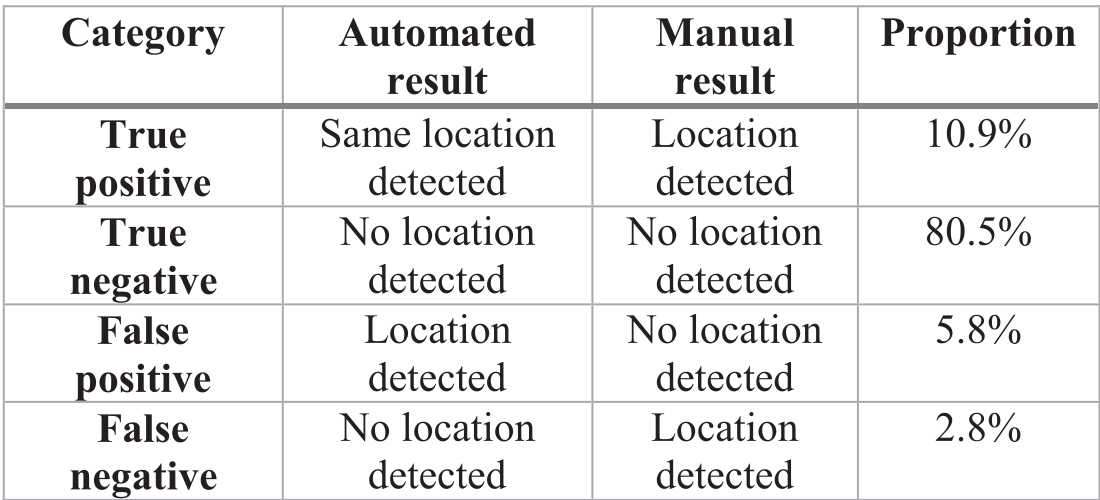
In the realm of geolocation, the automated systems performed with higher reliability. With a 80.5% True Negative rate, the system excels at recognizing when a post does not contain location data. However, the 5.8% False Positive rate (detecting a location where none exists) highlights issues with "hallucinated" entities.
Deep Insight: The Cost of Automation
The primary takeaway is that while automated systems provide the "heavy lifting" for data processing, they are currently incapable of replacing human verification for high-precision tasks. The 20.6% discrepancy in spam labeling indicates that current classifiers may be over-optimized for recall (catching as much as possible) at the expense of precision.
Key Visual Evidence
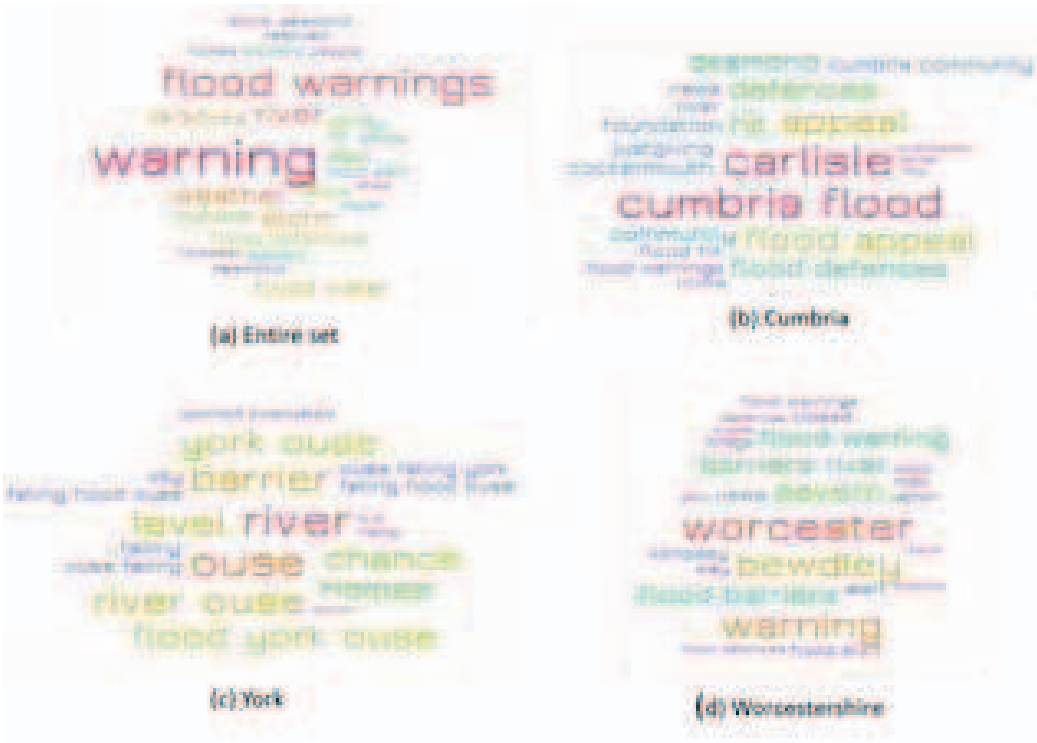
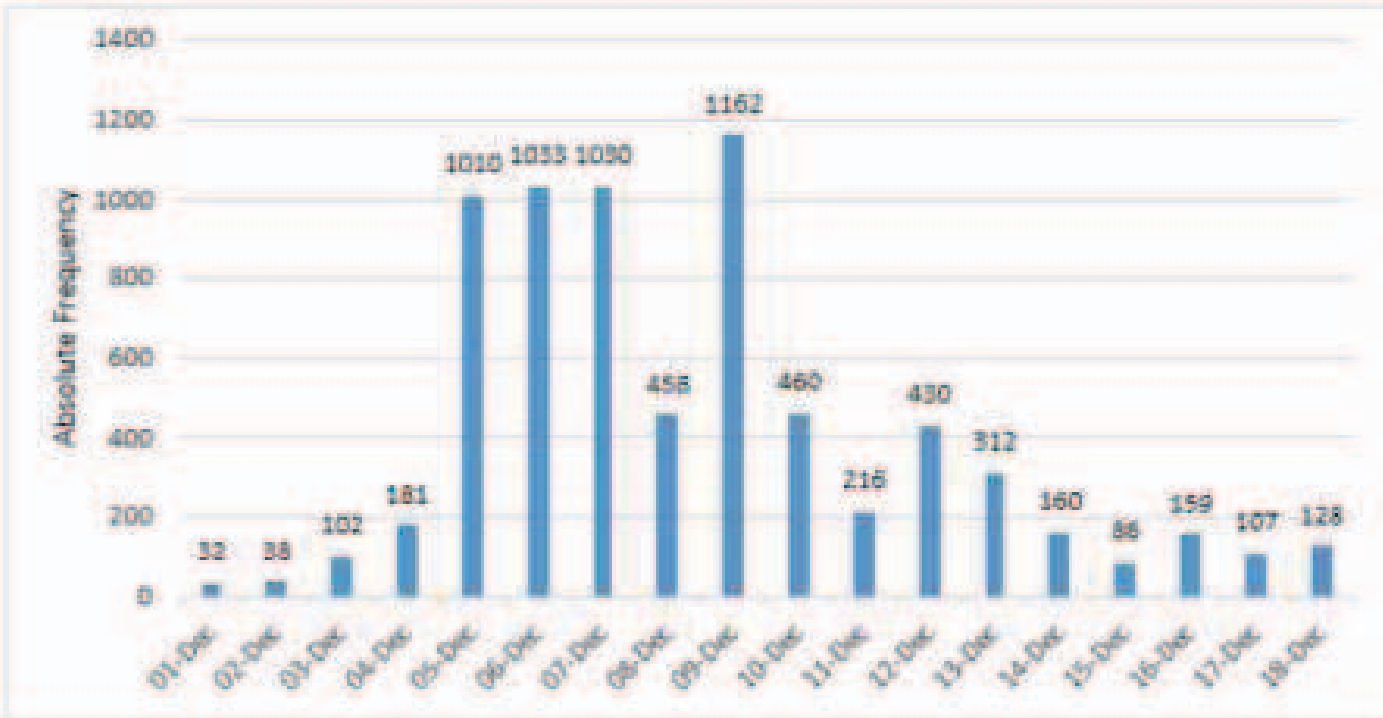
The following diagrams illustrate the distribution of discrepancies across different data categories, highlighting the spatial and semantic variability that confuses automated models.
Conclusion & Future Outlook
This paper serves as a reality check for the "automation-first" approach in social media analytics. To move forward, researchers must explore:
- Context-Aware Models: Moving beyond keyword-based filtering toward LLM-based reasoning.
- Human-in-the-loop (HITL): Integrating manual verification at critical failure points identified by the discrepancy tables.
- Negative Constraint Training: Explicitly training models to recognize what isn't a location or spam to reduce the False Positive ceiling.
Final Takeaway: Automation is a powerful tool, but until the 20% labeling gap is narrowed, human oversight remains the gold standard for high-integrity data moderation.