
Smart Steps: Designing a Data-Driven Shoe Suggestion System for Children
Data Mining and Web-Based Children Shoe Suggestion System
This paper presents a web-based recommendation system for children's shoes (K1-P3) using data mining techniques. It compares Decision Trees, K-Nearest Neighbors (KNN), and Neural Networks to predict suitable shoe sizes and brands based on physiological foot attributes.
TL;DR
Finding the perfect shoe for a growing child is more science than art. This research develops a web-based system that uses Decision Tree classification to suggest the most appropriate shoe brands and sizes. By analyzing foot length, sole curves, and toe styles, the system achieved up to 99% accuracy, outperforming complex Neural Networks in small-scale pediatric data environments.
Background & Positioning
In the landscape of recommendation systems, most platforms focus on consumer behavior (collaborative filtering). This work, however, is a physiological recommendation system. It sits at the intersection of data mining and pediatric ergonomics, aiming to solve the "comfort gap" in children's footwear by translating physical measurements into product SKU suggestions.
The Core Problem: Why is Fitting Children Hard?
Standard shoe sizing often ignores the morphological variety of young feet. Prior work in shopping suggestions frequently lacks the specific anatomical constraints required for children (K1-P3). Factors like:
- Sole Curve: Flat vs. Curved.
- Toe Features: Egyptian, Greek, or Square styles.
- Gender-based Growth Patterns.
The authors observed that most available shoes are designed for a "standard" foot, which doesn't account for these nuances, leading to discomfort or developmental issues.
Methodology: The Power of Decision Trees
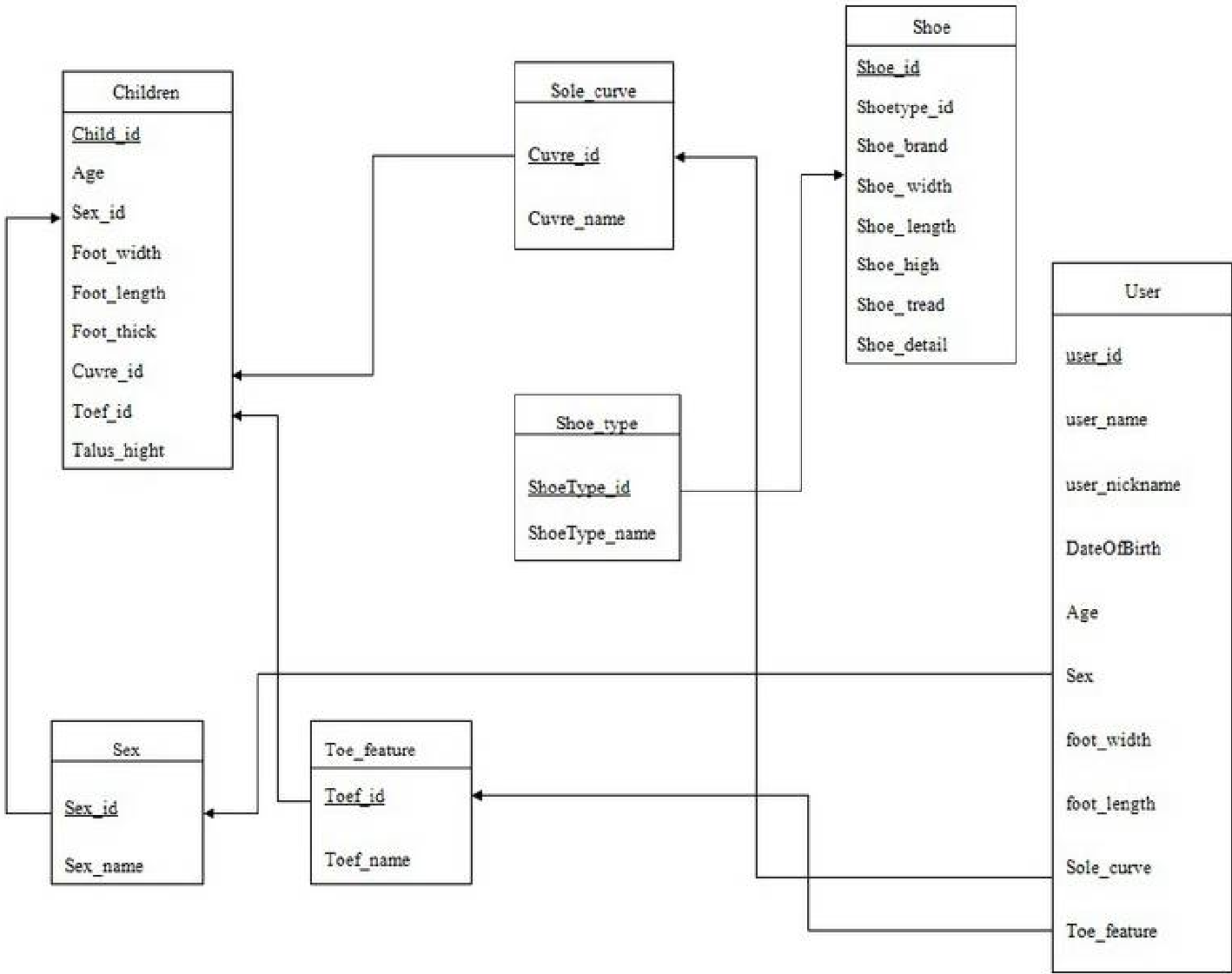
The researchers mapped out a data pipeline starting from manual measurement collection in schools to a structured E-R database diagram.
Architectural Flow
The system follows a classic data mining workflow:
- Data Collection: 120 pairs of student shoes, 70 pairs of sport shoes.
- Preprocessing: Feature extraction covering length, width, thickness, and style.
- Classifier Selection: Comparing KNN, Neural Nets (NN), and Decision Trees using the Weka toolset.
The Decision Tree was the standout performer. Its hierarchical nature mirrors how a human expert would choose a shoe: first considering the most dominant factor (length), then refined by secondary factors (sole curve), and finally specific constraints (sex/brand).
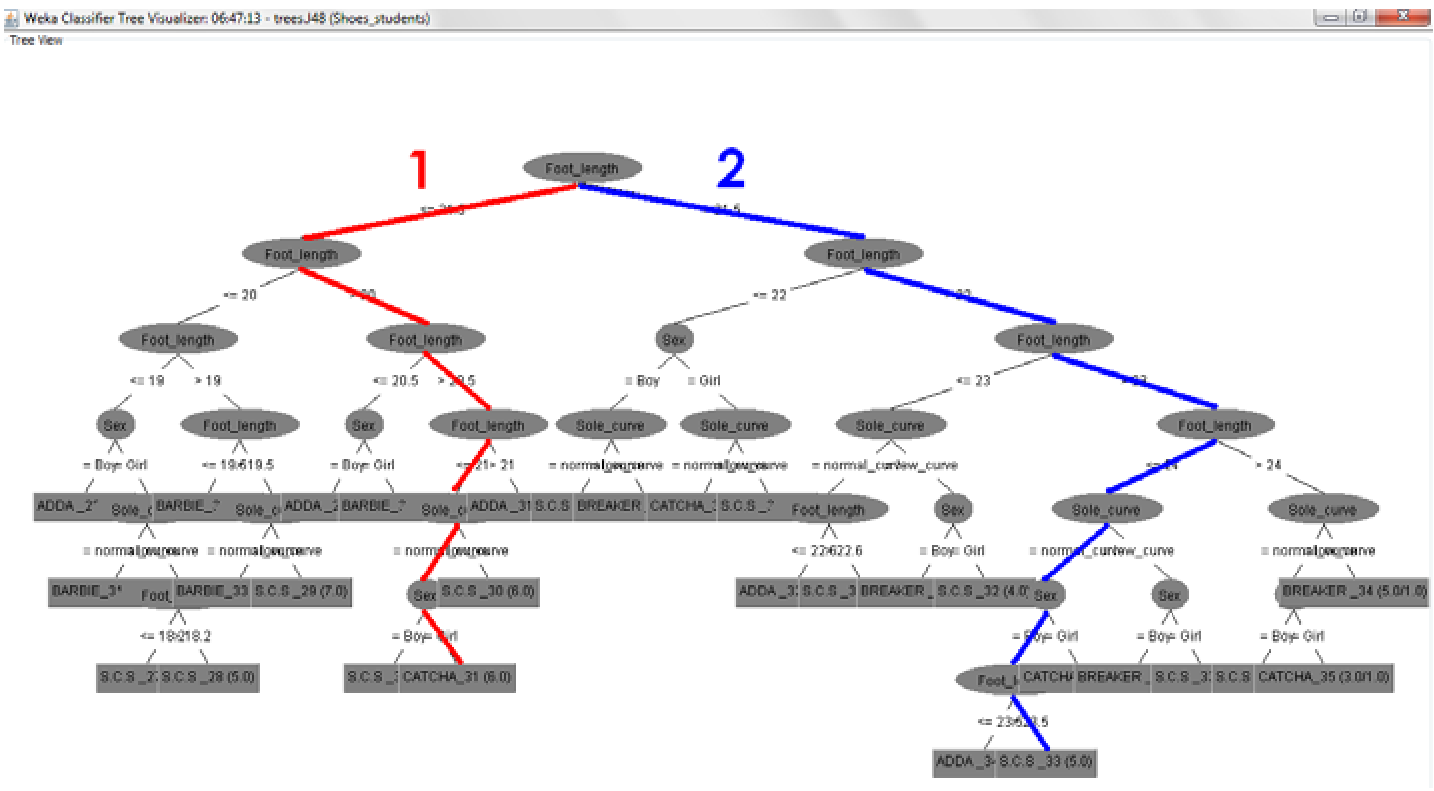 In the figure above, we see the model prioritizing foot length before splitting into sole curve and gender branches.
Experiments & Results: Interpretable AI Wins
The most striking result from this study is the failure of Neural Networks to match the performance of Decision Trees.
Performance Comparison
| Shoe Type | NN Accuracy | KNN Accuracy | Decision Tree |
|---|---|---|---|
| Student Shoes | 53% | 56% | 82% |
| Sport Shoes | 76% | 54% | 98% |
| Leisure Shoes | 80% | 55% | 99% |
Why did Decision Trees win? In datasets where a single feature (foot length) has an overwhelming correlation with the target (size), Decision Trees capitalize on this "information gain" immediately. Neural Networks, which often require larger datasets to tune weights effectively, likely overfitted or struggled with the low sample density (20-30 students per grade).

Deep Insight & Conclusion
This research highlights a crucial lesson in Applied AI: Model complexity must match data availability.
Limitations
The authors candidly note that "foot styles do not influence the classification much" in this specific study. This is likely due to a localized sample (Thai students in one area) where foot morphology was relatively homogenous.
Final Takeaway
The developed web interface proves that integrating data mining into e-commerce can move beyond "Customers who bought this also bought..." to a more precise "This fits your specific anatomy." Future iterations could enhance results further by incorporating 3D imaging to capture foot thickness and volume more accurately.
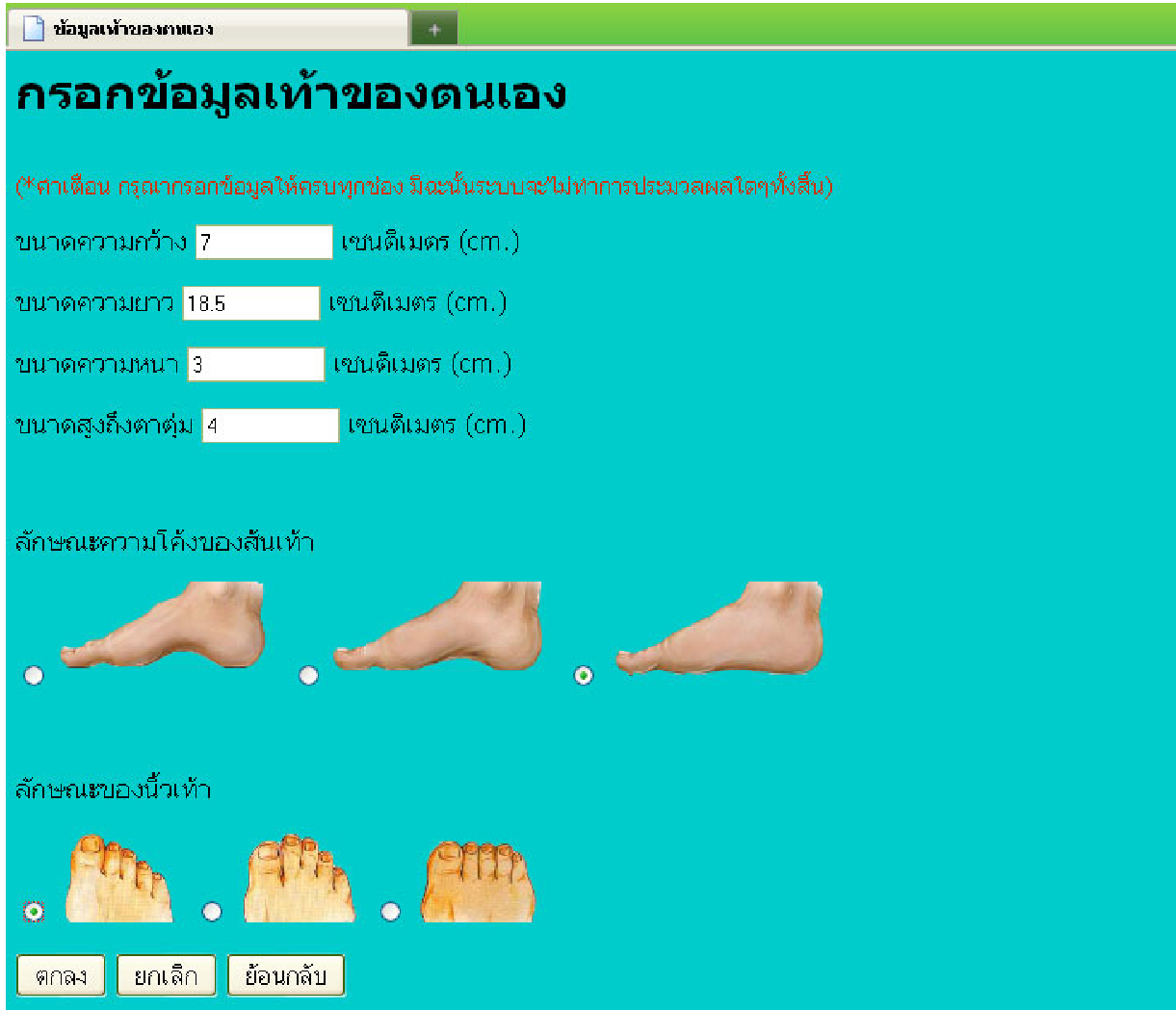 The prototype system allows parents to input precise foot measurements to receive a high-confidence recommendation.