
Designing a Datawarehouse for Education: Bridging Business Intelligence and Academic Success
Datawarehouse design for educational data mining
The paper presents a comprehensive guide for designing a Datawarehouse (DW) tailored for Educational Data Mining (EDM) within a Knowledge Management Framework (KMF). It specifically compares the Inmon and Kimball methodologies, ultimately recommending the Kimball bottom-up approach to support institutional decision-making and academic performance analysis.
TL;DR
Educational institutions are data-rich but insight-poor. This paper provides a roadmap for building a Datawarehouse (DW) specifically for Educational Data Mining (EDM). By comparing the industry's gold standards—the Inmon and Kimball methodologies—the authors demonstrate why a decentralized, bottom-up approach (Kimball) is the superior choice for the often-fragmented world of academia.
The "Value Chain" Crisis in Education
In the corporate world, Business Intelligence (BI) is a well-oiled machine. In education, however, data is often scattered across departments that operate as "islands"—admissions, human resources, and research often use incompatible systems.
The core challenge isn't just storing this data; it’s transforming it into Knowledge. Traditional DW designs fail here because they don't account for the unique "value chain" of an educational institution, which prioritizes academic efficiency and research development over mere transactional profit.
Methodology Deep Dive: Inmon vs. Kimball
The paper highlights a classic architectural debate:
- Bill Inmon (Top-Down): Build a massive, centralized enterprise DW first, then create data marts. It’s consistent and robust but expensive and slow to implement.
- Ralph Kimball (Bottom-Up): Create specific "Data Marts" for individual business units first using Dimensional Modeling. These are faster to build and deliver immediate value.
| Feature | Inmon (Top-Down) | Kimball (Bottom-Up) |
|---|---|---|
| Cost | High Initial Investment | Low Initial Cost |
| Time | Long Start-up | Quick Wins |
| Integration | Enterprise-wide | Individual areas |
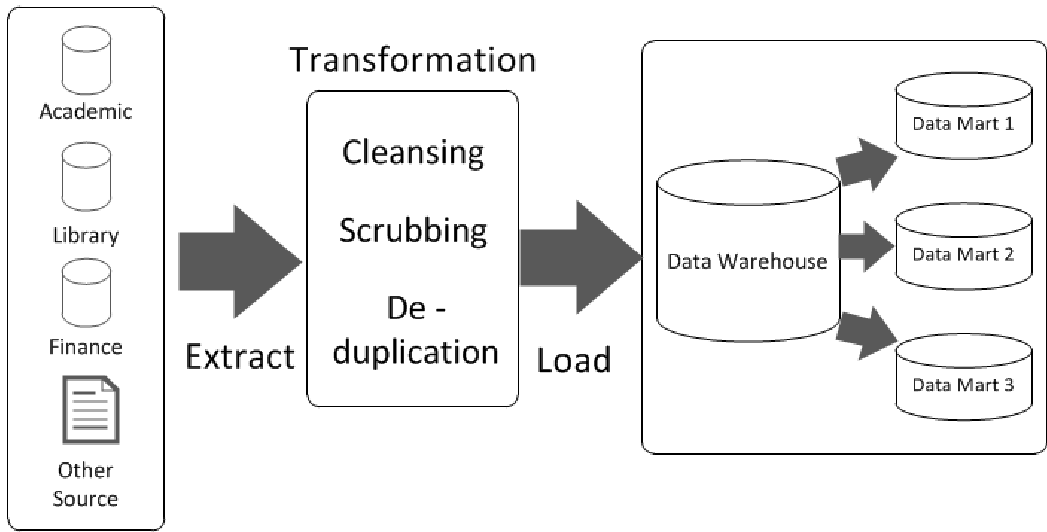 Figure 1: Comparison between centralized (Inmon) and decentralized (Kimball) logic.
The Case Study: A Private University's Journey
The authors applied their framework to a private university facing a five-year accreditation cycle. They used a Stakeholder Power-Interest Grid to identify "Key Players" (such as the Planning and Registration departments) whose data was most critical.
The Strategy
Due to limited budget and the presence of fragmented data (ranging from SQL databases to messy flat files), the team chose the Kimball Methodology.
The Architecture
They developed a Star Schema, centering on a "Student Fact Table." This allows BI analysts to look at a student's record and immediately slice the data by various dimensions: Time, Academic Program, and Welfare Status.
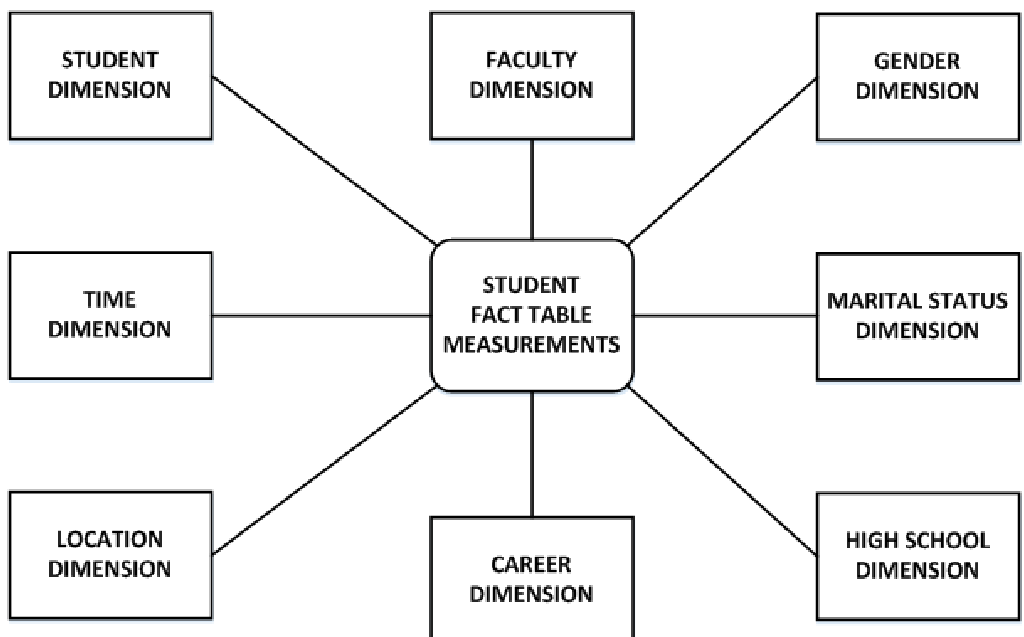 Figure 2: The multidimensional model used for analyzing student behavior.
Why This Matters (The "Why")
The brilliance of this work lies in its pragmatism. By acknowledging that most universities cannot afford a "perfect" centralized system, the authors validate the Data Mart approach as a legitimate academic research tool.
The ETL (Extract, Transform, Load) process remains the hardest part—the paper notes that manual data cleansing was necessary because departmental data wasn't updated daily. However, once loaded into the DW, Educational Data Mining (EDM) can take over, discovering hidden patterns like dropout risks or graduation trends that standard reporting would miss.
Critical Insights & Future Outlook
- Flexibility is King: Educational environments change rapidly. The Kimball approach allows for "Slowly Changing Dimensions," making it easier to manage academic restructuring.
- The Human Factor: The use of a Knowledge Management Framework (KMF) ensures that the tech doesn't exist in a vacuum; it supports the people and processes of the institution.
- Limit: The paper primarily explores internal data. Integrating external "Big Data" (social media, labor market trends) remains a frontier for future EDM research.
Conclusion
This paper serves as a blueprint for university IT leaders. It proves that with the right design methodology, even a fragmented institution can build a powerful BI engine to drive accreditation and academic success.