
De-anonymizing Social Networks via Profile Similarity: A Fast and Robust Approach
De-anonymizing Social Networks User via Profile Similarity
This paper introduces a novel profile matching method for de-anonymizing social network users by concatenating text-based attributes (Name, Username, Location, URL) into a single feature string. By applying similarity measures like N-gram distance, the approach achieves a high reliability of over 95% recall at 98% precision on Twitter and Github datasets while significantly reducing computational overhead.
Executive Summary
TL;DR: Researchers have developed a streamlined method to link user identities across different platforms (like Twitter and GitHub) by merging public profile attributes into a single "identity string" and measuring similarity. This method maintains SOTA-level accuracy (95%+ Recall) while being nearly 15 times faster than traditional attribute-by-attribute matching techniques.
Positioning: This work moves away from heavy, classifier-based matching towards a high-efficiency string-similarity logic, addressing the practical challenges of scalability and missing data in the wild.
The Problem: The Sparse and Massive Web
Modern users are fragments. A programmer might be an active contributor on GitHub, a political commentator on Twitter, and a hobbyist photographer on Tumblr. Linking these identities serves recommendation engines and security analysts but faces two massive hurdles:
- Attribute Sparsity: Users rarely fill out every field.
- Scalability: Comparing 10+ attributes for millions of pairs creates a "combinatorial explosion" of similarity matrices that traditional classifiers struggle to process in real-time.
Methodology: The Power of Concatenation
The authors’ core insight is that while an individual attribute (like "Location") might be vague, the sequence of Name + Username + Location + URL forms a highly unique "fingerprint."
The Workflow
- Selection: Extract text-based fields (Name, Username, Location, URL).
- Fusion: Concatenate these fields into a single long string ().
- Similarity Measurement: Apply the N-gram distance (breaking strings into characters) to compare the source profile string with candidates.
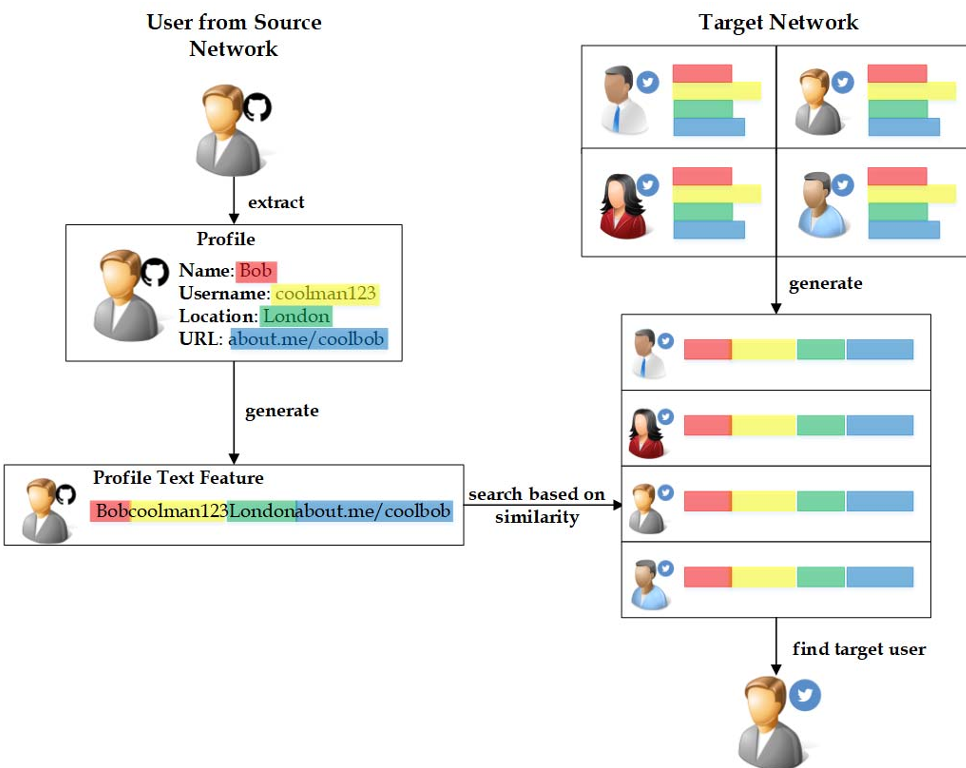 Fig 1: The conceptual framework of linking source network identities to target networks.
Why N-gram?
Unlike exact matching, N-gram distance is resilient to minor typos or slight variations in how a user might list their name or location across sites. The study found (trigrams) to be the "sweet spot" for balancing uniqueness and flexibility.
Experimental Results
The researchers tested their method on a dataset of users recovered via About.me.
1. Performance Stability
The method proved surprisingly robust. Whether the attributes were ordered "Name-Username-Location" or "Location-Username-Name," the F1-score remained stable, proving that the co-occurrence of information matters more than the specific sequence.
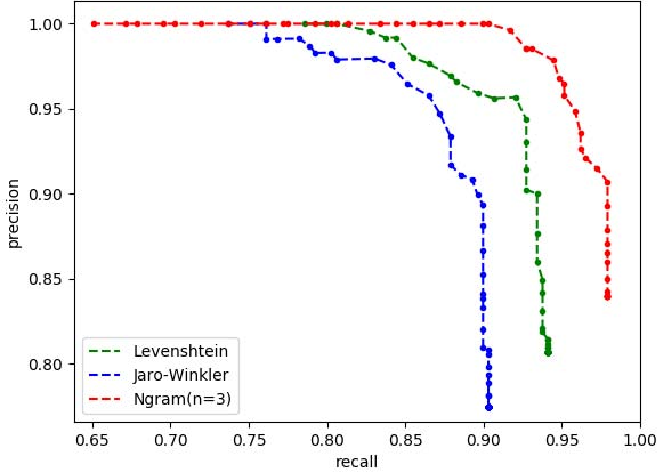 Fig 2: Comparison of different similarity measures. N-gram significantly outperforms Levenshtein and Jaro-Winkler.
2. Efficiency Gains
Compared to a "Basic Method" (calculating individual attribute similarities and feeding them into an SVM or Decision Tree), the proposed method eliminated the need for heavy similarity matrix generation. The time dropped from 37.02 seconds to 2.52 seconds for a standard batch—a vital improvement for real-world deployment.
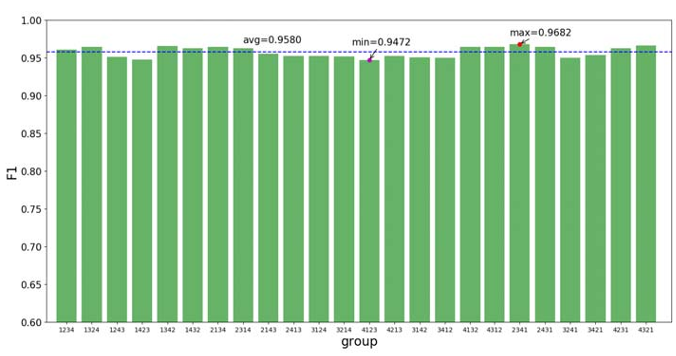 Fig 3: The proposed N-gram method achieves reliability comparable to SVM while being significantly faster.
Critical Insight & Conclusion
Takeaway
The success of this method highlights an "Inductive Bias" in social media usage: users tend to be consistent in their collective self-presentation even when they are inconsistent in individual fields. By treating the profile as a single text block, we can bypass the "missing value" problem that plagues structured data models.
Limitations
- Adversarial Users: The method assumes users aren't actively trying to hide. A user intentionally using different aliases across sites would easily defeat this string-similarity approach.
- Common Names: For extremely common names (e.g., "John Smith"), the method still relies heavily on the "Username" or "URL" fields to provide the necessary discriminative power.
Future Outlook: This approach sets a baseline for "lazy" but effective de-anonymization. Future iterations could integrate character-level embeddings (like FastText) to further improve the semantic understanding of user profiles beyond simple string distance.