
Digital Immortality and the Ghost in the Machine: Navigating Death in Virtual Worlds
Death, Social Networks and Virtual Worlds: A Look Into the Digital Afterlife
This paper explores the socio-technical implications of death within Social Networking Sites (SNS) and virtual worlds like Second Life. It categorizes the states of digital existence and examines how online platforms serve as tools for memorialization, bereavement, and the preservation of digital legacies.
TL;DR
As our lives become increasingly tethered to digital realms, we face a new existential crisis: What happens to our "digital selves" when our physical bodies cease to exist? This paper investigates the intersection of bereavement and technology, examining how social networks and 3D virtual worlds like Second Life transform into digital necropolises. The authors define the "Four States of Being" and warn of the legal and social entanglements of our digital legacies.
Background: The Persistence of the Profile
In the analog era, death was a relatively finite event. Today, a user's "Narrative Bits" (or Narbs) — posts, photos, and 3D creations — form a composite identity that frequently outlives the biological creator. The paper positions the deceased as "extreme users"—individuals with unique technical needs that existing UI/UX frameworks are ill-equipped to handle.
The Problem: When Data Outlives the Soul
The core tension lies in control. Once a user is gone, their digital assets (which may have significant monetary or sentimental value) often become locked behind Terms of Service (ToS) agreements.
- Privacy vs. Remembrance: Should a profile be frozen as a "memorial" (as seen in Facebook's early protocols) or deleted to protect privacy?
- Virtual Friction: In 3D worlds, the aesthetics of death (virtual graveyards) often clash with the "living" residents, leading to digital neighbor disputes.
Methodology: The Four States of Being
The authors provide a foundational framework to categorize the relationship between physical reality and virtual presence:
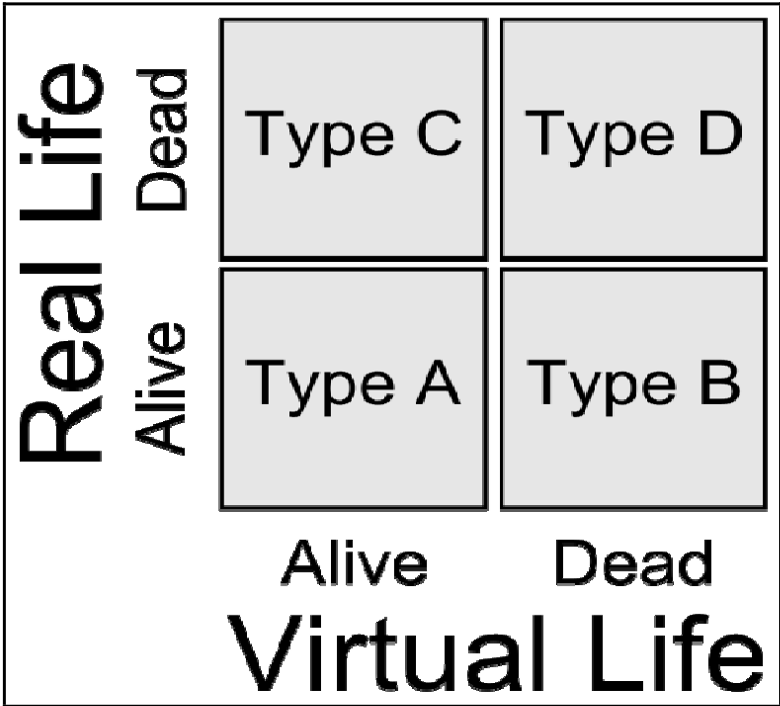
- Type A: Alive in both worlds (Active User).
- Type B: Physically alive, but "virtually dead" (Account deleted or abandoned, sometimes marked by a "virtual funeral").
- Type C: Physically deceased, but virtually active (The "Digital Ghost" profile).
- Type D: Dead in both realms (The ideal endpoint for some, a loss of history for others).
Case Study: Rituals in the Metaverse
The paper highlights fascinating cultural adaptations in Second Life. Users have constructed elaborate, interactive memorials (like the USS Arizona Memorial) where avatars can pay respects.
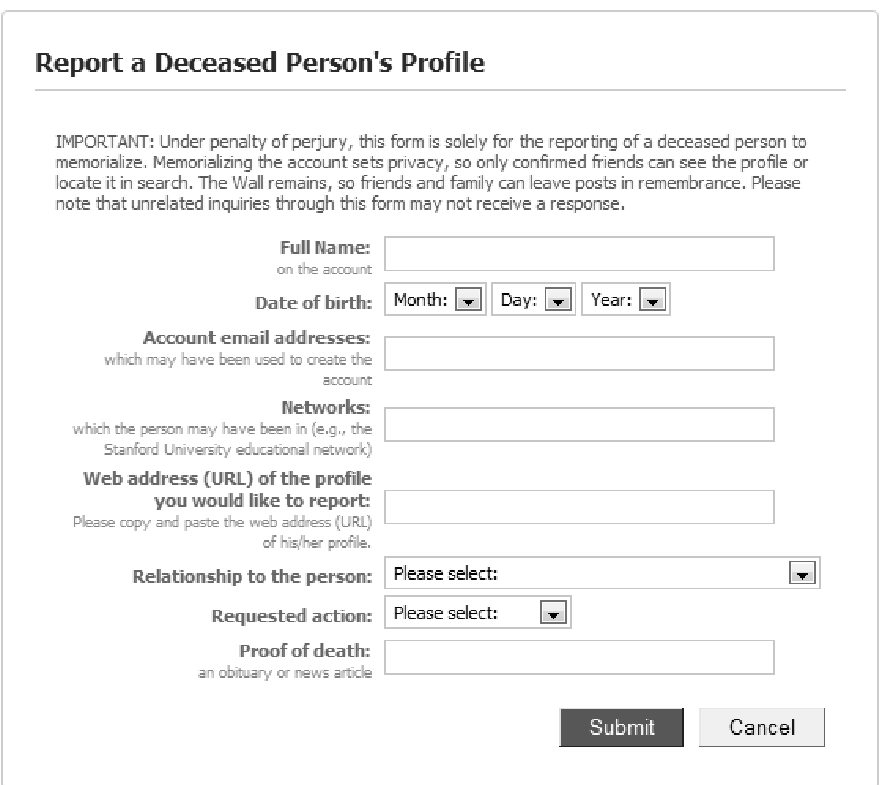 Figure: The USS Arizona Memorial in Second Life demonstrates how 3D spaces provide immersive mourning experiences that traditional SNS cannot.
However, these practices aren't always welcomed. The authors note instances where "virtual neighbors" complained about seeing gravestones from their virtual bedroom windows, proving that even in a digital world, the "Not In My Backyard" (NIMBY) sentiment applies to death.
Results: The Grieving Timeline
Research into MySpace comments confirms that digital profiles serve as a "living" connection for the bereaved. Support spikes aren't random; they correlate precisely with:
- Anniversaries of death.
- Birthdays.
- Major holidays.
This suggests that the digital legacy is not just a static archive, but a dynamic space for ongoing social support and "conversational therapy" for those left behind.
Critical Insight & Advice
The authors conclude with a pragmatic warning: Prepare your "Black Box" of secrets.
- Digital Wills: Legal counsel is now necessary for digital assets.
- Final Status: Trusting a "digital executor" with a pre-written final message ensures you maintain the last word in your online narrative.
- Pseudonyms: Use them for "secret" activities to prevent accidental exposure to surviving family members.
Conclusion
This work serves as a precursor to the modern discussions of the Metaverse and AI-reincarnation. It reminds us that while technology offers a form of immortality, it currently lacks the legal and social infrastructure to handle the messy, human reality of passing away. As our real and virtual lives continue to entangle, the "Ghost in the Machine" will only become a more prevalent resident of our digital future.