
Decentralizing the Control Room: Why "Dots on a Map" Can't Replace Human Conversation
Decentralizing the Control Room: Mobile Work and Institutional Order
This ethnographic study investigates air traffic management at Arlanda Airport, focusing on snow clearance operations. It analyzes the tension between a new "SnowCard" situational awareness display and traditional VHF radio communication, finding that personnel consistently prefer the latter for complex coordination.
TL;DR
In the high-stakes world of airport snow clearance, a new digital "SnowCard" system intended to modernize coordination by showing vehicle locations was largely ignored by workers. This paper reveals that the "old" technology—VHF radio—remains superior because it facilitates the messy, essential human work of negotiation and repairing misunderstandings that a silent map simply cannot handle.
Background: The Radical Shift to CNS
As air traffic grows, the traditional centralized "Control Tower" model is reaching its breaking point. To solve this, aviation authorities introduced CNS (Communications, Navigation, and Surveillance)—a concept aimed at decentralizing responsibility by giving pilots and ground crews more information. The centerpiece for ground crews at Arlanda Airport was the SnowCard, a "situational display" that shows other vehicles and planes as dots on a moving map.
The Friction Between Design and Practice
The designers of SnowCard operated on a specific logic: If everyone knows where everyone else is, we don't need to talk as much. They viewed radio talk as a source of "technical insufficiency" and potential misunderstanding.
However, the ethnographic findings by Juhlin and Weilenmann show a starkly different reality. The snow crews—responsible for clearing a 3.3km runway in just 8 minutes—rarely looked at the screens. When asked why, one driver pithily replied: "I can tell where the others are by looking out the windshield."
Methodology: Ethnography "In the Cab"
The researchers performed a deep dive into the daily lives of the sweeping groups—eight vehicles moving in a synchronized "falling line" (see below).
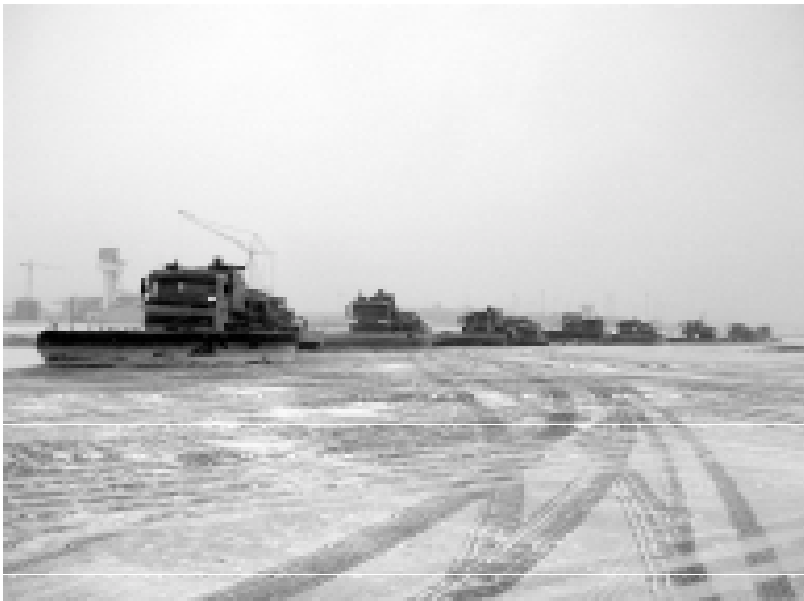 Figure 1: The synchronized formation of snow sweepers on the runway.
By recording and transcribing radio talk, the authors identified that work on the ground is already informally decentralized. Ground crews don't just follow orders; they negotiate them based on what they see through their windshields.
Why Radio Still Wins: The Power of Negotiation
The study highlights three areas where the digital system failed while the "primitive" radio succeeded:
- Repairing Misunderstandings: Radio allows for quick, conversational shifts to fix errors. In one instance, when the Tower gave a wrong direction (East instead of West), the lead sweeper corrected them based on visual evidence of departing planes.
- Ascribing Intention: A dot on a screen tells you where a vehicle is, but not what the driver intends to do next. Radio allows drivers to negotiate "next actions" in real-time.
- Managing Contingencies: When a novice driver's machine malfunctioned, the crew switched to a private channel (violating formal rules) to troubleshoot. This "workaround" was essential for safety, yet the SnowCard system provided no way to signal "I'm having mechanical trouble."
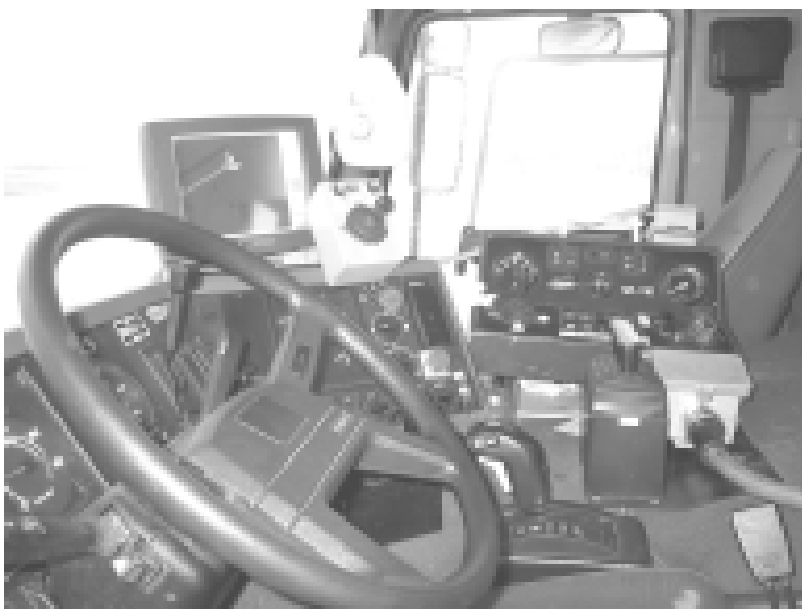 Figure 2: The SnowCard display (top left) versus the cluttered reality of the vehicle cab.
Critical Insight: The "Institutional Order" Problem
The study makes a brilliant observation about institutional order. The formal manuals at the airport are highly hierarchical and centralized (e.g., "NO UNNECESSARY CHAT"). However, the real work is successful precisely because crews break these rules—negotiating with the Tower, asking for permissions, and even correcting their superiors.
The SnowCard failed because it was designed to support the formal decentralization (giving more info) without acknowledging that informal decentralization (negotiation) is how work actually gets done.
Conclusion & Design Implications
Juhlin and Weilenmann argue that we cannot design coordination technologies by treating humans like autonomous sensors.
Future Design Lessons:
- Don't Compete with the Windshield: If a driver can see it through the glass, don't just put it on a screen.
- Integrate, Don't Replace: Instead of replacing radio, displays should augment it (e.g., showing which radio channel another vehicle is currently using).
- Support the "Unspoken": Systems must allow for the negotiation of intentions, not just the reporting of coordinates.
In the end, the study reminds us that in complex, high-reliability environments, the "chat" we often try to eliminate is actually the glue that holds the system together.