
Decision Tree for Tracking Learner’s Emotional State: Decoding the Rhythm of the Learning Mind
Decision Tree for Tracking Learner’s Emotional State Predicted from His Electrical Brain Activity
2008-08-12
Summary
Problem
Method
Results
Takeaways
Abstract
The paper presents a machine learning-based approach to track emotional transitions in learners using EEG-derived brainwave data. By employing a Decision Tree classifier, the authors successfully modeled the temporal dynamics of eight learning-related emotions, achieving a prediction accuracy of 63.11%.
## TL;DR
Researchers from the University of Montréal have developed a method to predict how students transition between emotional states like confusion, frustration, and "eureka" moments. By analyzing EEG brain activity and the timing of emotional shifts, they utilized Decision Trees to reach a **63.11% prediction accuracy**, offering a blueprint for more empathetic Intelligent Tutoring Systems (ITS).
## Background: Why Emotions Matter in Learning
In the realm of Artificial Intelligence in Education (AIEd), the "cognitive" aspect—what a student knows—has been well-studied. However, the "affective" aspect—how a student feels—remains a frontier. Emotions such as boredom or frustration are not just side effects; they are fundamental to the cognitive process. Existing systems often fail to adapt because they cannot "see" the learner's emotional trajectory.
## The Motivation: From Snapshots to Sequences
Previous work by the authors established that EEG can detect *current* emotions with high accuracy (up to 82%). However, this paper pushes further: **If we know a student is frustrated now, can we predict what they will feel next?**
The insight here is that emotions aren't static; they are transitions. By understanding the "staying power" of an emotion, a computer tutor can intervene *before* a student checks out mentally.
## Methodology: Mapping the Affective Brain
The team exposed 17 learners to the International Affective Picture System (IAPS), a standardized set of images designed to evoke specific emotional responses. While the students viewed the images, their brainwaves (Delta, Theta, Alpha, and Beta) were recorded via EEG.
### Frequency Bands and Mental States
The study maps brainwave activity to mental states, providing the biological foundation for the emotional classification:
- **Delta (δ):** Deep sleep.
- **Theta (θ):** Creativity and drifting thoughts.
- **Alpha (α):** Calmness and abstract thinking.
- **Beta (β):** High alertness and agitation.
### The Decision Tree Logic
Instead of using "black box" models, the authors chose Decision Trees for their interpretability. The model looks at the current emotion, the type of stimulus, and most importantly, **duration ($\Delta t$)**.
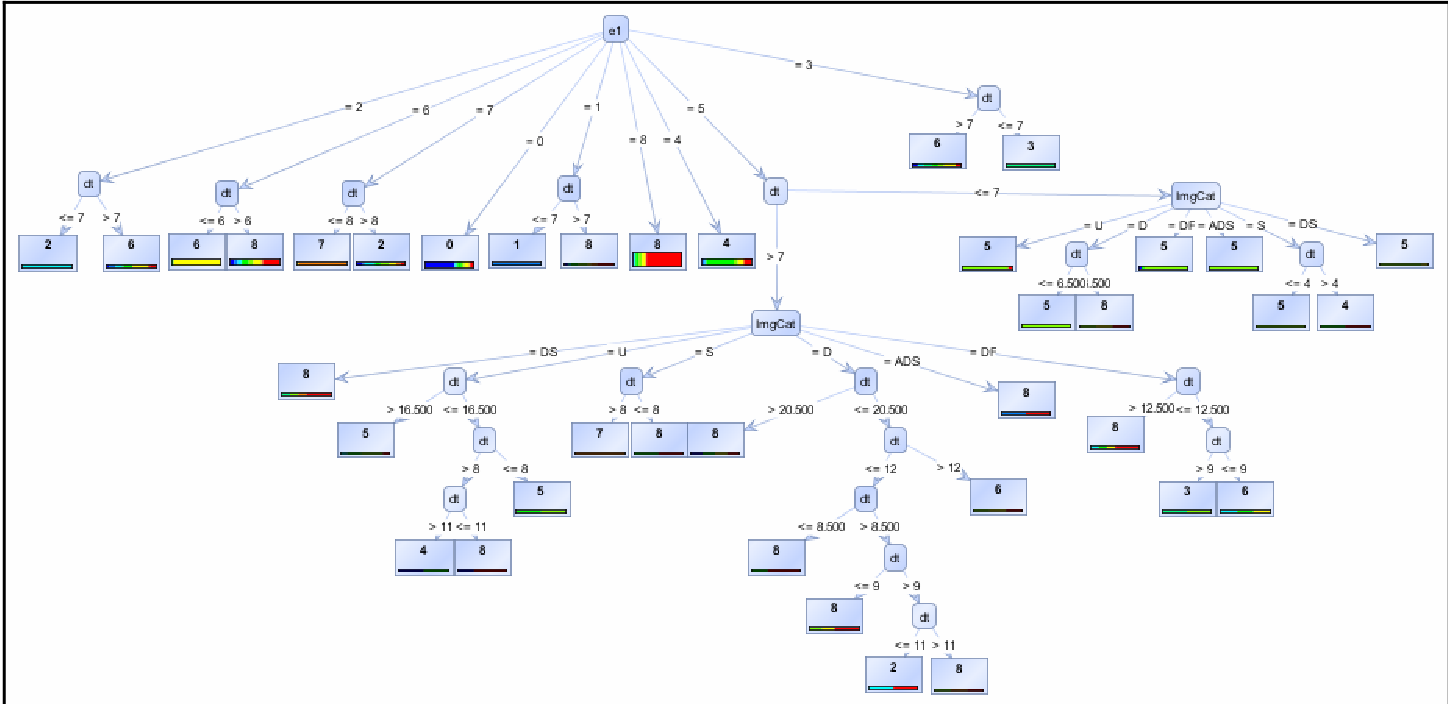
*Fig 1: The resulting emotional transition diagram derived from the Decision Tree.*
## Experimental Results: The 7-Second Rule
The experimental results revealed a fascinating physiological threshold: **The average duration of an emotion during these tasks is between 6 and 9 seconds.**
| Algorithm | Accuracy | Kappa |
| :--- | :--- | :--- |
| **Decision Tree** | **63.11%** | 0.534 |
| Random Forest | 63.12% | 0.532 |
| Rule Learner | 60.85% | 0.508 |
Interestingly, the Decision Tree performed nearly identically to the complex Random Forest, making it the superior choice for real-time deployment in tutoring software due to its lower computational overhead.
## Critical Insight: The Disgust Exception
A unique finding in the study was that for most emotions (anger, confusion, eureka), the *next* state was determined almost entirely by how long the student had been feeling the current emotion. The only exception was **Disgust**, where the specific category of the visual stimulus (the picture content) played a statistically significant role in determining the transition.
## Conclusion & Future Outlook
The ability to track emotional transitions with ~63% accuracy is a significant step toward "Affective ITS."
### Takeaways:
- **Predictive Pedagogy**: Tutors can now predict when a student is about to move from "Confusion" to "Frustration."
- **Intervention Timing**: If the "Eureka" state typically lasts 7 seconds, the system knows exactly when to present the next challenge to maintain "Flow."
### Limitations:
- **Small Sample Size**: 17 participants is a standard start for EEG studies but needs scaling for diverse populations.
- **Controlled Stimuli**: Viewing pictures (IAPS) is different from the complex stress of solving a real mathematical problem.
The future of education lies in systems that respond not just to what we type, but to the very rhythm of our brainwaves.