
DeciTrustNET: Building Tamper-Resilient Trust in the Age of Malicious Social Dynamics
DeciTrustNET: A graph based trust and reputation framework for social networks
DeciTrustNET is a novel graph-based trust and reputation framework designed for large-scale social networks. It integrates interaction history, profile similarity, and temporal behavior tracking to establish tamper-resilient trust, achieving over 75% precision in environments where up to 80% of users are malicious.
TL;DR
DeciTrustNET is a sophisticated graph-based framework designed to secure social networks against manipulation. By distinguishing between Global Reputation and Pairwise Trust, and introducing a temporal "Adaptation to Change" metric, it ensures that users cannot simply "game" the system through sudden behavioral shifts or malicious cliques.
Problem & Motivation: The Fragility of Online Trust
Most of our digital life relies on Electronic Word of Mouth (eWOM). Whether you are booking an Airbnb or buying from a third-party seller on Amazon, you are trusting a score. However, these scores are fundamentally broken:
- Anonymity & Distribution: Vulnerable to "Slandering" (fake bad reviews) or "Self-promotion" (fake good reviews).
- The Cold Start: New users have no history, making them invisible or easily faked.
- Whitewashing: Malicious actors behave well to build a score, execute a scam, and then reset their identity.
The authors of DeciTrustNET argue that trust shouldn't just be an average of stars; it should be a reflection of the quality of your network position and the stability of your behavior over time.
Methodology: The Anatomy of DeciTrustNET
DeciTrustNET moves away from static scoring to a dynamic, graph-based interaction model. It treats the social network as a directed influence graph where weights are determined by three core pillars:
1. The Dual-Supervision Feedback
Unlike systems where only the "rated" user is scrutinized, DeciTrustNET implements Rating-Reputation (RR). If User A gives a rating to User B that deviates wildly from the consensus (and B's established history), User A’s ability to influence future scores is downgraded. This penalizes "unfair raters" and rewards "honest evaluators."
2. Temporal Behavior Evolution (BE)
This is arguably the most critical component. The framework tracks:
- Historical Evolution (Hist): An average of reputation over time.
- Adaptation to Change (AC): A penalty function that identifies sudden spikes or drops in behavior.
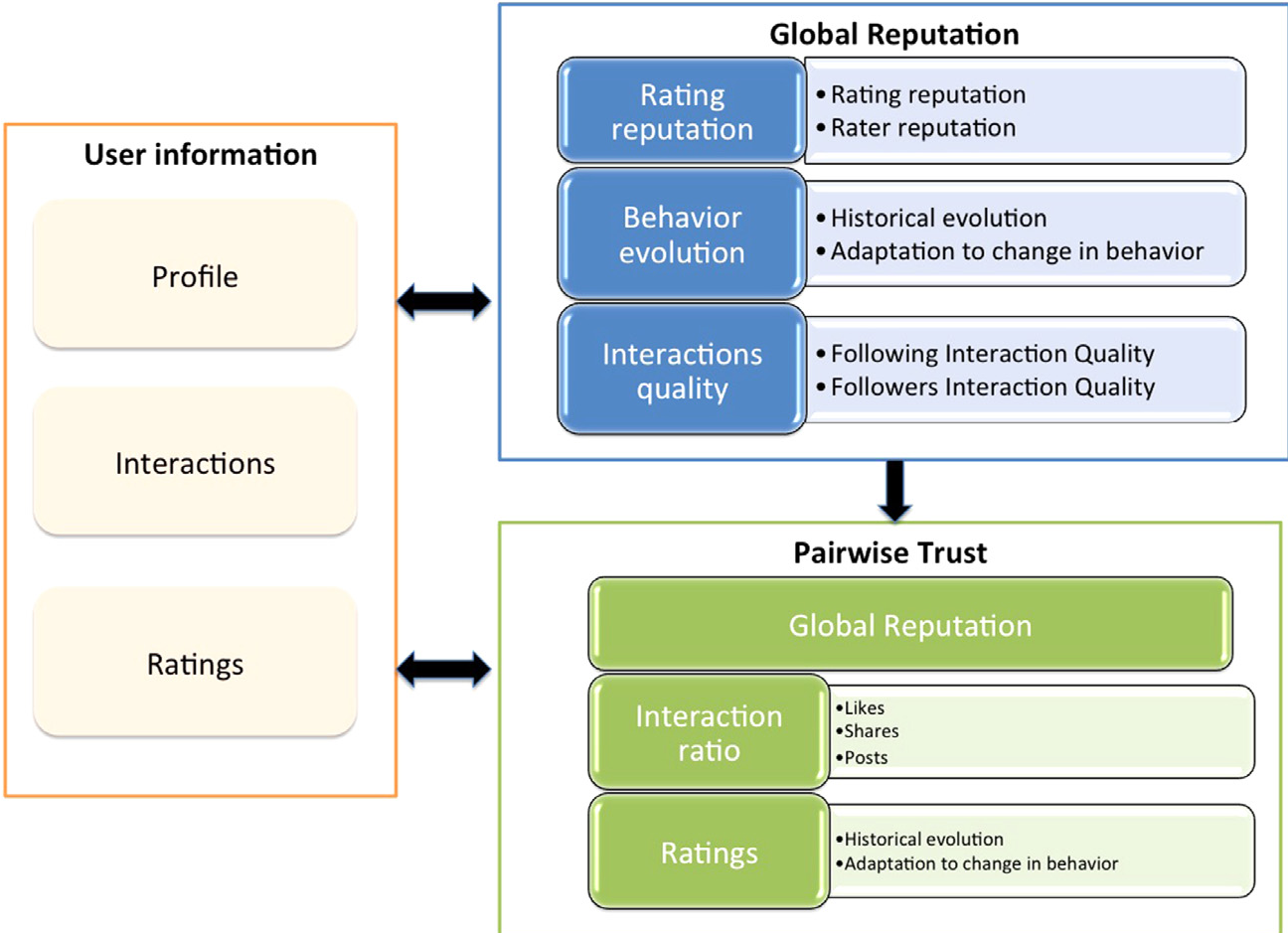 Figure 1: Conceptual components of the DeciTrustNET framework.
3. Graph-Based Interaction Quality
Borrowing from centrality theory (like Google's PageRank), the system calculates Interaction Quality (GIq). It posits that trust is transitive: if you are interacted with by highly reputable users (Followers), your own reputation increases. This makes it extremely difficult for a "clique" of low-reputation malicious users to boost each other.
Experiments: Stress-Testing the Framework
The researchers tested the system against a network of 500 agents over 1,000 rounds, introducing various attack vectors.
Resisting Malicious Saturation
Most trust systems collapse when malicious users exceed 30-40%. As shown in the benchmarking, DeciTrustNET maintains precision above 75% even when 80% of the network is malicious.
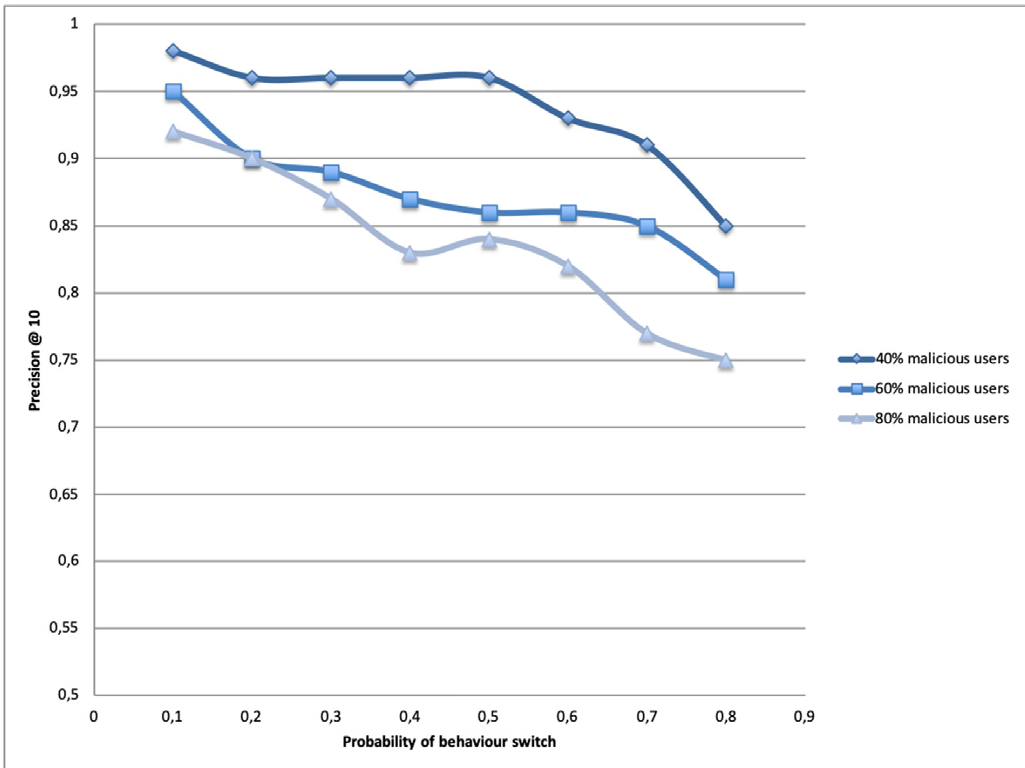 Figure 2: Performance comparison—DeciTrustNET vs SOTA models (SocialTrust/PCR) under high malicious pressure.
The "Sudden Switch" Test
The system was also tested against users who "flip" their behavior. By utilizing the AC metric, the Global Reputation (GR) of a flipping user drops almost instantly, whereas traditional models (where ) take too long to react, leaving the network vulnerable.
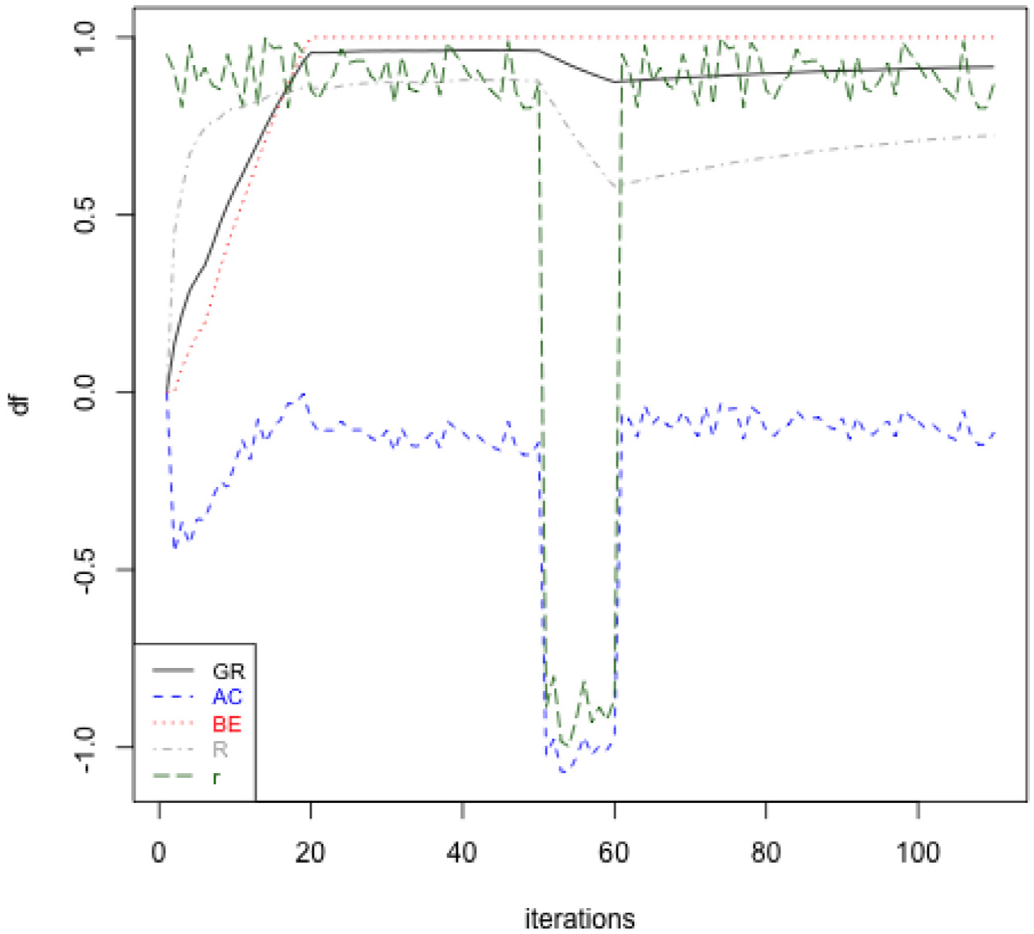 Figure 3: Impact of Adaptation to Change (AC) on Global Reputation when behavior shifts suddenly.
Critical Analysis & Conclusion
DeciTrustNET provides a robust mathematical foundation for what we intuitively know about trust: it's hard to earn and easy to lose.
Takeaway: The integration of Profile Similarity and Interaction Quality makes it a potent tool for e-health and e-democracy, where the cost of misinformation is high.
Limitations: The current model assumes a relatively high computational overhead for recalculating graph-wide reputations in real-time. In a network like Twitter (X) with millions of nodes, the "Global Interaction Quality" calculation would require significant optimization through distributed graph processing (e.g., GraphX or Spark).
Future Outlook: The next frontier for this work is Context-Aware Trust. A user might be highly reputable for "Technical Reviews" but completely untrustworthy for "Medical Advice." Integrating multi-granular linguistic analysis into these nodes will be the key to the next generation of resilient social information systems.