
CEPROQHA: Revolutionizing Cultural Heritage with Deep Multimodal Intelligence
Deep Learning and Cultural Heritage: The CEPROQHA Project Case Study
This paper introduces the CEPROQHA project, a comprehensive framework leveraging Deep Learning (DL) for the preservation, curation, and promotion of Digital Cultural Heritage (DCH). Key methodologies include multimodal classification for metadata enrichment, a hierarchical multitask learning framework, and specialized GANs for image inpainting, achieving significant accuracy improvements over single-modal baselines.
TL;DR
The CEPROQHA project addresses the critical challenges of Digital Cultural Heritage (DCH) by deploying sophisticated Deep Learning architectures. By moving away from "one-size-fits-all" models, the research introduces hierarchical classification, multimodal data fusion, and cluster-based Generative Adversarial Networks (GANs) to automate metadata annotation and restore damaged artifacts with unprecedented accuracy.
Context & Motivation: The Fragility of Memory
Cultural heritage is the bedrock of moral identity, yet it remains physically vulnerable and digitally underserved. While digitization (3D scanning and photography) has created vast repositories, these "Big Data" collections are often "dark"—unstructured, incompletely annotated, or physically damaged.
The CEPROQHA team identifies a major gap in existing AI for culture: most models treat cultural assets as generic image data, ignoring the rich textual context and the inherent hierarchical nature of museum collections (e.g., a carpet requires different metadata than a pottery shard).
Methodology: The CEPROQHA Three-Pronged Approach
1. Multimodal & Hierarchical Classification
Rather than relying solely on pixels, the authors argue that metadata prediction should be multimodal. By fusing visual features with existing textual fragments, the model gains a holistic understanding of the asset.
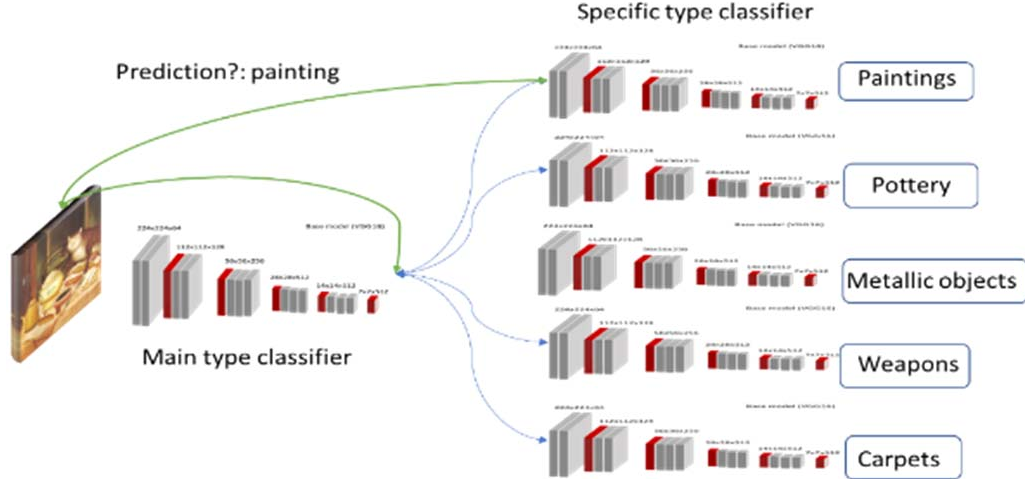
Furthermore, the team introduced a Hierarchical Multitask Framework. Instead of a single flat classifier, the system first categorizes the asset (Stage 1) and then invokes a specialized multitask head (Stage 2) tailored to that specific category’s metadata structure.
2. Specialized Semantic Inpainting
Physical artifacts are often fragmented. To "heal" these digital twins, the project utilizes Generative Adversarial Networks (GANs). However, a general GAN often produces "blurry" or contextually irrelevant completions.
The team's insight was to implement a Cluster-then-Generate strategy:
- Assets are clustered into similar visual contexts.
- A specialized GAN is trained for each cluster.
- This ensures the "Generator" understands the specific artistic style or material texture of the target object.
3. Ontology Learning via NLP
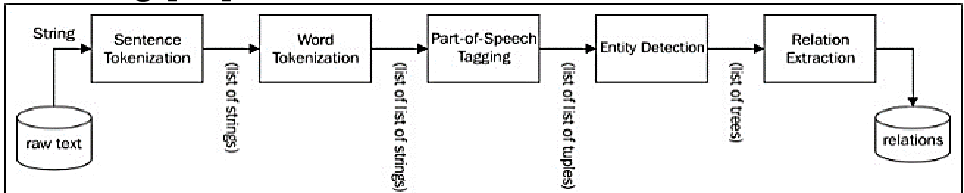
To ensure interoperability (making different museum systems talk to each other), the project uses Named Entity Recognition (NER) and Relation Extraction (RE) to map unstructured descriptions into the CIDOC-CRM standardized data scheme.
Performance: Proving the Advantage
The results validate the shift toward complexity:
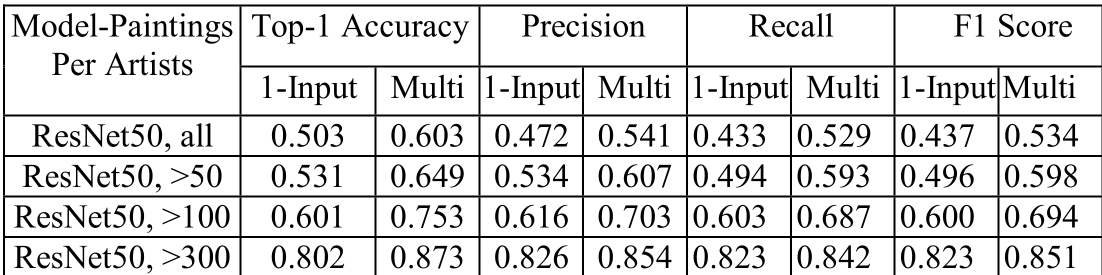
- Multimodal Boost: The fusion of text and image improved Top-1 Accuracy across all ResNet-50 variants, with gains as high as 15% for large painting datasets.
- Scale Efficiency: Using Transfer Learning allowed the models to converge faster, making the system practical for institutions without massive GPU clusters.
Critical Insight & Vision
The real value of CEPROQHA lies in its Inductive Bias. By encoding the structure of a museum curator's workflow into the neural network architecture (hierarchies, multimodal evidence, context clustering), the authors moved beyond "Black Box" AI toward "Domain-Aware" AI.
Limitations & Future Work: While the results for 2D paintings are robust, expanding this to 3D scattered artifacts remains a challenging frontier. The team’s next step is integrating these modules into a unified "Smart Collection Management System" for art professionals.
Conclusion
The CEPROQHA project demonstrates that Deep Learning is not just for tech giants; it is a vital tool for the preservation of human history. By intelligently combining CNNs, GANs, and NLP, we can ensure that our digital past is as rich and complete as the physical reality it represents.