
Fixed Paths in a Random World: How DLDF Revolutionizes Mobile Social Routing
A deep learning based data forwarding algorithm in mobile social networks
This paper introduces DLDF (Deep Learning-based Data Forwarding), an innovative routing algorithm for mobile social networks that utilizes LSTM-based recurrent neural networks to predict node meeting probabilities. By shifting from opportunistic "chance" encounters to "fixed path" forwarding derived from high-probability links, the model achieves superior transmission efficiency.
TL;DR
Mobile Social Networks (MSNs) are notoriously chaotic, often relying on "blind" opportunistic encounters to pass data. This paper introduces DLDF (Deep Learning-based Data Forwarding), which uses LSTM networks to predict node meetings with high accuracy. Instead of spraying packets everywhere, DLDF identifies "fixed paths" composed of high-probability links, slashing network overhead by over 60% while actually improving delivery rates.
The Motivation: Moving Beyond "Luck-Based" Routing
In traditional Delay Tolerant Networks (DTN), we assume there is no stable end-to-end path. Routing protocols like Epidemic solve this by essentially "flooding" the network—copying packets to everyone. While effective, it’s a disaster for battery life and bandwidth.
Social-aware protocols (like Bubble Rap or SEBAR) tried to use human social structures (communities, centrality) to be smarter. However, these methods are often static. The authors of this paper realized that human mobility isn't purely random; it's periodic. If we can predict when and where people meet using Deep Learning, we can treat a chaotic mobile network like a quasi-fixed infrastructure.
Methodology: Predicting the Invisible Path
The core of the paper lies in a two-step process: Probability Prediction and Qualified Path Discovery.
1. LSTM for Meeting Prediction
The authors convert trajectory data into time-series meeting probabilities. A gated recurrent unit (LSTM) is perfect here because it captures long-term dependencies (e.g., "Node A and Node B always meet on Monday mornings"). The input is a sliding window of historical meeting ratios, and the output is the probability of a meeting in the next time slot.
2. The DLDF Routing Logic
Once probabilities are predicted, the algorithm identifies Qualified Links (where probability > ) to build a path set.
- Path Discovery: It searches for a chain of nodes from source to destination where the cumulative probability exceeds a threshold ().
- Forwarding Strategy: If a fixed path exists, the packet follows it. If nodes are in different communities, it reverts to a controlled flooding mode to ensure reachability.
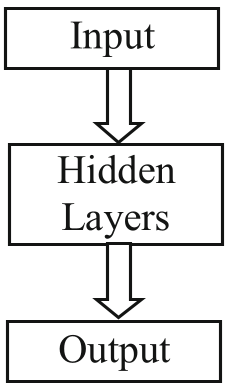 Figure 1: (a) LSTM Layer structure, (c) Network structure for predicting meeting probabilities between nodes.
Experiments: Performance Over Spams
The researchers tested DLDF against three heavyweights: Epidemic, Spray-and-Wait, and SEBAR, using one year of real-world GPS traces from Spanish emergency services.
Key Results:
- Packet Delivery Ratio: DLDF outperformed SEBAR by 12.8%. By knowing which nodes were likely to meet, it avoided the "dead ends" that social-only metrics often fall into.
- Overhead Reduction: This is the "killer feature." DLDF's overhead was 66.3% lower than Epidemic. Because it uses fixed paths, it doesn't need to create thousands of redundant copies.
- Sensitivity to Thresholds: The study found that as you increase the requirements for a "qualified link" (), the overhead drops significantly, but the delivery ratio eventually plateaus, highlighting a sweet spot for network tuning.
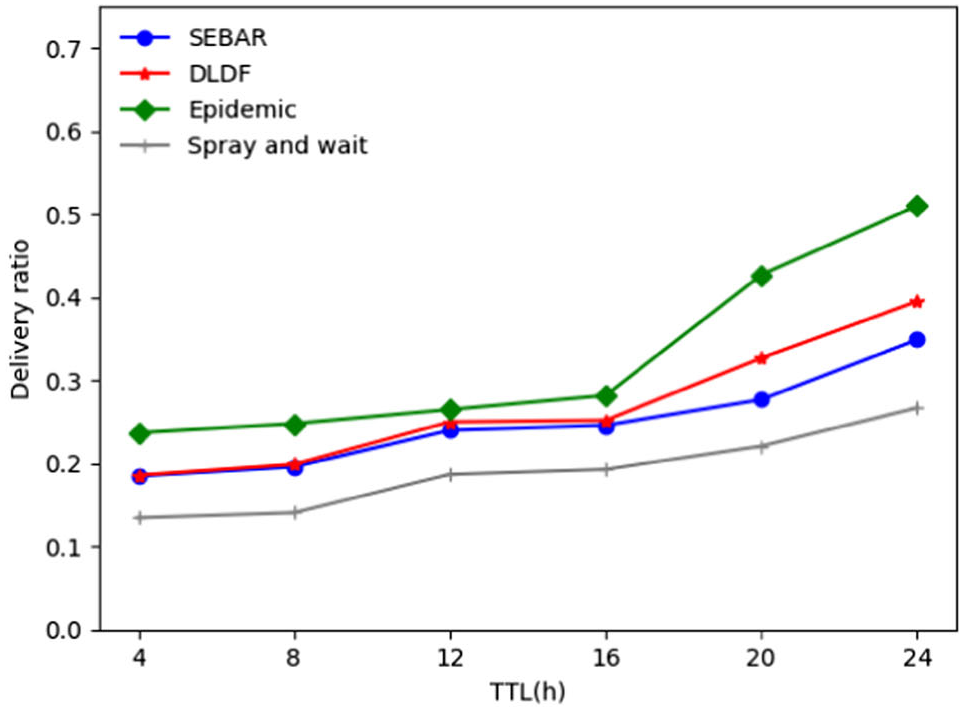 Figure 2: Delivery Ratio and Overhead comparison across different Time-to-Live (TTL) settings.
Critical Analysis & Conclusion
The true value of this work is the proof that Predictive Forwarding is viable. By showing that the number of connected nodes decreases linearly with the sampling period, the authors proved that deep learning can actually "digest" this data without being overwhelmed by noise.
Limitations:
- Computational Cost: Training an LSTM for every node pair is heavy. The authors suggest "Off-line servers" to calculate routing tables, but in a truly decentralized emergency scenario, providing that compute might be difficult.
- Cold Start: The model requires 4,000 hours of training data. It wouldn't work in a brand-new environment where node behavior hasn't been mapped.
Future Outlook: Integrating this with Reinforcement Learning (RL) could allow the thresholds ( and ) to adjust dynamically based on the current network congestion, making MSNs not just predictive, but truly autonomous.
Takeaway: DLDF shifts the paradigm from opportunistic hopping to calculated pathing, making mobile social networks significantly more professional and resource-efficient.