
DNNIP: Enhancing Indoor Localization with Stacked Auto-encoders and Hierarchical Stratification
A Deep Neural Network Based on Stacked Auto-encoder and Dataset Stratification in Indoor Location
This paper introduces DNNIP, a Deep Neural Network-based indoor positioning method that utilizes Stacked Auto-encoders (SAE) and a hierarchical dataset stratification strategy. Evaluated on the UJIIndoorLoc dataset, the model achieves a high classification accuracy of 88.9% for building and floor identification, outperforming traditional machine learning baselines such as SVM and Random Forest.
TL;DR
Indoor positioning in complex, multi-story buildings is notoriously difficult due to signal noise and high dimensionality. This paper presents DNNIP, a deep learning framework that uses Stacked Auto-encoders (SAE) for feature extraction and a stratified data approach to navigate hierarchical environments (Building > Floor > Space). Results show a significant accuracy boost to 88.9%, outperforming traditional SVM and Random Forest models on the benchmark UJIIndoorLoc dataset.
The Challenge: Navigating the "WiFi Jungle"
While GPS dominates outdoor navigation, indoor environments remain a frontier. WiFi Fingerprinting—using the Received Signal Strength Indicator (RSSI) from Access Points (WAPs)—is the most scalable solution. However, it faces two major hurdles:
- Complexity: Large buildings involve hundreds of WAPs, creating a high-dimensional sparse feature space.
- Instability: RSSI values fluctuate wildly due to human movement, multipath effects, and hardware variations.
Traditional algorithms like K-Nearest Neighbor (KNN) or Support Vector Machines (SVM) often fail to capture the abstract hierarchical relationship between a user's location and the signal environment.
Methodology: SAE Meet Stratification
The authors' "Secret Sauce" lies in combining unsupervised pre-training with a structured view of the physical world.
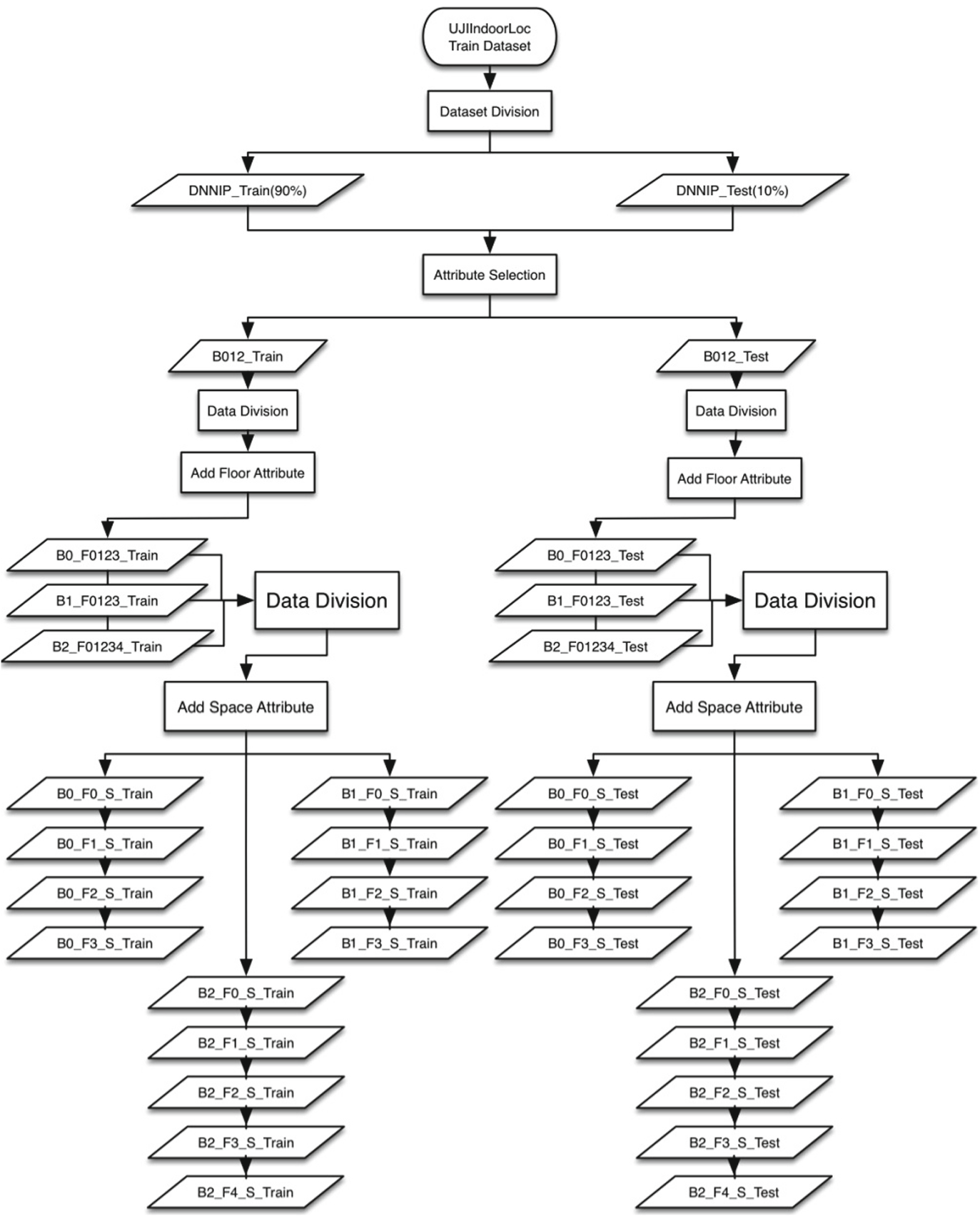
1. Dataset Stratification
Instead of treating every location as a flat list, the researchers organized the data into a tree-like structure. By predicting the BuildingID first, then the FloorID, and finally the SpaceID, the model reduces the search space at each step, significantly improving the precision of the final output.
2. Stacked Auto-encoders (SAE)
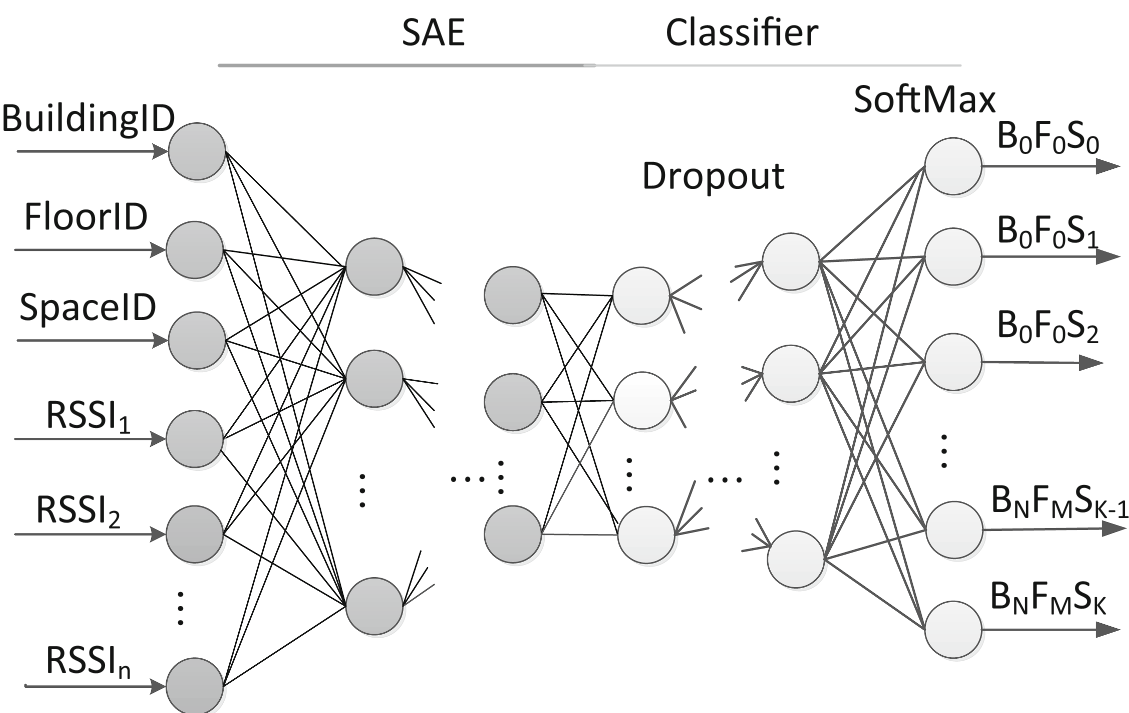
The core of DNNIP is a Stacked Auto-encoder. Unlike standard DNNs that start with random weights, DNNIP uses unsupervised learning to "reconstruct" the input RSSI vectors. This process compresses 523 dimensions into a dense, meaningful representation (e.g., 256 or 128 neurones).
- ReLU Activation: Replaces Sigmoid to prevent the "Vanishing Gradient" problem.
- Unsupervised Pre-training: Ensures the network starts in a state tuned to the specific signal characteristics of the building before the final classification layers are added.
Experimental Battleground: UJIIndoorLoc
The model was tested against the massive UJIIndoorLoc dataset, covering 3 buildings and up to 5 floors per building.
Performance vs. The Field
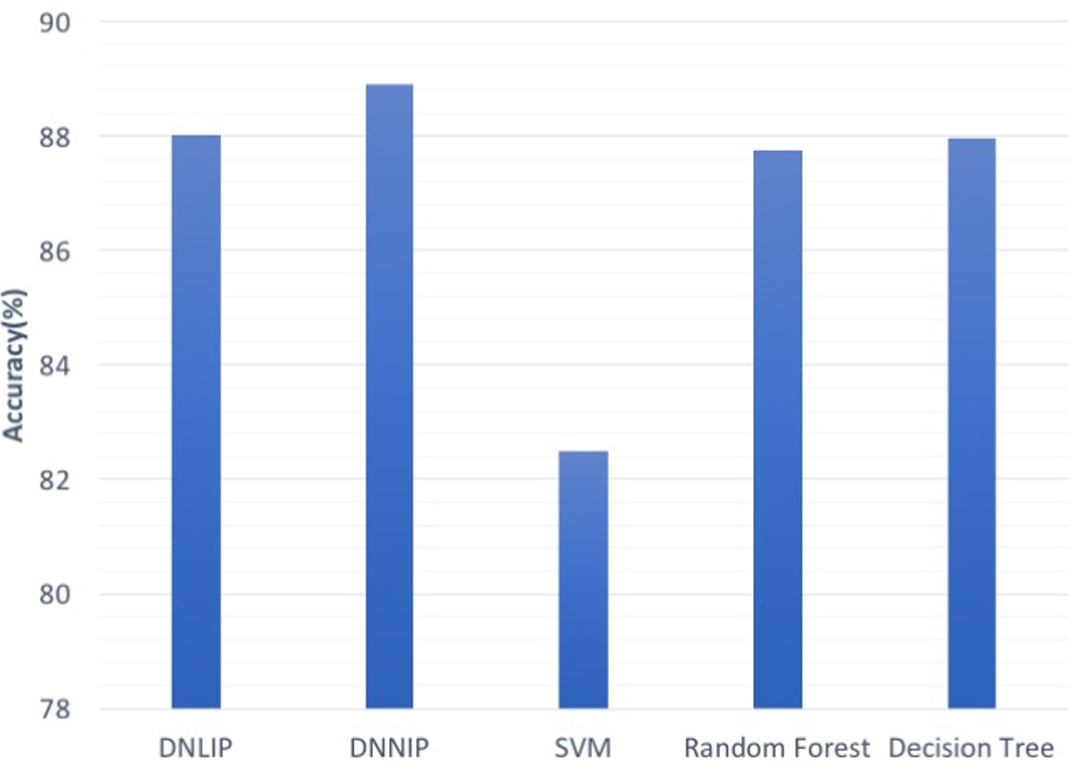
DNNIP clearly outperformed its predecessors. While SVM struggled at 82.5% accuracy for building/floor identification, DNNIP achieved 88.9%.
- Building Identification: Nearly all models achieved >99%, but DNNIP maintained stability.
- Floor Identification: This is where DNNIP shined, with an average accuracy of 93.8%, proving that its feature extraction layer handles the vertical "overlap" of WiFi signals between floors much better than traditional methods.
The Impact of Hidden Layers
The research found that a configuration of 256-128 hidden neurons provided the best balance. Adding a third layer (64 neurons) increased complexity without significant accuracy gains, highlighting a law of diminishing returns in deep stacking for RSSI data.
Critical Insight & Conclusion
DNNIP proves that feature representation matters more than classifier complexity. By using Auto-encoders to denoise and compress RSSI data, the model creates a "radiomap" that is more resilient to the chaos of real-world indoor environments.
Limitations: The primary drawback is the computational cost. Training hierarchical models for every new building environment requires significant GPU resources compared to simple KNN-based lookups. However, for large-scale, high-stakes deployments (like hospital management or emergency rescue), the trade-off for higher accuracy is undoubtedly worth it.
Future Outlook: The next step for this tech involves "Transfer Learning"—taking an SAE trained on one building and adapting it to another with minimal new samples.