
DSLX: Solving the "Insolvable" Facsimile Fraud via Physics-Inspired Time Reversal
Deep Probabilistic Learning in Hidden Social Networks and Facsimile Detection
This paper introduces DSLX (Deep Social Learning Network), a multidisciplinary deep probabilistic learning model designed to detect "facsimile" frauds in large-scale social and business networks. Leveraging a unique "time reversal" analogy from physics, the method achieves 100% recall and up to 55% precision in massive datasets containing billions of rows.
TL;DR
Detection of "perfect" frauds—the facsimile problem—is impossible with standard endogenous data. This paper introduces DSLX (Deep Social Learning Network), a multidisciplinary approach that applies the physics of time reversal to probabilistic networks. It identifies frauds not by rules, but by treating them as systemic physical aberrations, achieving 100% recall even with extremely sparse training data.
Background: The Facsimile Wall
In the world of fraud detection, a "facsimile" is a perfect copy. If a fake banknote has the exact physical properties and ID code of a real one, no amount of physical (endogenous) analysis can distinguish them. Most machine learning models hit a wall here: if the fraud process is statistically conformant to the normal process, it becomes invisible.
The author argues that solving this requires exogenous data—relationships, histories, and tracks—mined through a social network lens. However, organized crime changes patterns so rapidly that rule-based systems and standard CNNs often fall behind or require impossible amounts of labeled data.
Methodology: Physics Meets Big Data
The core innovation of DSLX is its departure from traditional gradient-based optimization toward a wave-based inverse problem heuristic.
1. Probabilistic Time Reversal
Inspired by acoustics and ultrasonic fields, where "time reversal" allows for focusing signals in chaotic, diffuse environments, DSLX mimics this process within a Deep Social Learning Network. It treats the dataset as a finite, discrete multidimensional space where probabilities propagate like waves.
2. The DSLX Pipeline
- Propagation Stage: It builds an in-memory graph (IG) and propagates a "risk index" forward through a sequence of relations (user-defined sequences or
uds). - Interference Pattern: Just as two waves create an interference pattern (see Figure 1), the "interaction" of these probabilities highlights local amplifications.
- Back-propagation: Instead of updating weights to minimize error, the system reverses the signal flow to refine the spatial distribution of risk without signal degradation.
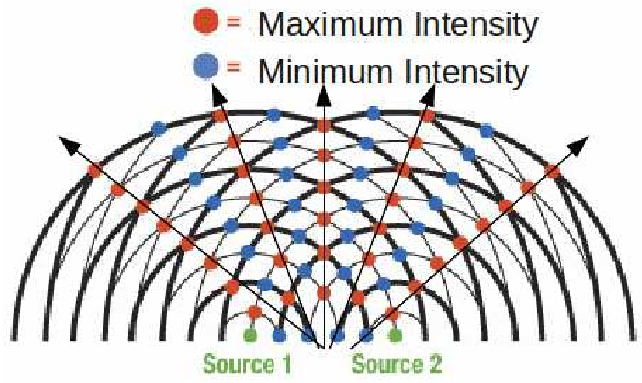 Figure 1: The physical intuition behind DSLX: identifying fraud through probability interference.
Experiments: Performance in the Wild
DSLX was tested on massive corporate databases ranging from 1 GB to 100 GB, involving up to 1 billion rows.
Key Findings:
- Sensitivity with Sparse Data: With a training set representing only 1.3% of data, DSLX reached 100% recall.
- The Double-Blind "Miracle": In a crucial test, investigators hid specific known frauds from the system. DSLX still flagged these entities in its Top 3 results. Because the model treats fraud as a "systemic anomaly" (a physical irregularity in the data flow), it could detect them even without having "learned" their specific label.
- Scalability: The system successfully merged multiple output graphs (
OG) into a composite network (CG) to visualize hidden social structures.
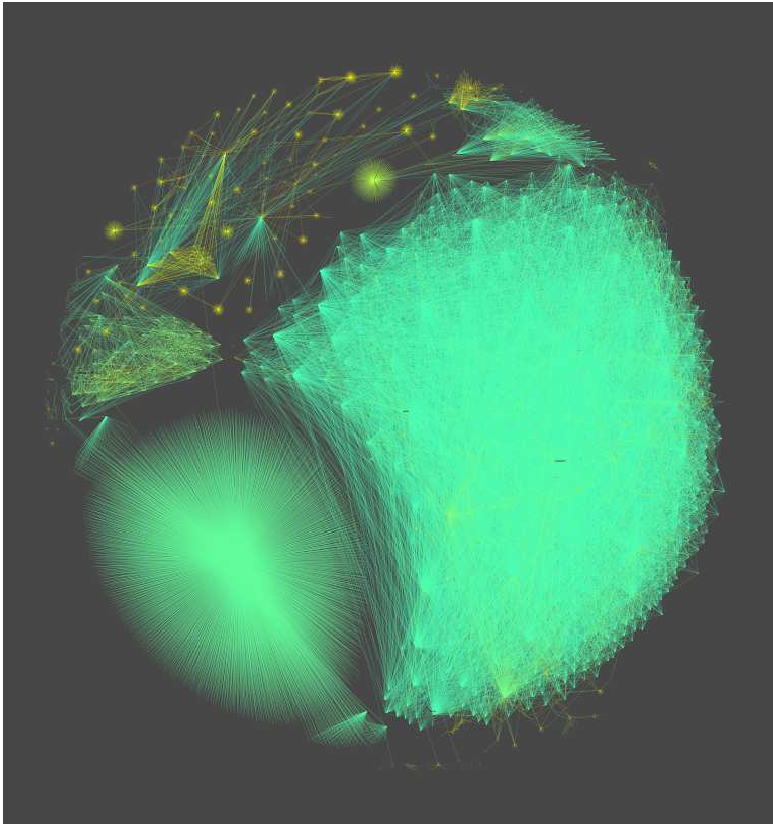 Figure 2: DSLX mapping complex hidden social networks from billions of rows.
Critical Insight: Why This Matters
Most AI today is "narrow"—it learns specific patterns of known fraud. If a fraudster changes their "shape," the AI fails. DSLX is fundamentally different because it looks for irregularities in the fabric of the network itself.
Advantages:
- Rules-Free: No need for experts to manually write "if-then" rules.
- Robust to Imbalance: It doesn't need millions of fraud examples to work; it just needs to know what "normal" looks like to see the "aberrations."
Limitations:
- Precision Trade-off: While recall is perfect (no frauds missed), precision sat around 40-55%, meaning many false positives require human review.
- Tuning Complexity: The "user-defined sequences" (
uds) and depth parameters currently require manual tuning, though future iterations aim for automatic optimization.
Conclusion
The DSLX model represents a bold bridge between Network Science and Wave Physics. By reframing Big Data mining as a wave interference problem, it provides a powerful tool for catching the most sophisticated "facsimile" frauds that currently slip through the cracks of the global financial system.