
Intelligent Healthcare at the Edge: Breaking the Cloud Latency Barrier with Deep Learning
On Delay-Sensitive Healthcare Data Analytics at the Network Edge Based on Deep Learning
This paper proposes a localized IoT edge analytics approach using Deep Convolutional Neural Networks (CNN) to process delay-sensitive healthcare data. By moving analytics from the central cloud to residential access points, the system achieves near real-time decision-making for senior citizens and rehabilitation patients.
TL;DR
The explosion of IoT bio-sensors has created a "data deluge" that traditional cloud-based systems can no longer handle in real-time. This paper introduces a Deep CNN-based Edge Analytics framework that processes critical healthcare data locally at the home access point. By bypassing the congested 4G/5G core networks, the system achieves ~94% accuracy with sub-minute execution times, enabling life-saving responses for patients "aging at home."
The "Death by Delay" Problem in Smart Healthcare
In the current paradigm, your wearable heart monitor sends data through a smartphone, which traverses a cellular network to a remote data center for analysis. While this works for routine check-ups, it fails for delay-sensitive scenarios:
- Network Congestion: 4G/5G Radio Access Networks (RANs) become overloaded by the massive number of machine-type devices.
- Computational Bottlenecks: Central clouds encounter batch-processing delays, rendering "real-time" alerts useless if they arrive minutes after a medical emergency.
- The MTC Clash: Machine-Type Communication (MTC) devices (sensors) have different traffic patterns than human users, leading to packet loss and resource wastage.
The authors argue that for senior citizens and rehabilitation patients, the analytics must move to the Network Edge—specifically the residential access point.
Methodology: Deep CNN at the Access Point
Why CNNs? The researchers chose Convolutional Neural Networks because they excel at extracting hidden features from large, high-dimensional input arrays (like time-series vital signs) while reducing the computational load through pooling layers.
The Interaction Matrix
The system gathers a multi-dimensional matrix of health data, including:
- Vital Signs: Pulse, respiratory rate, oxygen levels.
- Ambulation: Fall detection and gait tracking.
- Medication: Dosage patterns and medicine box status.
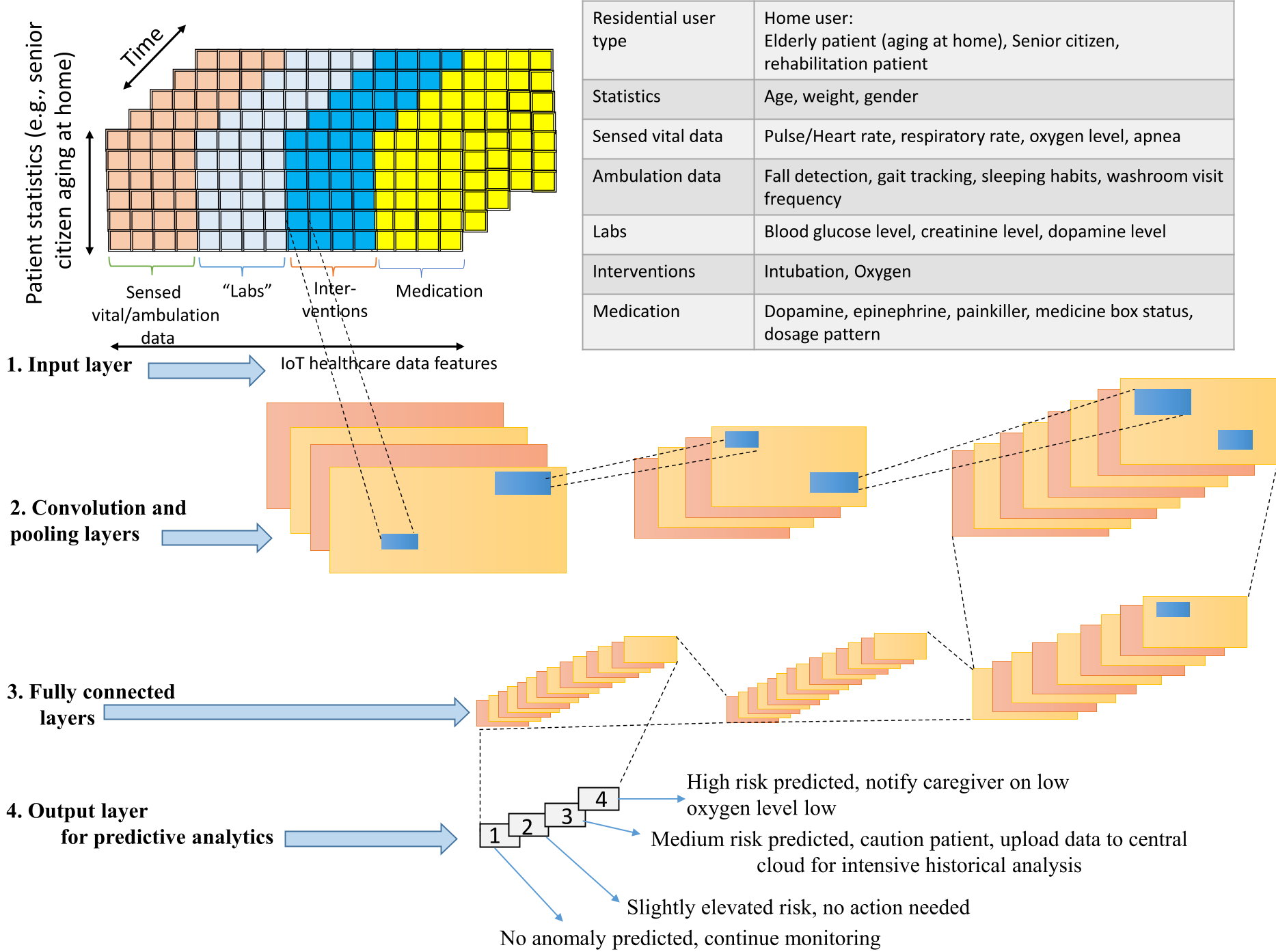 Fig 1: The proposed Deep CNN structure illustrating feature extraction from residential user statistics via convolutional and pooling layers.
The model utilizes a forward-propagation mechanism for prediction and an online back-propagation process to periodically update weights, ensuring the system adapts to changes like sensor malfunctions or new patient behaviors.
Experiments & Results: Real-World Training
Testing was conducted using real heart rate time-series data from the MIT-BIH database. The goal was to prove that a commodity CPU (typical of a high-end home router) could handle the task without needing a specialized GPU.
Accuracy vs. Efficiency
The study found a clear "sweet spot" at 125-150 epochs. As shown in the results, as the number of training iterations increased, the loss rate plummeted to 0.14, and accuracy stabilized above 94%.
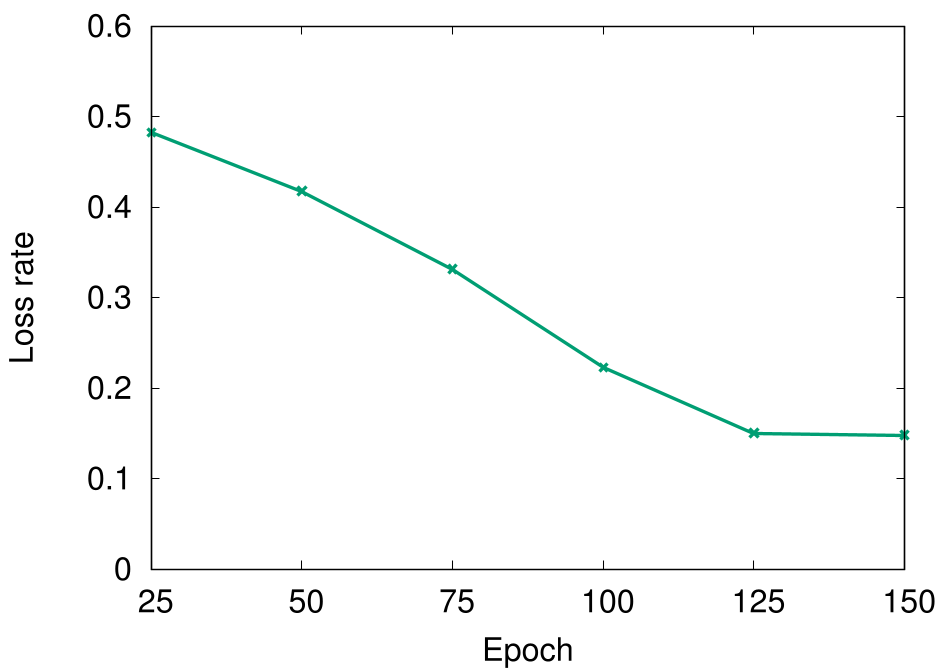 Fig 2: Training accuracy and loss rates across various epochs (a & b).
Batch Size Optimization
Interestingly, the researchers discovered that the batch size significantly impacted performance. A batch size of 5 emerged as the winner, providing the highest accuracy (94.44%) while taking the shortest execution time (48.47 seconds). This suggests that localized training is not just possible but highly efficient.
| Batch Size | Loss Rate | Accuracy (%) | Execution Time (s) |
|---|---|---|---|
| 1 | 0.491 | 77.67 | 238.81 |
| 5 | 0.148 | 94.44 | 48.47 |
Deep Insight: Why This Matters
The fundamental value of this work lies in its categorization strategy. By distinguishing between delay-tolerant (sent to the cloud) and delay-sensitive (processed at the edge) data, the system optimizes network resources.
Caveats: While the results are promising, the study used a "simplified" neural network (omitting some complex layers for the CPU simulation). In a real-world deployment, the trade-off between model complexity and the energy consumption of the home access point would be a critical factor to watch.
Summary
This paper serves as a vital bridge between AI theory and IoT infrastructure. It proves that we don't need "supercomputers" in the cloud for everyone; sometimes, a smart router at the edge of the network is enough to save a life.