
Democratizing AI: Fighting Climate-Induced Farmer Suicides with Edge Intelligence
Democratization of AI to Small Scale Farmers, Albeit Food Harvesting Citizen Data Scientists, that Are at the Bottom of the Economic Pyramid
The paper introduces a specialized IoT and edge-computing framework designed to democratize AI for small-scale dairy farmers. By utilizing the "Hanumayamma Dairy IoT Sensor" (a smart cow necklace), the system integrates localized sensor data with global climate models to predict heat stress and milk productivity fluctuations.
TL;DR
This research tackles a profound humanitarian crisis: the rising rate of farmer suicides linked to climate change. By deploying low-cost, wearable IoT sensors (cow necklaces) and edge-based Machine Learning, the authors aim to empower small-scale farmers with "Citizen Data Science" tools. These tools provide localized, predictive insights to protect livestock health and stabilize milk production against extreme weather.
The "Data-Poor" Gap: A Life-and-Death Challenge
In many developing countries, the dairy industry is highly decentralized, supported by millions of farmers managing only 3 to 5 cattle. For these individuals, a single heatwave or flood isn't just a bad season—it's a trigger for a cycle of debt and social stigma that has led to an estimated 60,000 climate-linked farmer suicides in India alone over the last 30 years.
The technical heart of the problem is that global climate models rarely translate to local actionable insights for a small farmer in a remote village. Current agricultural AI is often "top-down," built for massive industrial farms. This paper proposes a "bottom-up" innovation for those at the bottom of the economic pyramid.
Methodology: The Math of the "Cow Necklace"
The proposed solution centers on the Hanumayamma Dairy IoT Sensor, a Class 10 wearable device that monitors a cow's vital signs and movement.
1. The Activity Function
The core of the methodology lies in modeling the cattle's physical activity using a 3-axis accelerometer function : Under normal conditions, this function remains stable. However, climate events () distort these readings.
2. Partial Derivatives for Localized Impact
To isolate how a specific weather event (like a flood or heatwave) impacts a specific cow, the researchers use partial derivatives. This allows the system to calculate the "Climate Factor" by comparing a weather-impacted activity state () against a baseline state ().
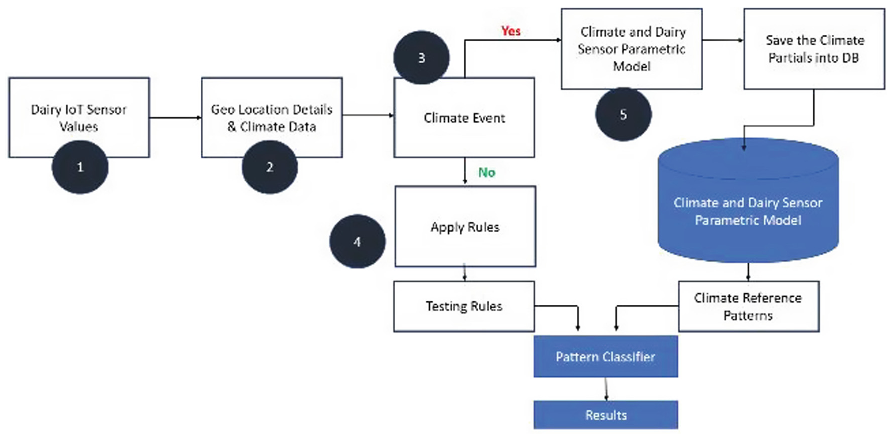 Figure 1: The framework for factoring in climate conditions into the dairy sensor data flow.
Real-World Case Study: Punjab to Vizag
The authors validated their sensors in diverse Indian climates. One striking finding was the detection of extreme humidity events (values reported over 140%), which significantly altered the physiological and emotional state of the cattle.
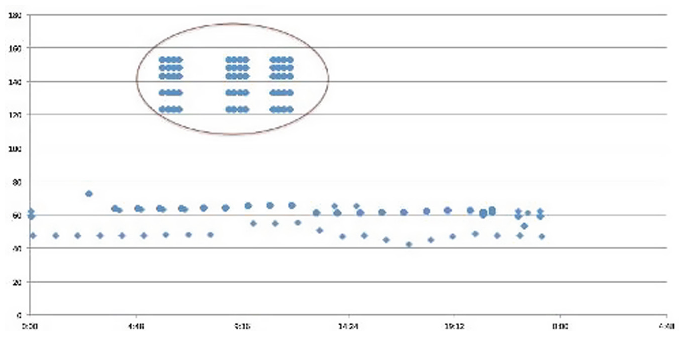 Figure 2: Real-time temperature and humidity data collected from dairy farms, illustrating the heat stress cattle undergo.
By applying Cohort Clustering, the system can take a global weather alert (from NOAA) and "superimpose" it onto the local sensor data of a specific farm cluster. This results in a personalized recommendation for the farmer, such as adjusting cooling or nutrition before the heat stress impacts milk yield.
Critical Insight: The Farmer as a Scientist
The most compelling aspect of this work is its sociotechnical ambition. It doesn't just aim for "better sensors"; it aims for the democratization of AI.
- Prognostics: Moving from "what happened" to "what will happen."
- Localized Context: Acknowledging that a "Wind Chill Warning" in the US is different from "Heat Stress" in Punjab.
- Human-Centric Gold Standard: The authors explicitly state that their "gold standard" for AI success is zero farmer life loss.
Future Outlook and Limitations
While the prototyping shows promise, the path to global adoption faces hurdles:
- Connectivity: Managing data uploads in low-bandwidth rural areas requires further optimization of edge-storage.
- Cost vs. Benefit: For farmers below the poverty line, even low-cost sensors must demonstrate immediate ROI in terms of saved milk gallons.
- Scalability: Validating "Cohort Clusters" across different cattle breeds and ecological zones will require massive data aggregation.
Conclusion
This paper serves as a reminder that AI's greatest value may not lie in generating digital art or chat, but in providing a "data defense" for the world's most vulnerable populations. By turning a "cow necklace" into a sophisticated climate-adaptation tool, we can move closer to an era where data-driven insights are a universal right, not a luxury.