
Engineering Quality: Why Your Crowdsourcing Platform Needs Both Incentives and Reputation
10551_Design and Analysis of Incentive and Reputation Mechanisms for Online Crowdsourcing Systems.
The paper proposes a dual-mechanism framework—combining a Bayesian game-based incentive scheme with a repeated game-based reputation system—to ensure high-quality solution solicitation in online crowdsourcing systems like UpWork. It achieves 98.82% of theoretical maximum system efficiency while maintaining 96% of platform revenue through optimized parameter selection.
Executive Summary
TL;DR: Soliciting high-quality work from a crowd of anonymous, strategically-minded workers is notoriously difficult. This paper introduces a mathematically rigorous framework that combines Incentive Mechanisms (to stop laziness) with Reputation Mechanisms (to discourage the unskilled). By treating crowdsourcing as a repeated game, the authors demonstrate that you can guarantee high-quality solutions while maintaining platform profitability—achieving nearly 99% theoretical efficiency.
The work is a significant "System Design" contribution, moving beyond simple task-matching algorithms to create a self-sustaining ecosystem where workers self-sort based on their own private skill levels.
The "Double Jeopardy" of Crowdsourcing
Online labor markets like Amazon Mechanical Turk and UpWork face a fundamental dilemma. Requesters want the best quality for the lowest price, while workers want the highest reward for the least effort. This leads to:
- The Free-Rider Problem: A worker accepts a task but provides a low-effort, "junk" solution because they get paid anyway.
- The Skill Mismatch: Even a hard-working individual can’t provide a "High-Quality" (HQ) solution if they lack the underlying skill.
Previous SOTA (State of the Art) focused on assignment accuracy—trying to guess who is good. But the authors argue that the workers know their skills better than the system ever will. The goal, therefore, is to make workers self-select out of tasks they aren't qualified for.
Methodology: The Core Framework
The paper’s architecture is divided into two distinct but coupled layers:
1. The Incentive Layer (Bayesian Game)
The system allows workers to solve the same task. The reward is only split among the "winners" (those providing the highest quality). Using a Bayesian Game model, the authors derive the minimum reward necessary to ensure that exerting maximum effort is the unique Nash Equilibrium.
 (Note: This conceptual flow chart represents the interaction between Requesters, Workers, and the Platform Administrator)
2. The Reputation Layer (Repeated Game)
To stop low-skilled workers from cluttering the system, the authors introduce the system:
- (Active Window): How many errors a worker can make before being penalized.
- (Blocking Window): How long a worker is banned from the platform after hitting the error threshold.
In a Repeated Game setting, the math shows that the threat of being blocked (losing future income) is so high that low-skilled workers will voluntarily refuse tasks they can’t solve perfectly.
Experiments and Results
The authors validated their model using a massive dataset from UpWork containing over 150,000 transactions.
The Revenue-Efficiency Trade-off
One of the paper's most salient contributions is the "Trade-off Curve." If you block workers too aggressively, the platform loses transaction fees (Revenue). If you are too lenient, the quality drops (Efficiency).
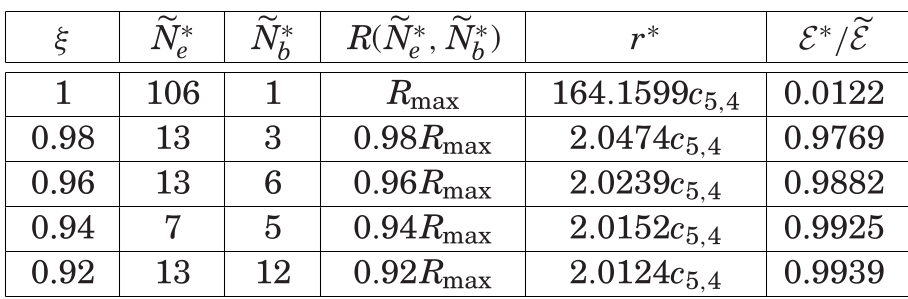 (The table above illustrates that by sacrificing just 4% of revenue, the platform can reach nearly peak efficiency.)
Key Findings:
- Robustness: Even when requesters give "unfair" ratings (human bias), the system remains stable if the reward is adjusted slightly.
- Optimal Settings: For UpWork-like systems, a blocking window () of 6 slots and an error threshold () of 13 proved to be the "Sweet Spot."
Critical Insight & Conclusion
The genius of this paper lies in its Inductive Bias: it assumes workers are rational and long-lived. By shifting the burden of "screening" from the platform to the worker through the threat of future exclusion, the system becomes significantly more efficient.
Limitations: The model assumes that "Quality" can be objectively ranked by requesters. In highly subjective tasks (like creative writing), the "Error Matrix" might become too noisy for the math to hold without substantially higher rewards.
Takeaway for the Industry: If you are building an AI-data labeling platform or a freelance marketplace, don't just optimize your matching algorithm. Optimize your penalty-to-reward ratio. The most efficient system is one where the workers are afraid to fail.