
Intelligent Libraries: Leveraging RFID and 2D Codes for Data-Driven Marketing
A Design for Library Marketing System and Its Possible Applications
The paper proposes a "Library Marketing System" designed to enhance patron services and management efficiency through data-driven insights. It introduces two primary identification technologies—RFID for automated Intelligent Bookshelves (IBS) and 2D codes (QR codes) for mobile interaction—to capture real-time usage patterns and achieve SOTA-level library intelligence.
TL;DR
This research presents a framework for a Library Marketing System that shifts library management from passive record-keeping to proactive service optimization. By deploying RFID-based Intelligent Bookshelves (IBS) and 2D/QR codes, libraries can capture "hidden" usage data—how books are handled on the shelves—and use data mining to improve shelf arrangements and personalized patron services.
Background: Beyond the Circulation Counter
In the traditional library model, data collection is limited to the circulation desk. If a student browses ten books but only borrows one, the library "loses" the data on the other nine. This work argues that for a library to remain a "growing organism" (referencing Ranganathan’s Five Laws), it must adopt Automatic Identification and Data Capture (AIDC) technologies to understand the granular behavior of its patrons.
Methodology: The Core Technologies
The author proposes a dual-track technology stack to solve the visibility problem:
1. RFID & Intelligent Bookshelves (IBS)
RFID tags allow for non-contact, multiple-item reading. By embedding RFID antennas directly into the shelves, the system creates an Intelligent Bookshelf.
- The Log Logic: Every time a book is removed or replaced, the system generates a log entry.
- Data Transformation: Raw logs are converted into Event Quadruples:
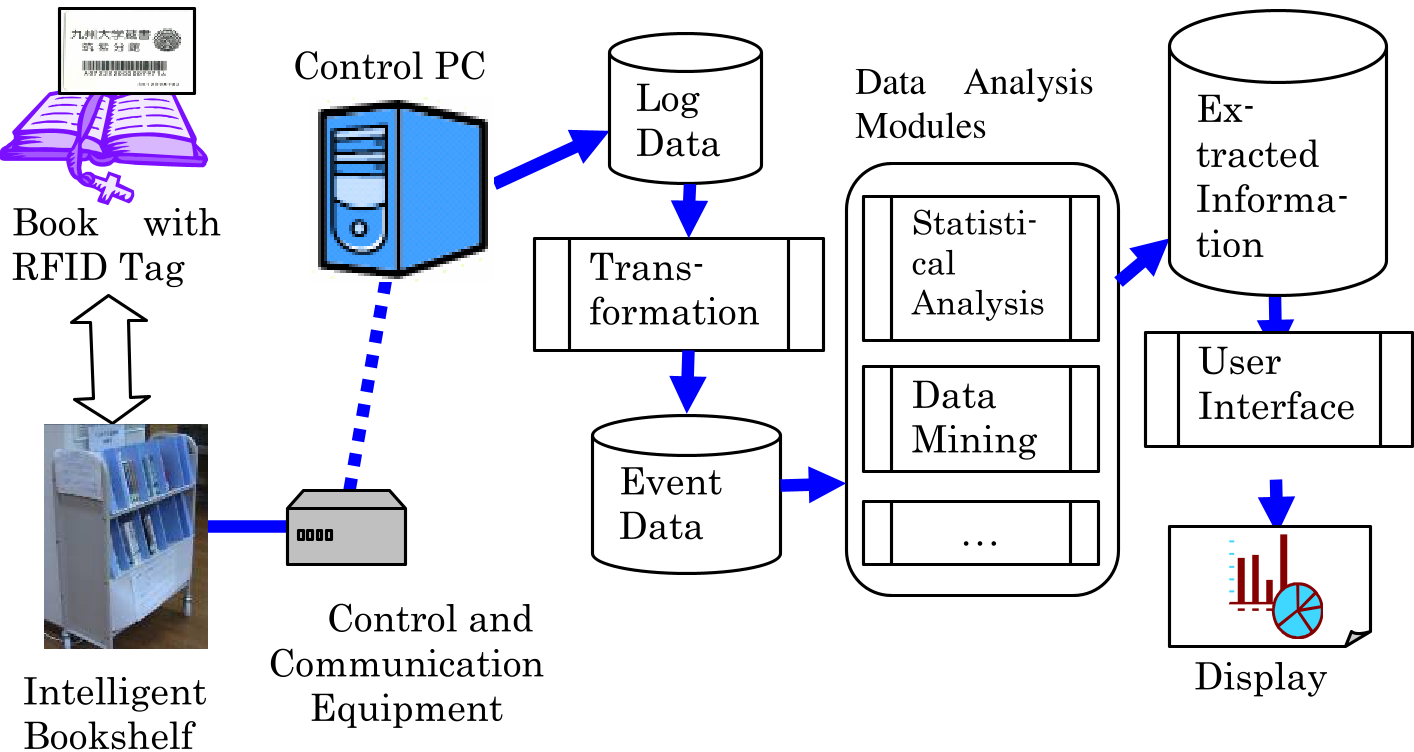 Figure 1: The proposed extension of library systems including Intelligent Bookshelves.
2. 2D Codes (QR Codes) for Mobile Interaction
While RFID is excellent for backend management, 2D codes are the bridge to the patron's smartphone.
- Low Cost: Unlike expensive RFID tags, QR codes can be printed on existing labels.
- Social and Personal: Patrons can scan a code to add a book to a virtual shelf, blog about it, or access digital supplements, creating a rich "profile of interest."
Key Quantitative Performance
The impact of these technologies on library operations is transformative:
- Inventory Efficiency: At the City of Kita Central Library, inventory for 300,000 books—which typically takes weeks—was reduced to a daily 5-10 minute cycle.
- Usage Analysis: By analyzing the "OUT-IN" session times, the system can distinguish between Textbook usage (long sessions, high average time) and Reference/Dictionary usage (short, frequent sessions).
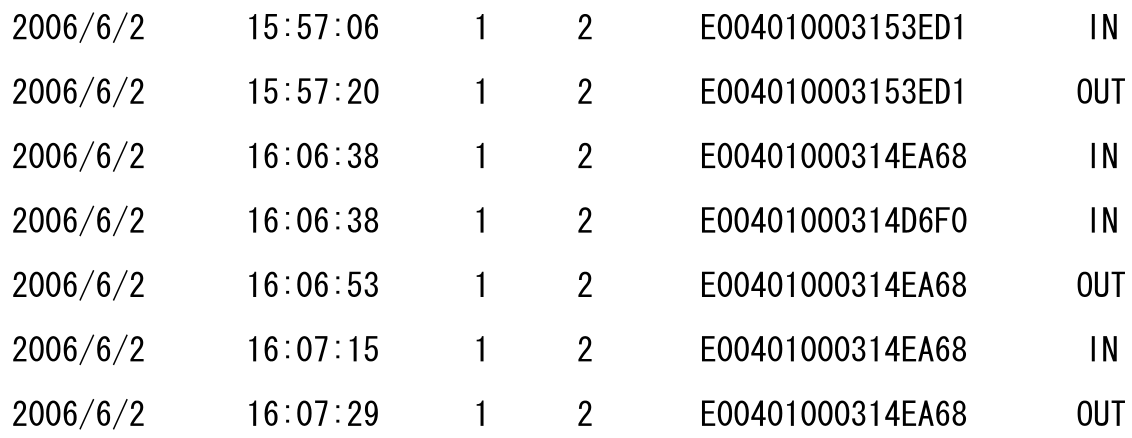 Figure 2: Sample event data used to calculate frequency and duration of use.
Deep Insights: The Marketing Intelligence
The true value of this system lies in the three analytical metrics proposed:
- Frequencies of Use: Identifies "hidden gems"—books that are read often in the library but never checked out. This informs purchasing decisions.
- Accumulated Time of Use: Correlates with the actual "usefulness" of the material. A book handled for hours is likely more central to research than one picked up and immediately put back.
- Session Characterization: Using Min/Max/Average times to categorize book types automatically, helping librarians optimize shelf real estate (e.g., placing popular reference books in high-traffic areas).
Critical Analysis & Conclusion
Takeaway
The integration of RFID and 2D codes creates a ubiquitous library environment. It validates the idea that library "marketing" isn't about profit, but about maximizing Patron Satisfaction (PS) through the intelligent allocation of physical and digital resources.
Limitations
- Cost Barrier: The initial investment for RFID readers in every shelf (IBS) remains high for smaller public libraries.
- Privacy: While the paper focuses on data collection, the tracking of individual patron movement via mobile IDs requires robust ethical and privacy frameworks.
Future Outlook
The next step for this research is the fusion of these datasets into a Recommendation Engine that can suggest books not just based on what you bought or borrowed, but what you touched on the shelf.