
Social Machines: A Decentralized Blueprint to Tackle Disinformation
Designing Social Machines for Tackling Online Disinformation
This paper introduces a decentralized approach to combat online disinformation by designing "Social Machines" that coordinate human- and machine-driven fact-checking. It leverages W3C Web Annotations, the JaCaMo multi-agent platform, and a formalized MOISE organizational model to enable transparent, scalable credibility assessments on the open Web.
TL;DR
To solve the scalability issues of manual fact-checking and the accuracy pitfalls of automated AI, this paper proposes Social Machines. By combining human intuition with machine speed through a decentralized Multi-Agent System (MAS), the authors create a framework where W3C Web Annotations act as a transparent layer for assessing the truthfulness of any online content.
Context: The Death of the Gatekeeper
In the traditional media era, editors acted as gatekeepers. Today, social networks have democratized information access but at the cost of "gate-keeping" quality. Modern fact-checking faces a binary struggle:
- Human-driven efforts (like EUFACTCHECK) are high-quality but can't keep up with the viral speed of "fake news."
- Automated efforts (NLP models) are fast but fail at understanding context, irony, or intent, and often operate within "closed-world" biases.
This paper argues that the solution isn't better AI or more journalists, but a Social Machine—a hybrid system where humans and machines work in a coordinated, decentralized organization.
Methodology: Engineering a Multi-Agent Organization
The core innovation lies in treating the fact-checking process as a formal Multi-Agent Organization. Instead of a monolithic app, the researchers use the MOISE model to define the process across three dimensions:
- Structural: Defines roles (e.g., Active User).
- Functional: Breaks down fact-checking into 46 questions across 6 distinct processes (Reputation, Transparency, Corroboration, etc.).
- Normative: Explains what agents ought to do/are permitted to do.
Architecture: The Disinformation Tackler
The authors use W3C Web Annotations to ensure the "dialogue" about a piece of news stays independent of the news source itself. This means even if a site is biased, the metadata layer (annotations) remains objective and controlled by the community.
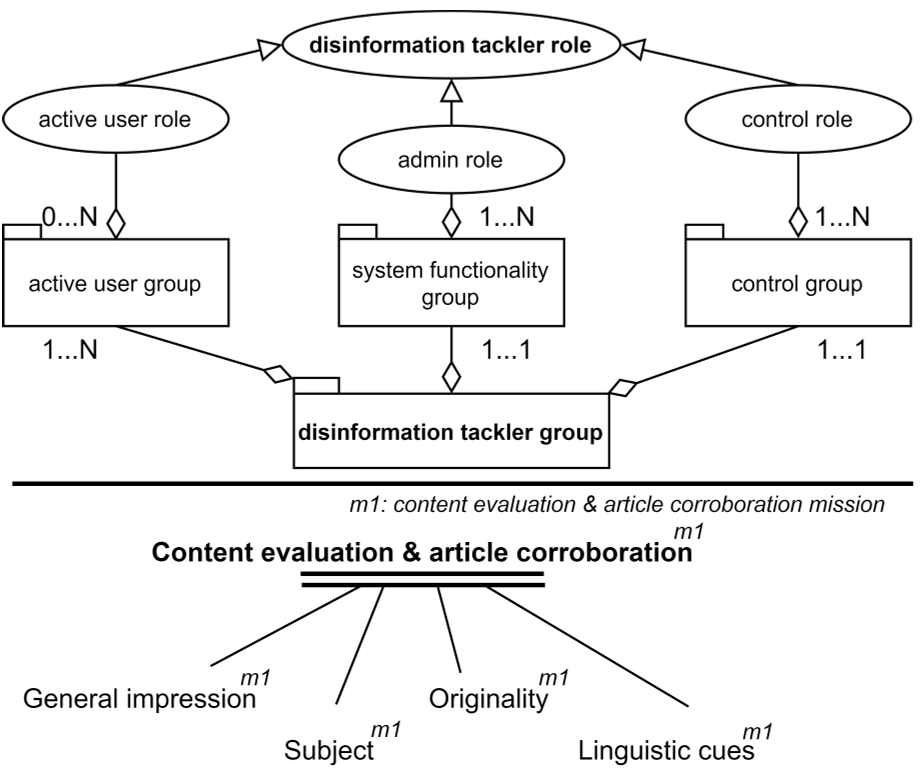 Figure 1: The six-process fact-checking workflow bridging human and machine efforts.
The system utilizes the JaCaMo platform to manage the software agents that proxy human users, helping them navigate the complex verification workflow.
The Disinformation Tackler Ontology
To make this machine-readable and interoperable, the authors introduced an OWL ontology. By extending the standard Web Annotation vocabulary, they treat humans and AI bots as "Agents" (dt:Agent) of equal first-class status, capable of providing evidence-based annotations.
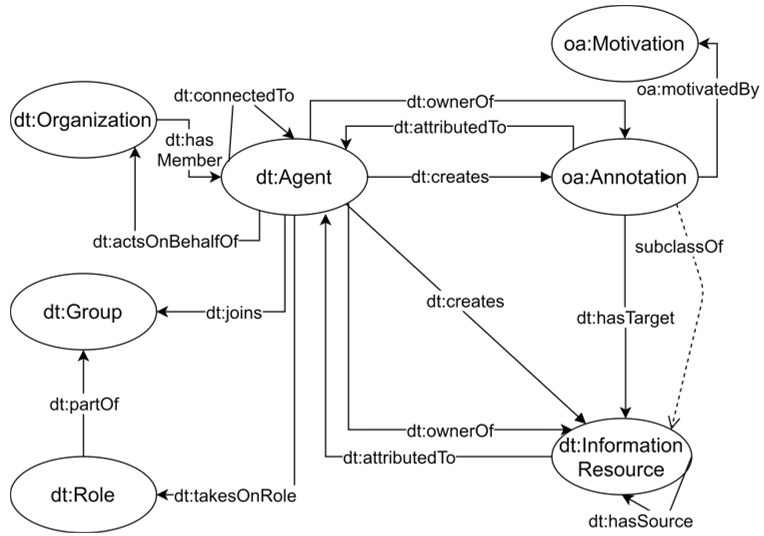 Figure 2: The Disinformation Tackler Ontology extending W3C standards.
Prototypical Implementation & Results
The researchers developed a browser plugin (integrating with the Hypothesis platform) that allows users to perform these 46 credibility checks in real-time while browsing.
- Scalability: The system can spin up "fact-checking organizations" on-demand for trending articles.
- Transparency: Every assessment is linked back to a specific agent and specific evidence, avoiding the "black box" nature of current AI moderation.
- Aggregation: The plugin summarizes findings from multiple agents to give the reader an immediate "credibility score."
Critical Analysis & Future Outlook
While the approach is theoretically robust, it faces the "cold start" and "malicious actor" problems common in decentralized systems. If a network is flooded with bad-faith actors (bots), the consensus mechanism could fail.
The authors acknowledge that future work must focus on community health—specifically detecting malevolent users and establishing "ground truth" in high-conflict scenarios. However, by moving the logic of fact-checking into a decentralized MAS, this work provides a scalable alternative to the centralized censorship models often proposed by big-tech platforms.
Takeaway
This isn't just a tool; it's a vision for the Web as a collaborative knowledge base. By distributing the burden of proof across humans and machines, we can reclaim the decentralized spirit of the Web without surrendering to the chaos of disinformation.