
SNet: Decoding the DNA of Social Media Influencers through Information Propagation
Some measures to detect the influencer on social network based on Information Propagation
This paper introduces the SNet framework, a social network representation model that couples users with tags to identify brand-specific influencers. It dual-evaluates influence through an "Influential Vector" (measuring interaction depth) and "Propagation Speed" (measuring temporal diffusion).
TL;DR
Researchers from Vietnam and the Czech Republic have developed SNet, a multi-dimensional model that identifies social media influencers not just by their follower counts, but by the speed and impact of their information propagation. By analyzing the relationship between "Users" and "Tags," the model provides a surgical approach to influencer marketing that yielded a 61% increase in comment engagement for real-world brands.
The "Vanity Metric" Trap: Problem & Motivation
Most brands still choose influencers based on follower counts—a "vanity metric" that often fails to translate into actual engagement or brand loyalty. The academic challenge is that influence is domain-specific and time-sensitive. A user might be influential in "Tech" but invisible in "Skincare." Furthermore, the speed of spread (how fast a post goes viral) is often ignored in static centrality algorithms.
The authors' insight is simple: Influence is a vector. It requires measuring not just who sees a post, but how they interact with it (Share vs. Comment) and how quickly that interaction ripples through the network.
Methodology: The SNet Framework
The core of the paper is the SNet Model, defined as a triplet :
- U (Users): Profiles, friends, and followers.
- T (Tags): The actual content (posts, clips) including "Seeders" and "Interactors."
- R (Relations): The connective tissue (who followed whom, who shared what).
1. The Influential Vector
The paper moves beyond simple counts by applying weights () to different actions. For example, a Share (Sharing Impact - SI) is often weighted more heavily than a Like because it demonstrates a higher level of "social reinforcement."
2. Propagation Speed & Social Pulse
This is the paper's "secret sauce." The authors define the Social Pulse as the volume of interest within a specific time window.
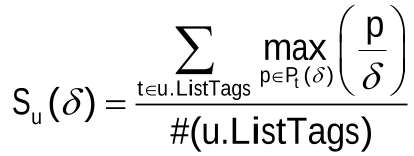
The Propagation Speed measures the maximum rate of spread for a user's tags. A true influencer is someone whose content doesn't just sit there—it explodes.
3. Sub-Graph Extraction
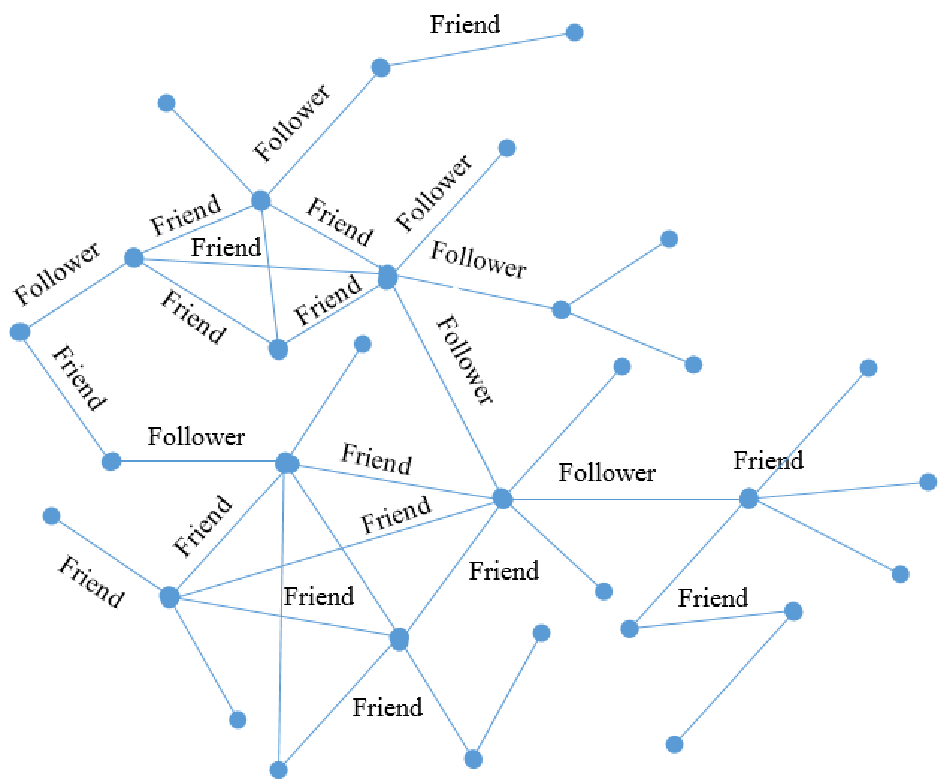
Instead of analyzing the entire Facebook graph, the model extracts a Brand-Specific Sub-Graph. It traverses the network to find users who have mentioned "Brand X," effectively mapping out the "Homophily" (the cluster of users with shared interests).
Experimental Results: Real-World ROI
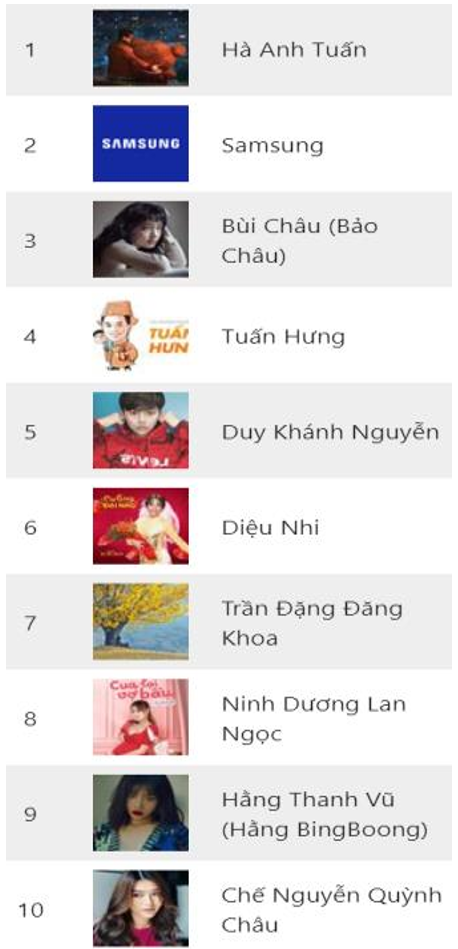
The authors tested SNet on Vietnamese Facebook users for a mystery "Product X." The results were compelling:
- Engagement Spike: During the campaign (Dec 1st–16th), the brand saw a massive surge in likes and comments.
- Share of Voice: Product X achieved a significantly larger "voice" compared to its competitors by specifically targeting the influencers identified by the SNet algorithm.
| Metric | Growth Rate (Nov vs Dec) |
|---|---|
| Posts | +38% |
| Comments | +61% |
| Shares | +8% |
Critical Analysis & Conclusion
The Takeaway: The SNet model provides a rigorous mathematical foundation for what marketers call "Word of Mouth." By quantifying the of information and isolating sub-networks, the researchers have created a blueprint for highly efficient, automated influencer discovery.
Limitations: The current model treats all "Tags" as text-based. In the modern era of TikTok and Reels, the physical content of the image or video (analyzed via Computer Vision) would likely provide even deeper insights into why a tag propagates.
Future Outlook: The next step for this research is integrating Natural Language Processing (NLP) to analyze the sentiment of propagation. It's not enough for a tag to spread quickly—it needs to spread positively. Identifying "Negative Influencers" could be just as valuable for brand crisis management.