
Smartphone Proximity as a Lifeline: Detecting Heavy Drinking Episodes via Passive Sensing
Detecting Drinking Episodes in Young Adults Using Smartphone-based Sensors
This paper presents a machine learning-based approach to detect drinking and heavy drinking episodes (HDE) in young adults using passive smartphone sensor data. Utilizing a Random Forest classifier, the authors achieved a 96.6% accuracy in distinguishing between non-drinking, drinking, and heavy drinking episodes in a real-world study involving 30 participants.
TL;DR
Researchers have developed a machine learning model capable of detecting drinking episodes with 96.6% accuracy using nothing but the sensors already in your pocket. By analyzing movements, communication patterns, and even how you type, the system identifies when a young adult transitions from casual drinking to a high-risk "Heavy Drinking Episode" (HDE), paving the way for instant, life-saving mobile interventions.
The Problem: The Latency of Intervention
Young adults have the highest prevalence of hazardous alcohol use. While text-based interventions exist, their efficacy is hampered by timing: they are rarely delivered at the moment the drinking occurs. Existing "gold standard" sensors like SCRAM ankle bracelets are stigmatizing and suffer from a 2-hour physiological lag, while self-reporting is prone to forgetfulness and bias. The challenge was clear: How do we detect drinking "in the wild" without asking the user a single question?
Methodology: Beyond the Breathalyzer
The study monitored 30 young adults for 28 days, collecting data via the AWARE framework. The genius of this approach lies in its multi-modal analysis. It doesn't just look at whether you're stumbling (accelerometer); it looks at:
- Communication Context: Increases in outgoing calls or texts to coordinate social gatherings.
- Human-Device Interaction: Slower typing speeds and more frequent keypress deletions (a proxy for motor-control impairment).
- Mobility: Radius of gyration and "Activity Recognition" (e.g., transition from walking to sitting in a vehicle).
System Architecture & Feature Engineering
The authors extracted 56 distinct features, ranging from battery charging duration to the "happy emoticon count" in messages. They discovered that temporal features (time of day, day of week) were the strongest predictors, but social indicators like "screen unlocks per minute" provided the critical nuance needed to separate heavy drinking from a late-night study session.
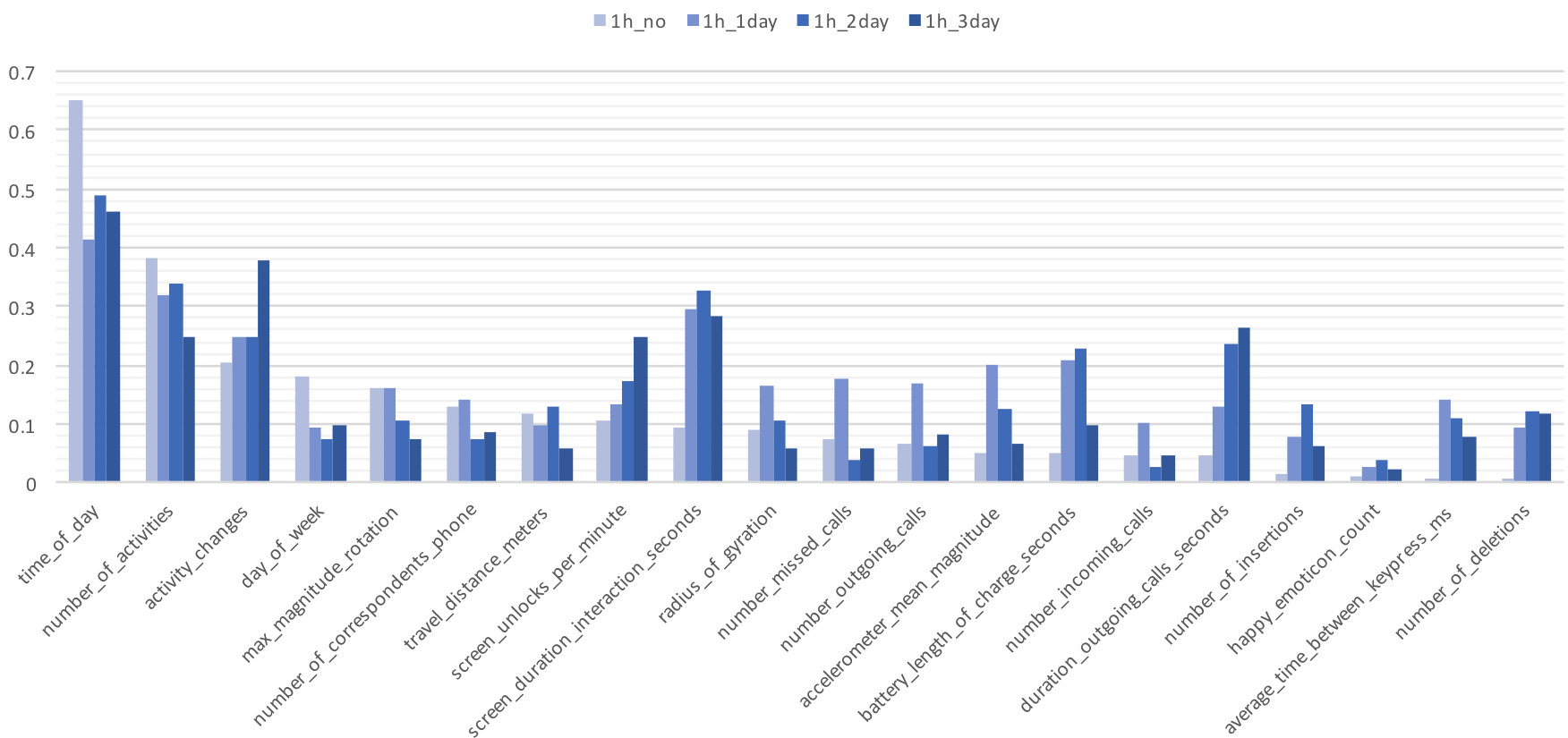 Figure 1: Information Gain analysis showing the importance of movement and screen interaction duration when historical data is included.
Experimental Results: Precision in the Wild
The study tested various window sizes and historical data depths. The results were a landslide victory for Random Forest (RF) models over Bayesian Networks or Decision Trees.
- Window Size: Shorter windows (30 minutes) were more effective than longer ones (2 hours), likely because they captured the rapid behavioral shifts at the start of an episode.
- The "History" Factor: Adding just 1 day of historical data boosted the True Positive Rate for heavy drinking from a dismal 32.1% to a staggering 90.9%. It turns out, your phone needs to know "normal you" to understand "drinking you."
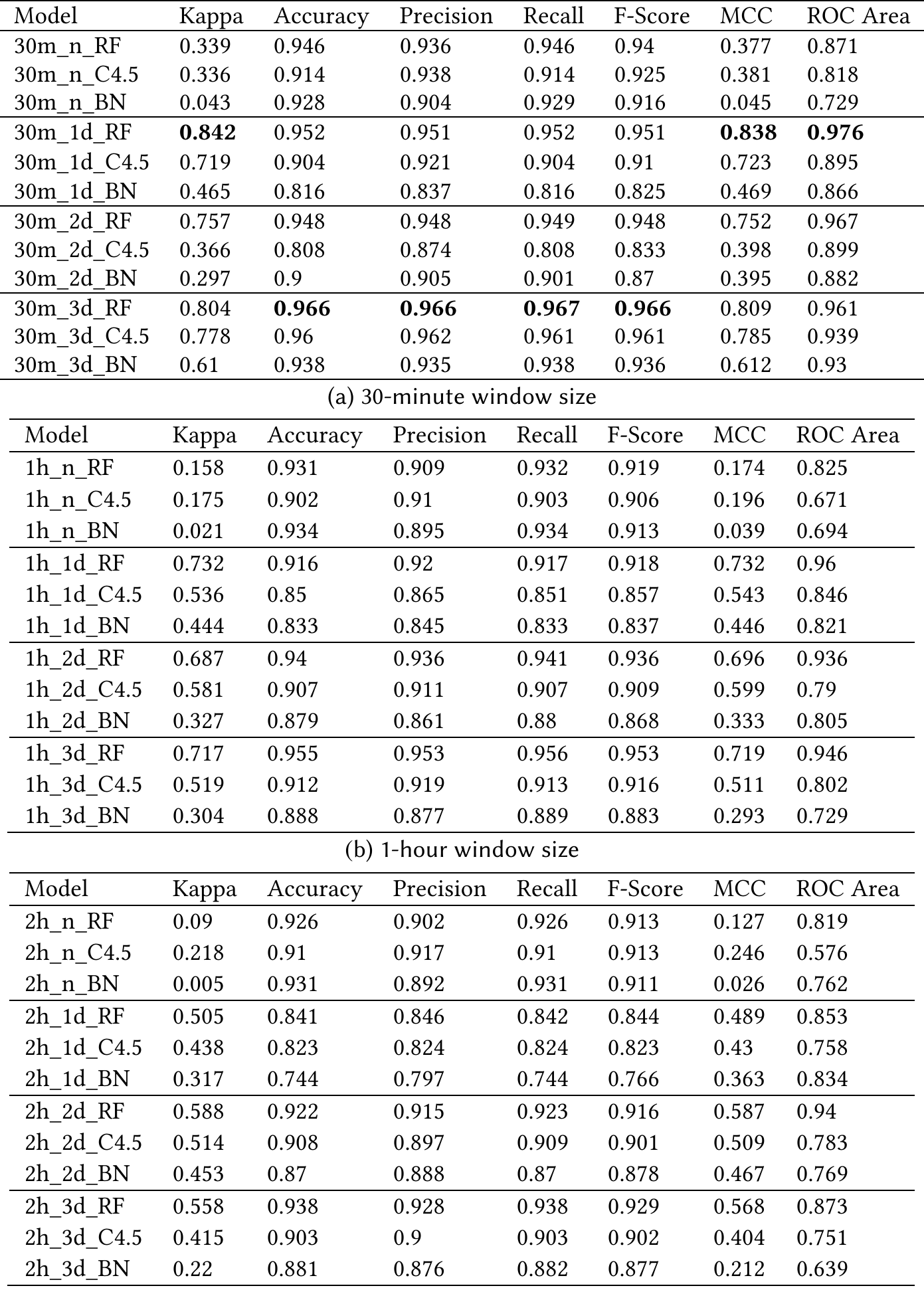 Figure 2: Comprehensive classifier performance metrics across different time windows.
Critical Insight: Why Historical Data Matters
The most profound finding is the "1-day history" rule. By comparing current behavior to the previous 24 hours, the model accounts for individual baselines. For example, a high "radius of gyration" might be normal for a delivery driver but serves as a strong signal for a student who usually stays on campus. This individual-in-context approach is what allows the model to achieve clinical-grade accuracy.
Conclusion and Future Outlook
This work transforms the smartphone from a mere communication tool into a digital biomarker sensor. By hitting 96.6% accuracy, the research moves us closer to a future where:
- JITAIs: Your phone detects a heavy drinking onset and automatically texts a "sober buddy" or suggests protective strategies (e.g., "Time to order a water").
- Clinical Reflection: Patients and doctors can review objective drinking patterns during follow-up visits, bypassing the "recall bias" of self-reporting.
Limitations: While the accuracy is high, the sample size (n=30) is a starting point. Future iterations will likely move from "population models" to "personalized models" that learn the specific "digital signature" of an individual's intoxication over months of use.
Takeaway for Practitioners
If you are building health-tech apps, the lesson is clear: Passive data + Temporal Context = Superior Predictive Power. You don't need a wearable to save lives; the sensors in the user's hand are already enough.