
FRAppE: Unmasking the "App-Nets" and Malicious Ecosystems on Facebook
13472_Detecting Malicious Facebook Applications.
The paper introduces FRAppE (Facebook’s Rigorous Application Evaluator), the first tool specifically designed to detect malicious third-party applications on Facebook. By analyzing 111K apps, the authors achieve a 99.5% detection accuracy and uncover a massive ecosystem of "app-nets" where malicious applications collude to propagate spam.
TL;DR
While many security tools fight social media spam by scanning links, they often ignore the "factory" producing them: malicious third-party applications. This paper presents FRAppE, a detection framework that reaches 99.5% accuracy by profiling app behavior and metadata. Beyond detection, it reveals the chilling reality of "app-nets"—highly organized clusters of apps that work together to bypass security and infect millions of users.
Background: The Facebook Gold Mine for Hackers
With over 20 million app installs per day, Facebook's third-party ecosystem is a prime target. Hackers use apps to steal personal data, spread survey scams, and use "app piggybacking" to make malicious posts look like they came from trusted names like FarmVille or Facebook for iPhone. Identifying these apps is a game of cat-and-mouse where the attackers are surprisingly "lazy" yet effective.
The Core Insight: Identifying the "Lazy" Hacker
The authors discovered that malicious apps leave distinct digital footprints compared to benign ones:
- Incomplete Profiles: 98.6% of malicious apps don't even bother with a category, company name, or description.
- Simplicity as a Weapon: 97% of malicious apps request only one permission (usually "publish_stream") to avoid scaring off victims with high-friction permission requests.
- Name Reuse: Instead of creating unique names, hackers create hundreds of apps named "The App" or "Profile Watcher" to run massive, redundant campaigns.
Methodology: How FRAppE Works
FRAppE operates in two modes: FRAppE Lite (on-demand features for real-time checking) and the full FRAppE (incorporating cross-user aggregated data).
1. Feature Engineering
The system uses an SVM classifier trained on features like:
- Identity Mismatch: Checking if the
client_idin the installation URL matches the actualapp_id. - Redirect Reputation: Using WOT (Web of Trust) scores for the domains where apps send users after installation.
- Aggregate Similarity: Tracking how many apps share identical names or post the same suspicious URLs.
2. Uncovering the Collusion (App-Nets)
The most significant contribution is the forensic analysis of "collusion graphs." Hackers use a "Promoter-Promotee" relationship where one app posts a link to install another.
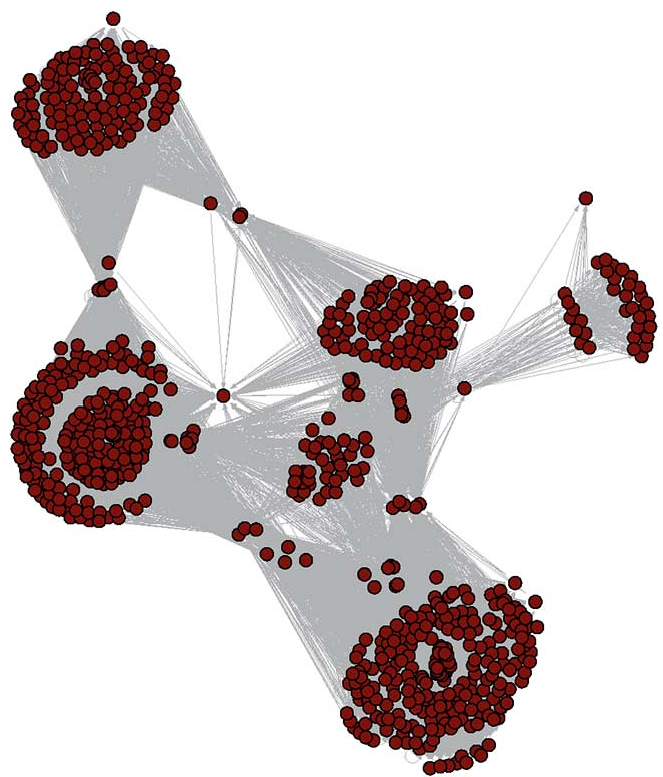 Fig 1: The lifecycle of a malicious app installation and its propagation.
Experimental Results: Near-Perfect Detection
In a dataset of 111K apps, FRAppE's performance was stellar. Even with a 10:1 ratio of benign to malicious apps (simulating real-world conditions), the accuracy remained at 99.5%.
| Feature Category | Accuracy | False Positive (FP) | True Positive (TP) |
|---|---|---|---|
| FRAppE Lite (On-demand) | 99.0% | 0.1% | 95.6% |
| FRAppE (Full) | 99.5% | 0.0% | 95.9% |
The researchers also found that 81% of the apps they flagged were eventually deleted by Facebook, validating FRAppE's predictive power.
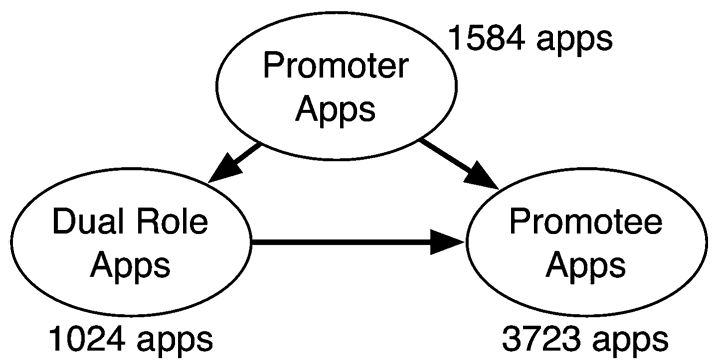 Fig 2: A Promotion Graph showing how malicious apps form dense, connected clusters (App-Nets) to support each other.
The Anatomy of an "App-Net"
The study identified "app-nets" with up to 3,484 connected apps. These networks use Fast-Flux redirection: a single shortened URL in a post redirects users to hundreds of different malicious apps over time. This ensures that if Facebook bans one app, the underlying campaign survives through its "siblings."
Critical Insight & Recommendations
The paper highlights a critical "piggybacking" vulnerability where hackers use the Facebook prompt_feed API with a stolen api_key to post malicious content under the guise of legitimate apps.
Key Takeaways for Platform Security:
- Strict Identity Enforcement: Platforms must ensure the
client_idmatches theapp_idduring redirection. - Ban App Cross-Promotion: Apps should be forbidden from redirecting users to the installation pages of other apps to break the viral collusion cycle.
- Source-Based Filtering: Spam protection must move upstream from the URL to the Application ID that generated it.
Conclusion
FRAppE proves that while hackers are organized, they are also predictable. By shifting the focus from what is being posted to who (which app) is posting it, we can identify malicious intent with nearly 100% certainty before a single user clicks a scam link.