
Hidden Distortion: Unmasking and Mitigating Bias in the Social Media Mirror
Detecting and mitigating bias in social media
The paper "Detecting and Mitigating Bias in Social Media" identifies and analyzes three critical types of bias—API, Population, and Platform News bias—that distort social media research. By comparing Twitter's sampled "Streaming API" against the full "Firehose" data, it demonstrates significant discrepancies in content representation and proposes diagnostic frameworks for data integrity.
TL;DR
Social media is the "world’s largest laboratory," but its data is often fundamentally broken. This paper by Fred Morstatter reveals that the 1% "sample" data researchers rely on is often not representative of reality. By auditing Twitter's API against its total data "Firehose," the author exposes massive gaps in content, demographics, and platform-driven news, providing a roadmap to detect and fix these distortions.
The "Random Sample" Myth: Problem & Motivation
Most social media research operates on a dangerous assumption: that the data provided by platforms via APIs is a representative, random slice of the total conversation. Morstatter argues that this is rarely true.
The motivation for this work stems from the realization that social media is biased at three distinct levels:
- Selection Bias: Who is actually on the platform? (e.g., Pinterest's female-dominated base).
- Sampling Bias: How do the platform's algorithms decide which 1% of data to give to scientists?
- Algorithmic Bias: How do "Trending" features manipulate what users see and talk about?
If these biases aren't accounted for, any conclusions about human behavior, political sentiment, or disaster response are built on a foundation of sand.
Methodology: Auditing the Black Box
The most striking part of the methodology is the direct comparison between the Twitter Streaming API (1%) and the Twitter Firehose (100%).
1. API Bias Detection
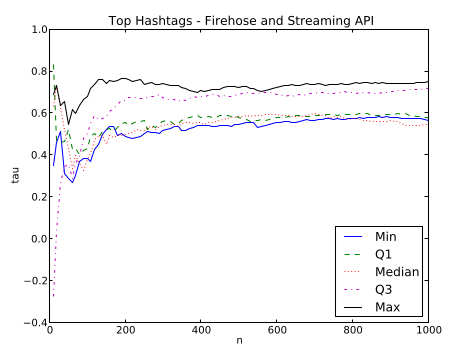
The author tracked a specific event—protest activity in Syria—for one month. By collecting every single relevant tweet from the Firehose and comparing it to the sampled API, they could calculate the correlation of top hashtags. If the sample were truly random, the top hashtags should match. Instead, they found significant divergence.
2. The "Barometer" Solution
To solve this, Morstatter developed a "barometer" to help researchers identify when the API is being biased. Since a researcher usually doesn't have access to the Firehose, this tool acts as a diagnostic to warn when the sample is diverging from expected statistical distributions.
Experimental Insights: The "Trending" Trap
One of the paper’s most modern insights is Platform News Bias. Platforms like Facebook and Twitter show users what is "Trending," but is that a fair representation of what users are actually talking about?
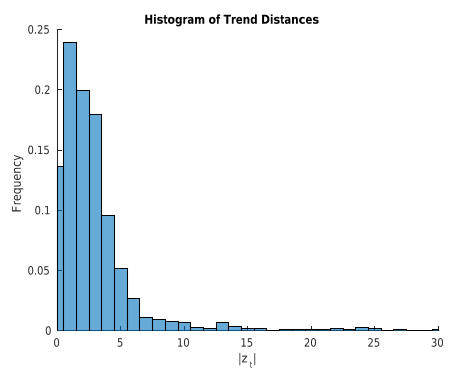
The author collected 50,000 trending stories and compared them to the raw 1% sample of all site discussion.
- Finding: Over 50% of the trends were significantly biased.
- The Disconnect: The words highlighted in the "Trending" sidebar often did not match the vocabulary or sentiment of the millions of users discussing those same topics. This suggests that platforms "engineer" the conversation rather than just reflecting it.
Critical Analysis & Conclusion
Morstatter’s work is a sobering wake-up call for the "Big Data" era. It reminds us that quantity is not quality.
Takeaways:
- Sampling is not Random: Platform APIs are optimized for server efficiency or business logic, not for scientific rigor.
- Mitigation is Possible: Using multiple samples and "barometer" tools can reduce error, though not eliminate it entirely.
- Demographics Matter: We must move toward "stratified" social media collection to ensure voices from underrepresented groups (like the elderly on Twitter) are amplified.
Future Outlook: In the age of AI, where social media data is used to train Large Language Models (LLMs), Morstatter’s findings are more relevant than ever. If the training data is sourced from biased samples or algorithmically curated trends, the resulting AI will inevitably inherit those same distortions. The next frontier is not just detecting bias in data, but preventing it from being "baked in" to the foundation of modern AI.