
The Digital Masquerade: Architectural Strategies to Unmask Identity Deception in SNS
11795_Detecting and Preventing Online Identity Deception in Social Networking Services.
The paper "Detecting and Preventing Online Identity Deception in Social Networking Services" provides a comprehensive framework for identifying and mitigating identity concealment, theft, and forgery in SNS. It categorizes defense strategies into user-centric and developer-centric perspectives, highlighting advanced methodologies such as natural language processing (NLP), social network analysis, and biometric verification.
Executive Summary
TL;DR: This seminal work dissects the anatomy of online identity deception—concealment, theft, and forgery—and proposes a multidisciplinary defense roadmap. By blending technical detection (NLP, image analysis) with psychological prevention (media richness, signaling theory), the authors argue for a "security by design" approach to protect the 1.2 billion+ users navigating social networking services (SNS).
Context: Published as a technical guide for the IEEE, this paper bridges the gap between behavioral psychology and computer science, positioning itself as a foundational framework for SNS developers battling increasingly sophisticated social engineering.
The Modern Deceiver's Edge: Why We Fail to Detect Lies
In the physical world, we rely on "leakage cues"—fidgeting or micro-expressions—to spot a liar. Online, these signals vanish. The paper identifies three critical pain points:
- Low Moral Cost: Distance and computer-mediated communication reduce the psychological barrier for deceivers.
- Lack of Accountability: SNS platforms often allow "registration without identity confirmation," creating a playground for identity foragers.
- Human Limitations: Humans are statistically poor at detecting deception, often scoring no better than a coin flip (50% accuracy).
The Detection Framework: From Text to Biometrics
The authors split detection into two distinct silos: Human-aided and System-automated.
1. Structural and Social Analysis
The paper argues that a user’s social context—their employment history, family ties, and network connections—is the ultimate "assessment signal." Research indicates that including these social features significantly boosts detection accuracy.
2. The Computational Toolkit
- Textual Analysis: Using Natural Language Processing (NLP) to identify stylistic inconsistencies.
- Similarity Analysis: Detecting if one individual is operating multiple accounts by comparing lexical features (though this comes with a high computational cost).
- Image Forensics: Detecting forged profile pictures by analyzing "blocking artifacts" and resampling traces.
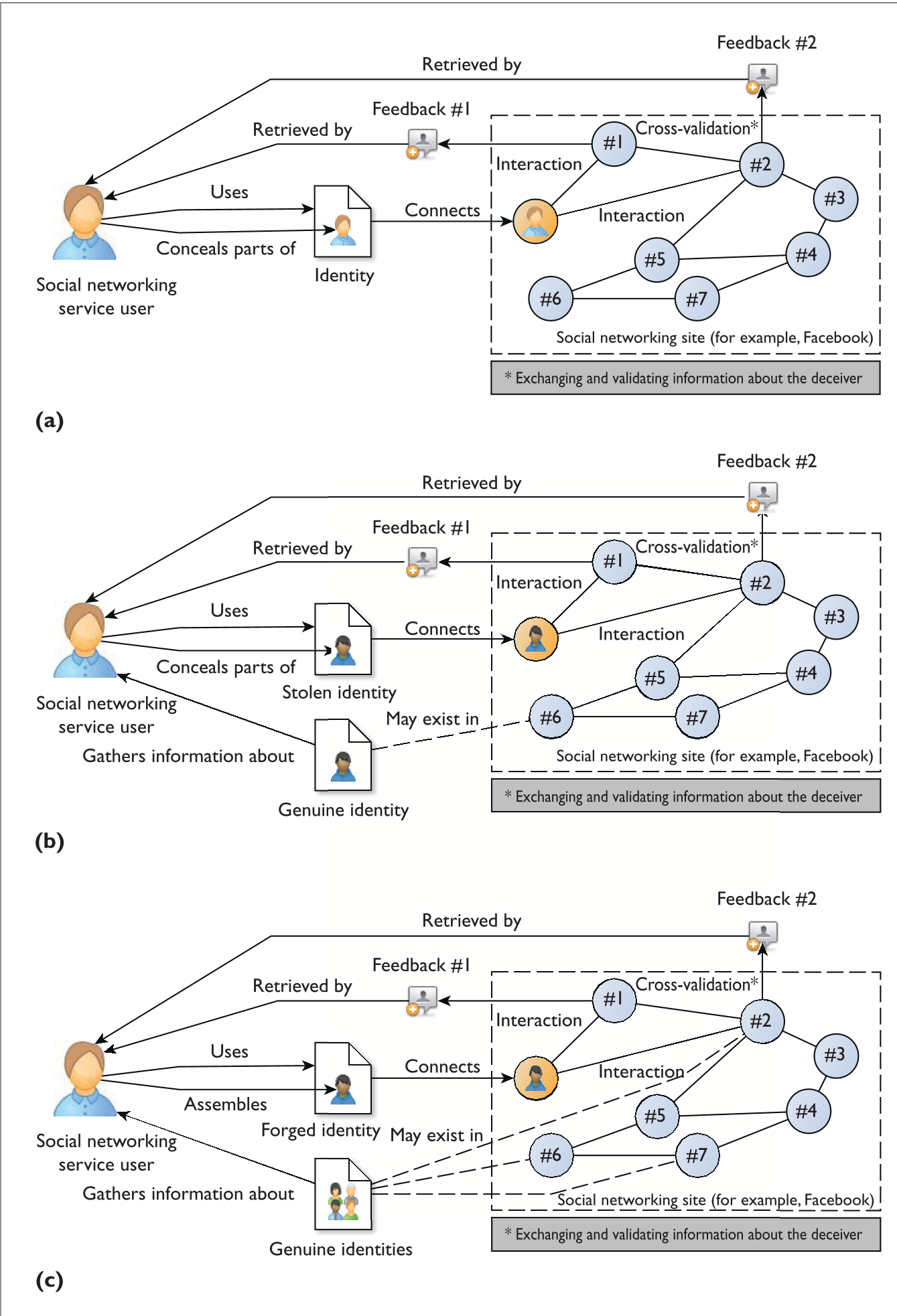 Figure 1: Conceptual models of Identity Concealment, Theft, and Forgery.
Prevention: Psychological Pressure and Design
Technical detection is only half the battle. The authors introduce "Prevention by Design" through:
- Media Richness: Increasing the channels of communication (video, synchronous chat) makes it harder for deceivers to maintain a facade without making errors.
- Psychological Pressure: Implementing "viewer tracking" where a deceiver knows they are being watched by their potential victim, increasing the cognitive load on the attacker.
- Gamified Trust: Gradually unlocking SNS features only after a user has established a "history of participation" and verified social capital.
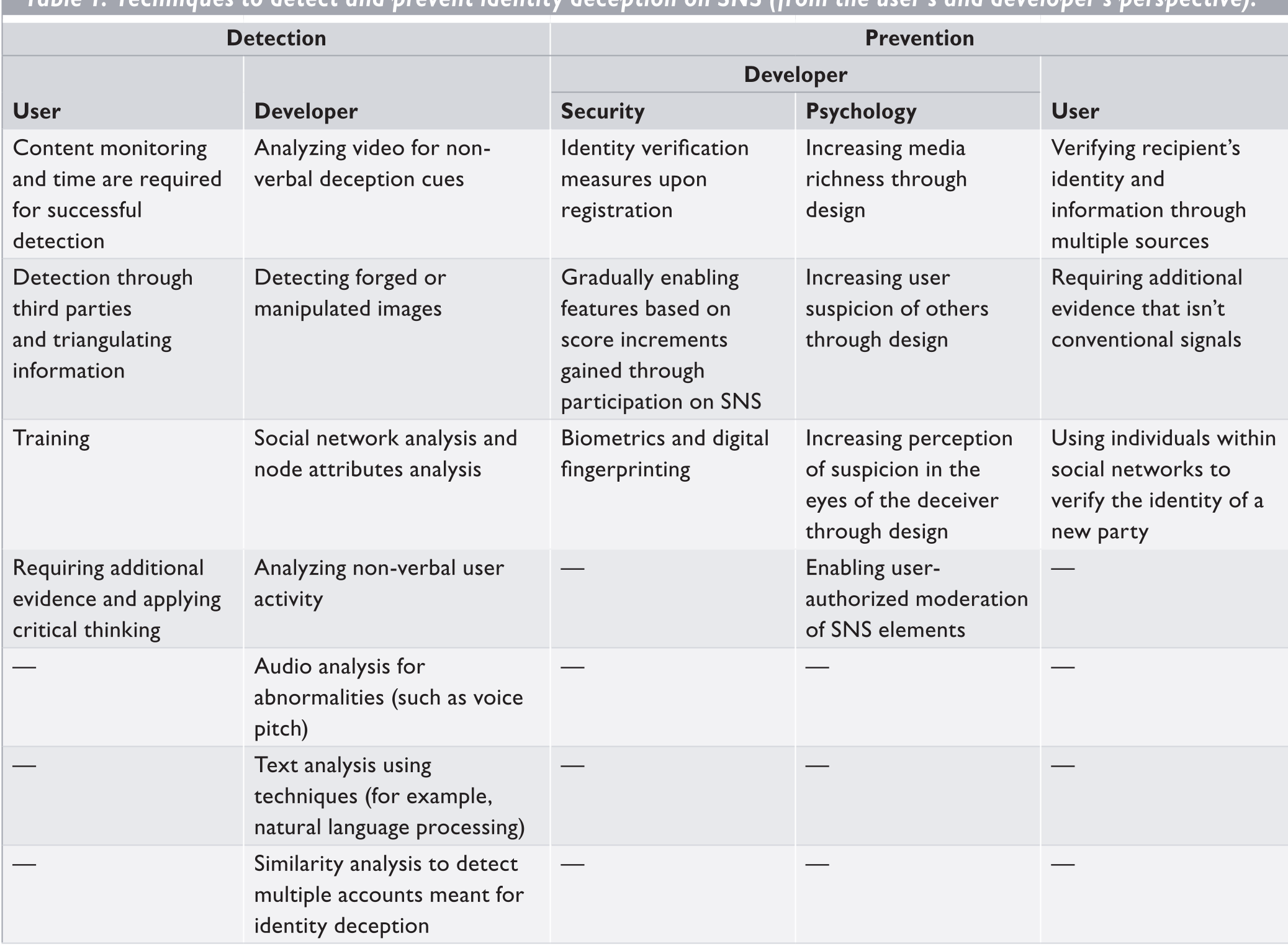 Table 1: A holistic view of detection and prevention strategies for users and developers.
Experimental Evidence & SOTA Comparison
The paper highlights that while human detection is slow (taking weeks), automated methods like Expectancy Violations Theory (EVT) modeling can identify fake Wikipedia accounts with a 68% success rate. The authors emphasize that "Triangulation"—verifying info via third parties—remains the most effective human strategy.
Critical Insights & Future Outlook
The "Takeaway" is clear: we cannot rely on a single silver bullet. Identity deception is an evolutionary arms race.
Limitations:
- Computational Load: Implementing similarity checks on platforms like Facebook (billions of users) is currently infeasible.
- Privacy Paradox: Many prevention measures (biometrics, heavy monitoring) conflict with user privacy and the ideal of a "free" web.
Future Work: The authors point toward "Behavioral Fingerprinting" (keystroke dynamics, mouse movements) as the next frontier for unobtrusive, real-time deception detection. As SNS continues to flood our lives, the goal is to shift the burden of proof from the victim back to the deceiver.