
Beyond Pixels: Decoding Social Context through Multimodal Thin-Slicing
Detecting social context: A method for social event classification using naturalistic multimodal data
2015-05-01
Summary
Problem
Method
Results
Takeaways
Abstract
This paper introduces a multimodal machine learning framework for Social Event Classification, targeting eight complex scenarios like weddings and interviews. By utilizing "thin-slicing" inspired global audio-visual features, the authors achieved a 51.87% classification accuracy on a noisy, naturalistic YouTube dataset.
## TL;DR
Researchers have developed a method to help robots "read the room" by classifying social events (like weddings, parties, and classes) using simple, noisy audio-visual data. By mimicking human "thin-slicing"—the ability to grasp a scene’s gist in under 500ms—the system achieves over 51% accuracy across eight categories, proving that global "vibe" features are often more important than fine-grained object detection for social intelligence.
## Background: The Social Gap in Robotics
When you walk into a room, you know within milliseconds if you are at a funeral or a birthday party. This **situational context** dictates your volume, your posture, and your expectations. For robots, however, a "room with people" is often just a collection of bounding boxes and signals. Most prior work either ignores this high-level context or relies on "cheat codes" like GPS metadata and time stamps.
This paper argues that for a robot to truly integrate into human society, it must perceive social context directly from its sensors, just as we do.
## Methodology: The Power of Global Cues
The core insight of the authors, prompted by neurological models, is that **low-resolution information** (color, brightness, volume) is processed first to provide a "broad context." This context then acts as a filter for higher-level object recognition.
### 1. The Formal Model
The authors define social context as a union of multiple factors:
$$SocialContext(P, E) \approx SituationalContext(E) \uplus SocialRole(P, E) \uplus SocialNorms$$
In this study, the focus is strictly on the **Situational Context**, which encompasses Salient Objects, Behaviors, and the specific Social Event.
### 2. Feature Extraction and "Thin-Slicing"
Instead of tracking every face or hand movement, the authors extract:
* **Visual**: Mean HSV color, brightness, and contrast (light-to-dark ratio).
* **Audio**: Mean volume and percentage of silence.
These are calculated over 500ms temporal windows, preserving a "coarse" temporal flow without the computational overhead of deep feature maps.
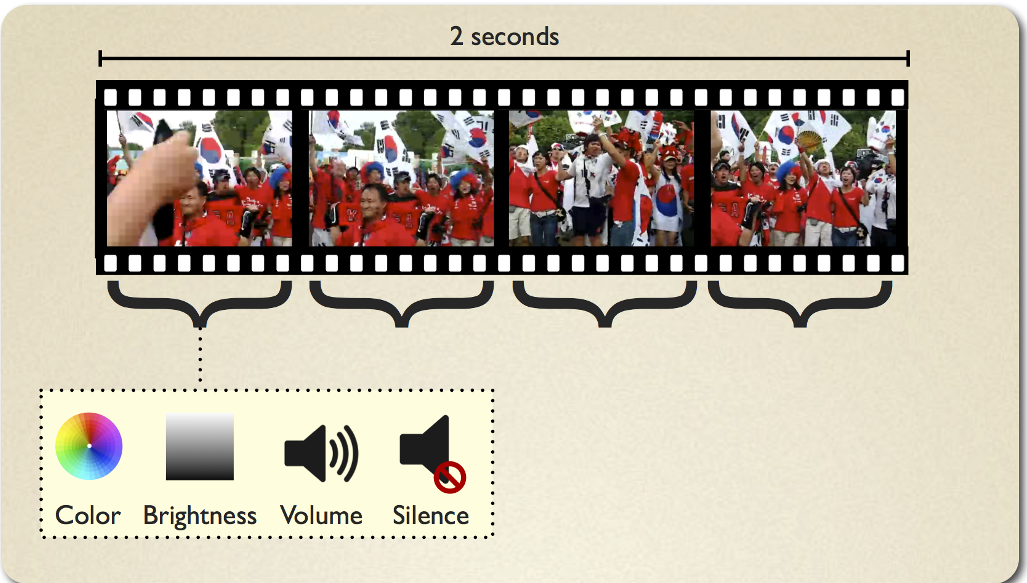
*Fig 1: The architecture of the feature extraction pipeline, showing the window-based fusion of audio and video cues.*
## Experimental Results: K-NN and Multimodality
The study used 320 highly variable YouTube videos. Classification results showed a stark contrast between unimodal and multimodal performance.
* **K-NN is King**: Surprisingly, K-Nearest Neighbors (K=8) outperformed SVM and Naive Bayes when using multimodal data. Why? Because K-NN makes fewer assumptions about the distribution of the data, which is crucial when dealing with "noisy" real-world YouTube clips.
* **The Synergy Effect**: Combining audio and video wasn't just slightly better; it was transformative. For "Weddings," video-only accuracy was a measly 8.99%, but jumped to **53.98%** when audio was added.
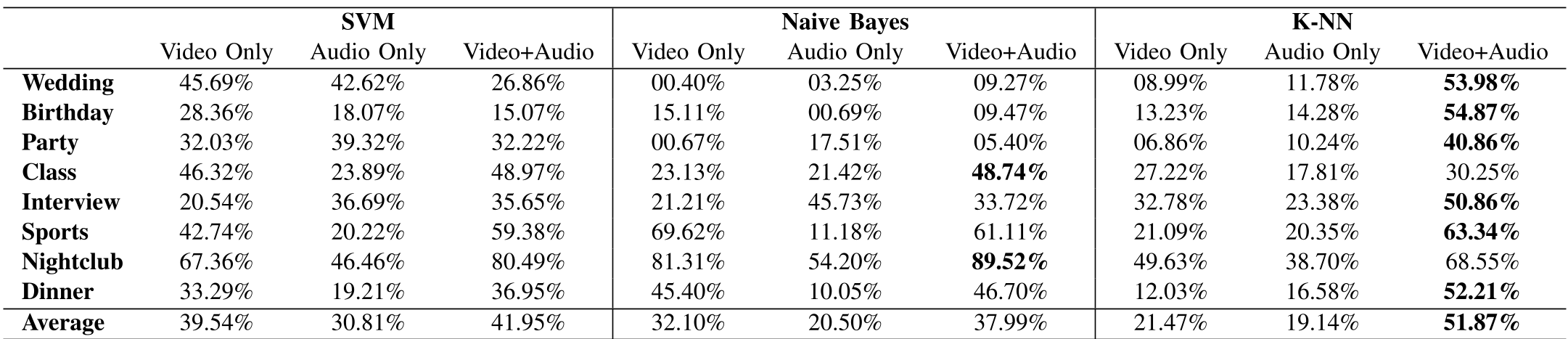
*Table 1: Accuracy table showing the massive performance leap (bolded) when shifting to Multimodal K-NN.*
## Critical Insights: Why Does This Work?
The effectiveness of this "coarse" approach lies in the **uniqueness of social environments**:
1. **Event Signatures**: A nightclub has a specific "strobe" lighting and volume signature that looks nothing like a classroom.
2. **Audio-Visual Alignment**: Social events are defined by the *relationship* between sight and sound. A "Sports" event has high-motion visuals coupled with high-volume, fluctuating crowd noise. By using early fusion, the model captures these correlations directly.
### Limitations
While impressive, the model struggles with categories that share high visual/auditory overlap, such as Weddings vs. Birthdays vs. Parties. These require more "fine-grained" cues (like specific objects or rituals) to differentiate accurately.
## Future Outlook
This research provides a "starting point" for a pipeline where a robot first recognizes the broad context (e.g., "I am at a party") and then queries a database of **Situational Norms** to decide how to act.
In the future, moving from "offline" YouTube classification to "online" sensor fusion on actual hardware will be the ultimate test for this low-cost, high-impact social sensing approach.