
Interaction Geometry: Decoding the Hidden Math of Social Situations
Detecting Social Situations from Interaction Geometry
This paper introduces a quantitative framework for detecting social situations based on interaction geometry, specifically interpersonal distance and relative body orientation. Using high-precision infrared (IR) tracking and Gaussian Mixture Models (GMM), the authors demonstrate the ability to identify dyadic social interactions, achieving up to 77.81% classification accuracy.
TL;DR
Researchers at TU München have developed a way to "read" social interactions using nothing but the physical distance and orientation between people. By mapping these movements with sub-millimeter precision through IR tracking, they’ve proven that social context can be accurately identified by machines—paving the way for mobile devices that truly understand our social surroundings.
Background: Beyond the Digital "Friend" List
We usually think of social networks as digital graphs—Facebook friends or LinkedIn connections—that change over months. However, the most vital social networking happens in the "real world" over minutes. This paper shifts the focus from long-term virtual ties to micro-social scales. The core insight is that human social behavior is governed by interaction geometry: a subconscious choreography of distance and angles.
The Problem: The Resolution Gap
Traditional sociology is "low-res." It uses questionnaires to ask who you liked at a party. Current mobile tech is "medium-res," using GPS to see if you were at the party. But neither can tell if you were actually talking to someone or just standing near them. To bridge this, we need a way to transform low-level physical signals (where you are facing) into high-level social context (are you in a conversation?).
Methodology: Mapping the Social Manifold
The authors propose a simplified 4-tuple model for a social situation: (Participants, Time, Space, Semantics). They focus on the dyadic (two-person) relationship, reducing the complexity of human posture to two key variables:
- : The distance between centers of mass.
- : The relative angle of the shoulder lines (torso orientation).
Experimental Rigor
To find the ground truth, they used an 8-camera Infrared Tracking System (D-Track) and wearable beacons. Unlike noisy mobile GPS, this setup provided <1mm accuracy. Nine participants interacted in a 3m x 3m space while their positions were logged at 60 frames per second.
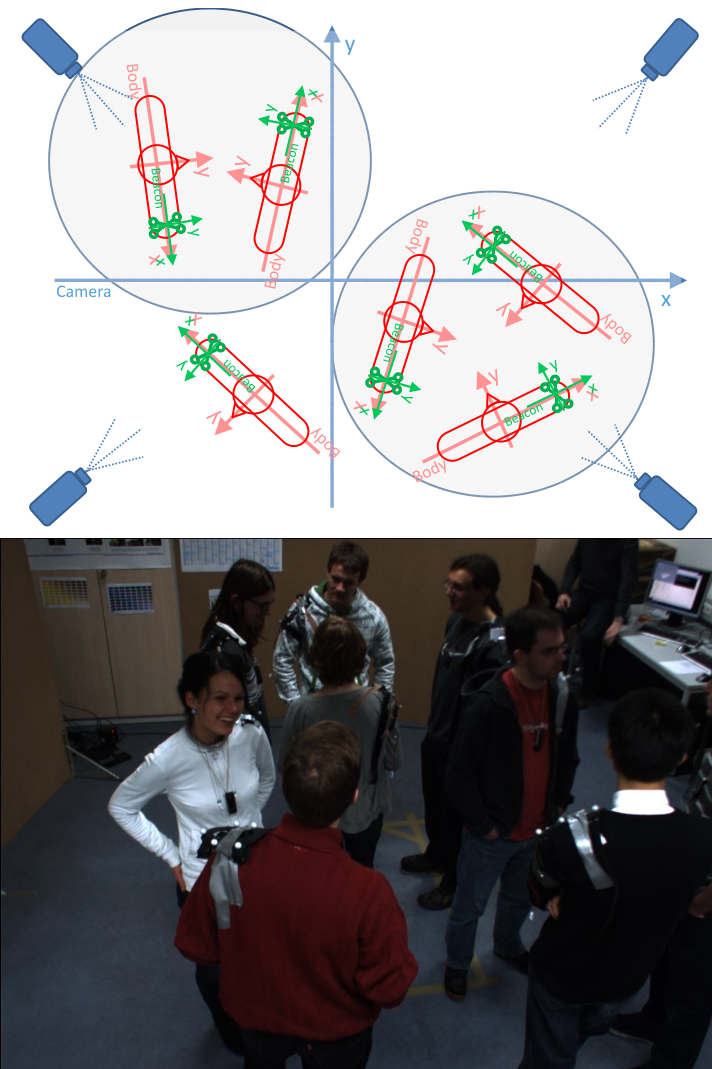 Figure 1: The IR tracking environment used to capture precise social movements.
Discovery: The "Lurker" and the "Casual Zone"
The data revealed fascinating physical "signatures" of social behavior:
- The Casual-Personal Zone: Most active conversations happened at with a relative angle of . This tells us people prefer a slightly open "V" shape rather than a strict face-to-face confrontation, allowing them to remain aware of their surroundings.
- The Lurker Gaussian: A distinct cluster was found where one person stood behind another (). This represents the "lurker"—someone waiting for an opening to join a conversation.
- The Avoidance of Indifference: The data showed a prominent minimum at (parallel facing) for social interactions. Humans either turn toward each other to talk or turn away to end the interaction; staying parallel is socially "indifferent."
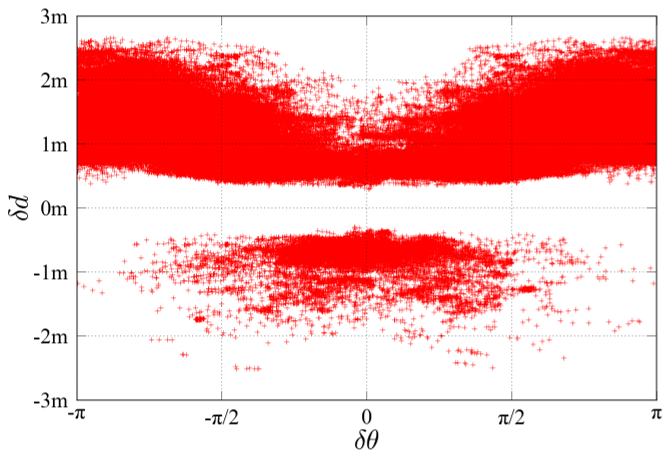 Figure 2: Heatmaps showing the high-density geometric configurations that define a "Social Situation" (S⊕).
Results: Can Machines Label Social Reality?
The authors tested several classifiers to see if they could predict a "social situation" based solely on those two geometric features.
| Classifier | Accuracy |
|---|---|
| SVM (Support Vector Machine) | 77.81% |
| GMM (5 Gaussians) | 74.67% |
| Naive Bayes (Kernel) | 73.10% |
While SVM won on pure accuracy, the Gaussian Mixture Model (GMM) is arguably more valuable. It provides a "probability map" of human interaction that can be used for more complex reasoning over time (e.g., using Hidden Markov Models).
Critical Insight & Future Outlook
This work demonstrates that social signals are algorithmically robust. You don't necessarily need complex facial recognition or audio analysis to know if people are interacting; their "Interaction Geometry" speaks loud enough.
Limitations: The current study relies on high-end IR cameras. The next frontier is achieving this same level of detection using the noisy sensors found in standard smartphones (accelerometers and digital compasses).
Closing Thought: This research moves us closer to "Social Life-logging," where our devices can automatically document our meaningful social encounters, creating a digital diary not just of where we were, but who we truly connected with.