
Digital Phenotyping: Predicting and Treating Mental Illness through Social Media
11833_Detecting and Treating Mental Illness on Social Networks.
This paper introduces a predictive framework designed to identify and support social media users suffering from mental illnesses like depression and anxiety. By integrating psychometric questionnaire data with social network features (posts, images, social connections), the researchers developed machine learning models that classify users' mental health status to enable proactive digital interventions.
TL;DR
Mental health disorders are a global crisis, and traditional healthcare systems are overwhelmed. This research proposes a proactive solution: using machine learning to analyze social network data (posts, social ties, and timing) to identify users at risk of depression. By correlating linguistic patterns with clinical scores, the framework aims not only to detect illness but to deliver real-time interventions directly on social platforms.
The Scalability Problem in Mental Health
Current mental health diagnosis is often a "snapshot" process—patients visit a clinic only after symptoms become severe. With an estimated economic impact of US$6 trillion by 2030, the status quo is unsustainable. The challenge lies in the shortage of services and the lack of continuous monitoring. Social media provides a continuous stream of behavioral data, yet the field lacks a robust pipeline that connects this data to clinically validated labels and immediate intervention.
Methodology: Bridging the Gap between Data and Clinical Truth
The researchers designed a comprehensive pipeline to turn digital footprints into diagnostic insights.
- Longitudinal Synchronization: Unlike one-off studies, this method collects survey data four times over two months to track the progression of mental states.
- Multimodal Feature Extraction: The data involves more than just text. It includes:
- Linguistic Markers: Using LIWC to extract psychological categories from posts.
- Social Dynamics: Monitoring friend counts and check-in patterns.
- Informed Consent Integration: A dedicated web app manages API permissions, ensuring ethical data collection.
Insights from the Pilot Study
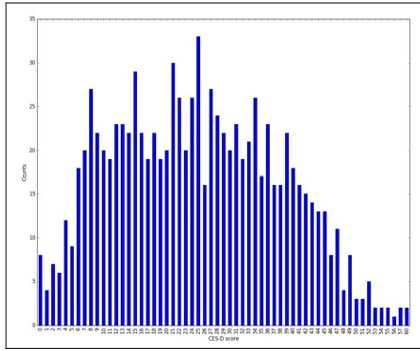
Using the myPersonality dataset, the authors validated their approach against the CES-D (Center for Epidemiological Studies-Depression) scale.
The "Grammar" of Depression
The study found statistically significant correlations between specific language use and high CES-D scores:
- Self-Focus: A sharp increase in 1st person singular pronouns (I, me, my), suggesting internal preoccupation.
- Emotional Valence: High frequency of "sad" category words.
- Cognitive Style: A negative correlation with analytical thinking. Depressed users tend to post in more narrative, less structured ways.
Benchmarking Performance
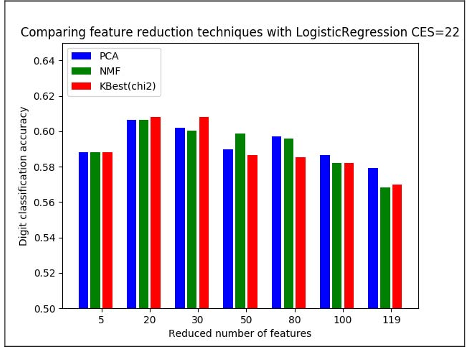
The pilot tested multiple classical Machine Learning algorithms. While most achieved an AUC (Area Under the Curve) near 0.70, the results indicate a stable baseline for "behavioral classification" using only text-based features.
Deep Insight: Beyond Detection to Treatment
The most innovative aspect of this work is the proposed Intervention Model. Most papers in this field stop at "Detection." This research advocates for a closed-loop system:
- Detection: Identification of at-risk users via the trained ML model.
- Treatment: Immediate delivery of health service links and support information within the social network interface.
Critical Analysis & Future Outlook
While the pilot study is promising, the AUC of 0.70 suggests that linguistic features alone have limitations. Mental health is deeply contextual.
- Future Work: Incorporating image analysis (computer vision) to detect depressive cues in uploaded photos and temporal analysis (predicting the timing of posts) could significantly boost accuracy.
- The Ethical Frontier: The authors rightly acknowledge the need for investigating user concerns. Using social data for health monitoring is a double-edged sword that requires strict privacy controls and user trust to be effective.
This work represents a critical shift from "Social Media as a distraction" to "Social Media as a diagnostic tool," potentially saving millions in healthcare costs through early, automated detection.