
DCST: Unmasking Hidden Secrets in the Social Network Era
Detection of distributed steganographic information in social networks
This paper introduces the SDA (Steganalysis Detection Architecture) and a specific tool called DCST (Dynamic Content Steganalysis Tool) designed to detect hidden steganographic data within social networks and Web 2.0 environments. By integrating with the open-source StegSecret engine, the system automates the acquisition and analysis of dynamic web content, including images and text, that are often shielded behind authentication and Captcha mechanisms.
TL;DR
As social interactions migrated to gated platforms (Facebook, RSS, Twitter), traditional steganalysis tools broke. This paper introduces the SDA Architecture and the DCST tool, which turns standard web browsing into an automated hunt for hidden data. By acting as a transparent proxy, it bypasses Captchas and logins to analyze images and text "in-flight" using advanced statistical detection.
The Problem: The "Closed Wall" of Web 2.0
Before the rise of social networks, steganographers hid data in static files on public websites or Usenet. Today, the most effective "covers" are hidden behind authentication, private profiles, and Captchas.
For security analysts, this presents a paradox: automated tools cannot login or solve Captchas easily, while human analysts cannot manually scan the millions of images uploaded daily to platforms like Flickr or YouTube. This gap creates a sanctuary for the distribution of malware, child pornography, or clandestine communications.
Methodology: The SDA and DCST Framework
The authors move away from the "isolated crawler" model toward a Stego-Proxy (DCST) approach.
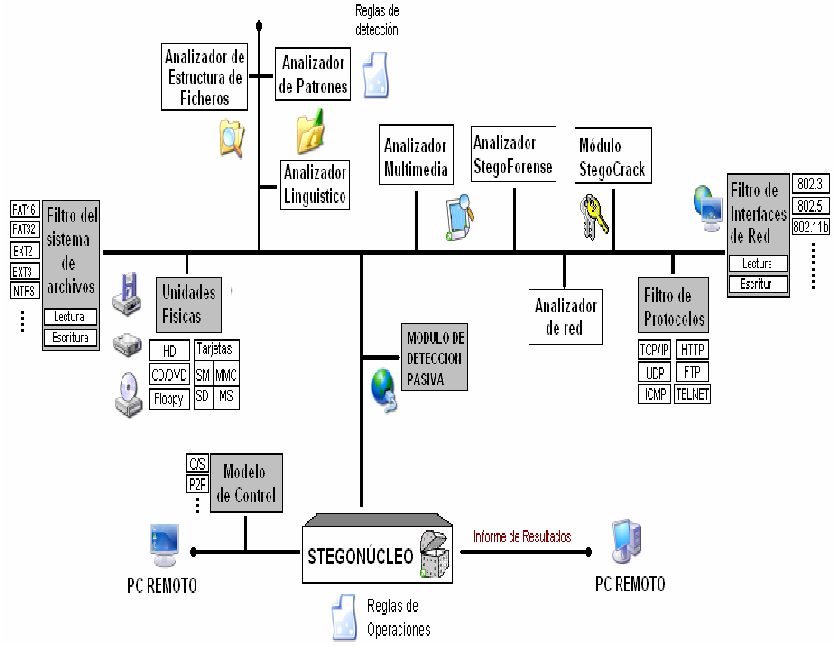
1. The SDA (Steganalysis Detection Architecture)
The SDA is the theoretical backbone, divided into modular components:
- Fixed Pattern Detection: Looking for signatures of common tools like Camouflage or Jphide.
- Stego-Forensics: Checking for the presence of steganographic software on a machine via cryptographic hashes.
- Heuristic Structure Analysis: Detecting anomalies in file headers (e.g., "End of File" data appending).
2. The DCST (Dynamic Content Steganalysis Tool)
DCST acts as the "harvester." It can:
- Monitor Caches: Scrape the local browser cache (Firefox/IE) to analyze what the user has already seen.
- Transparent Proxying: Intercept traffic between a user and the server. Since the user provides the "human intelligence" to bypass the Captcha, DCST can analyze the content once it is unlocked.
- Email & RSS Integration: Automatically analyze attachments and feed updates.
Experiments: Statistical Detection in Action
The core detection engine, StegSecret, employs several heavy-hitting academic algorithms:
- LSB Analysis: Detects modifications in the Least Significant Bits of pixels.
- Visual Attacks: Enhances the noise in a file to make hidden bit patterns visible to the human eye.
- Chi-Square Attack: Measures the "Pair of Values" frequency to see if the statistical distribution has been flattened by message embedding.
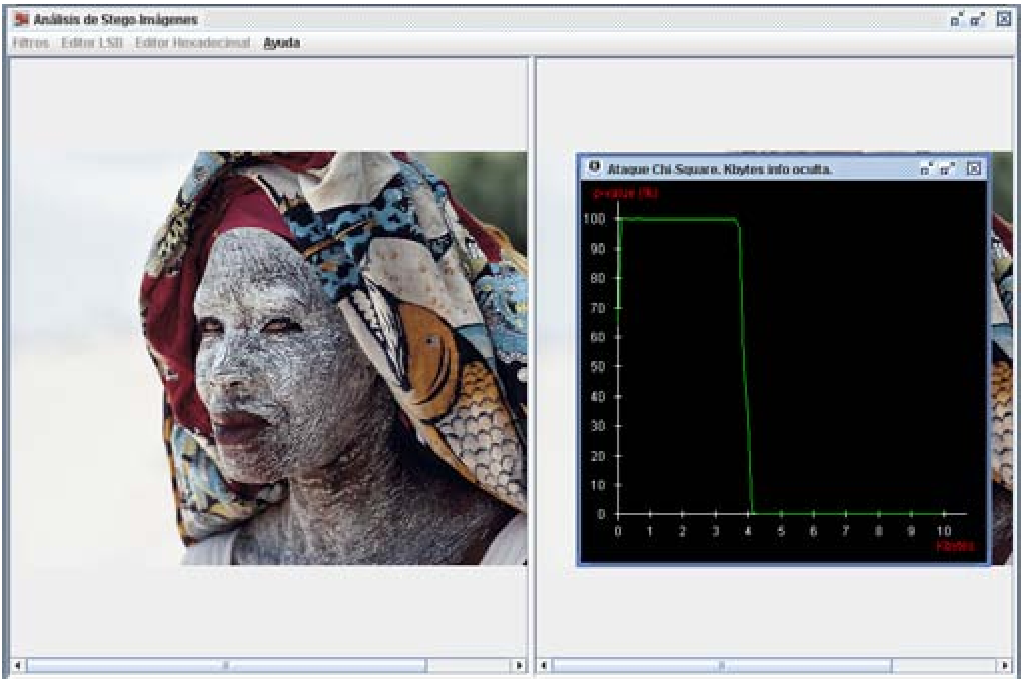 The figure above shows a successful Visual Attack where a 4KB hidden message creates detectable patterns in an image's bitplane.
Deep Insight: Why This Matters
The genius of the DCST approach is its inductive bias toward user behavior. Instead of trying to crawl the "entire internet"—which is impossible—it focuses on the information flux a specific organization or individual consumes.
The transition toward Blind Steganalysis (detecting hidden data without knowing the specific algorithm used) is a critical leap. By using Support Vector Machines (SVM) and characterizing JPEG features like DCT coefficients, the authors align their work with the cutting edge of digital forensics.
Conclusion: The Path Forward
While steganography serves as a tool for privacy and circumventing censorship, it also poses a risk for data exfiltration and illicit material distribution. The DCST-StegSecret combo represents a shift from "File Analysis" to "Flow Analysis."
As we move further into a world of encrypted traffic and decentralized networks, the next frontier will likely involve integrating these steganalysis tools directly into the browser (e.g., Firefox extensions) to alert users in real-time when they encounter suspicious digital carriers.