
Detecting the Silent Majority: A Hypergraph Approach to Lurker Detection
Detection of Lurkers in Online Social Networks
The paper introduces a novel hypergraph-based data model for Heterogeneous Social Networks (HSNs) to integrate users, multimedia objects, and topics. It leverages this model to propose a "Follow the Leader" strategy for detecting "lurkers"—passive users who consume information without contributing—using a newly defined Neighborhood Centrality measure.
TL;DR
In Online Social Networks (OSNs), "lurkers"—users who consume content but never post—constitute nearly 90% of the population. This paper presents a sophisticated Hypergraph-based Heterogeneous Social Network (HSN) model that captures complex user-content-topic relationships. By introducing Neighborhood Centrality, the authors provide a robust mechanism to identify these silent participants, significantly outperforming traditional graph metrics on the Yelp dataset.
Background: The Lurker's Dilemma
In the world of Social Network Analysis (SNA), visibility is currency. Most algorithms focus on "posters" or "influencers" because their edges are explicit. However, lurkers present a unique challenge and opportunity:
- Privacy and Security: Lurkers might be unauthorized intruders or bots.
- Community Health: High lurking rates can lead to "free-rider" problems where content creation stalls.
- Data Sparsity: Standard graphs (User-User) ignore the content (User-Object) that lurkers actually consume.
The authors argue that to find a lurker, you must see the network not as a collection of lines, but as a set of overlapping groups or events, which is where Hypergraphs shine.
Methodology: The Power of Hypergraphs
Traditional graphs limit relationships to pairs (). This paper uses Hyperedges, which can connect any number of vertices simultaneously.
1. The HSN Data Model
The model integrates:
- Users (): Individuals or organizations.
- Objects (): Content like reviews, photos, or business listings.
- Topics (): Extracted via Latent Dirichlet Allocation (LDA) from text annotations.
2. Redefining Centrality
The core innovation is Neighborhood Centrality (). Unlike Degree Centrality (how many people you know), measures how much of the network you can "reach" within steps.
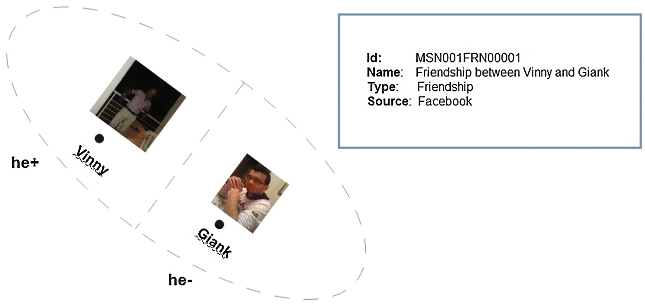 Fig 1: Examples of User-to-User and User-to-Object hyperedges.
3. The "Follow the Leader" Algorithm
The detection strategy is elegantly simple:
- Identify Leaders: Users with maximum Neighborhood Centrality.
- Identify Candidates: Users with minimal Neighborhood Centrality.
- Detect Lurkers: A candidate is a lurker if they are connected to a leader but contribute nothing back to the network expansion.
Experimental Results: Yelp Dataset
The authors validated their model using the Yelp Challenge Dataset (1M users, 4.1M reviews). Since there is no "ground truth" for lurkers, they established a ranking based on a weighted combination of reviews, compliments, and votes to benchmark their tool.
Performance Comparison
| Metric | Recall | Precision |
|---|---|---|
| Degree Centrality | 0.13 | 0.25 |
| Closeness Centrality | 0.24 | 0.29 |
| Neighborhood Centrality | 0.48 | 0.55 |
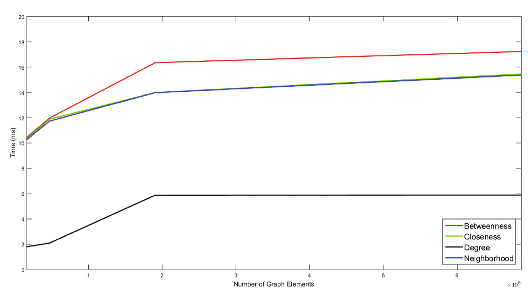 Fig 2: System efficiency showing loading times for the bipartite graph representation.
The results show a massive jump in precision—Neighborhood Centrality is over 2x more effective than Degree Centrality at spotting the silent majority.
Depth Insight: Why Hypergraphs Work Better
The fundamental reason this approach works is Inductive Bias. A standard graph flattens a review into a simple link between a user and a business. A hypergraph preserves the context: (User, Business, "Italian Food" Topic, Photo).
For a lurker, their only "social path" is often through the content they consume. By modeling the content as a first-class vertex in a hyperedge, the algorithm can track the "informational reach" of a user who never clicks "Like" or "Share," but is nonetheless deeply embedded in the network's consumption layer.
Critical Analysis & Future Work
Strengths:
- Bridges the gap between content analysis and structural linkage.
- Scalable implementation using Apache Spark (Bipartite graph transformation).
Limitations:
- Weight Sensitivity: The results depend heavily on the and parameters (path penalties).
- Ground Truth: The evaluation relies on a proxy for lurking (inactivity in Yelp) rather than verified "passive browsing" logs.
Future Outlook: This framework lays the groundwork for more proactive OSN management. Imagine recommendation engines that identify lurkers and specifically serve them "low-friction" entry points to participation, transforming passive consumers into active contributors.