
Decoding the Player Mind: Why We Swipe and Socialize in Mobile SNGs
Determinants of player acceptance of mobile social network games: An application of extended technology acceptance model
This study proposes an integrated model based on the Technology Acceptance Model (TAM) to investigate the psychological determinants of user acceptance of Mobile Social Network Games (M-SNGs). By employing Structural Equation Modeling (SEM) on a sample of 1,409 players, it identifies perceived usefulness, enjoyment, mobility, and control as key drivers of user intention, achieving a high explanatory power (R² = 74.6%).
TL;DR
Why do millions of people spend hours on games like FarmVille or Sims Social on their phones? This research from KAIST explores the "Extended TAM" (Technology Acceptance Model) specifically for Mobile Social Network Games (M-SNGs). It reveals that our decision to play isn't just about fun—it's a complex psychological calculation involving how much control we feel over the game, how connected we feel to our friends, and how well the game fits into our "anywhere, anytime" mobile lifestyle.
Context: Beyond the Desktop
Social Network Games (SNGs) transformed from browser-based distractions to a multi-billion dollar mobile industry. However, the shift to mobile introduced new variables: Mobility and Constant Connectivity. While early research focused on simple "Ease of Use," this study recognizes that M-SNGs are "Hedonic Systems" where the goal isn't productivity, but pleasure and social utility.
The "Why": Analyzing the Motivation GAP
Existing models (like the original TAM) struggled to explain why users embrace entertainment technologies. The researchers identified a gap: the lack of focus on Flow State (being "in the zone") and Mobility.
The authors hypothesized that:
- Playful Characteristics (Enjoyment, Control, Ease of Use) drive the "fun" side.
- Useful Characteristics (Mobility, Connectedness, Usefulness) drive the "social/performance" side.
Methodology: The Integrated Model
The study utilized Structural Equation Modeling (SEM), a rigorous statistical technique, to analyze 1,409 valid survey responses.
1. The Dual-Pathway Architecture
The model breaks down the user experience into two core pillars:
- The Hedonic Path: Perceived Control & Skill → Perceived Enjoyment → Attitude.
- The Utilitarian Path: Perceived Mobility → Perceived Usefulness → Attitude.
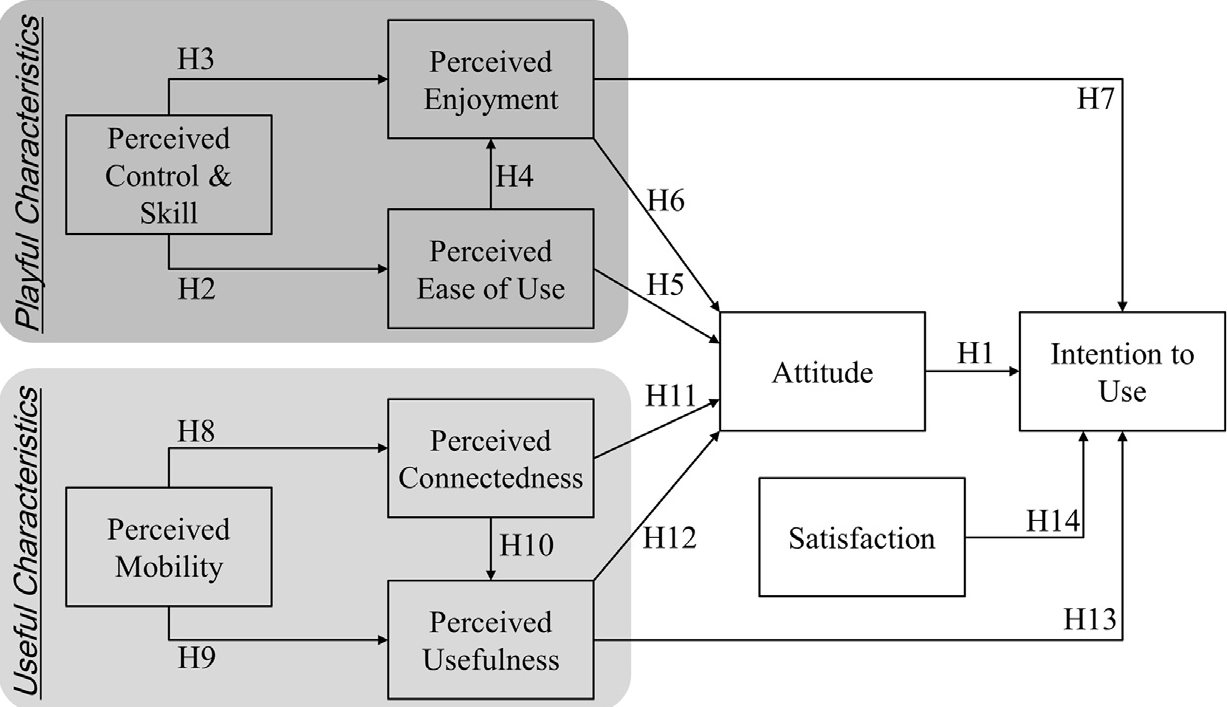 Figure 1: The proposed research model illustrating the causal relationships between mobility, control, and acceptance.
Key Insights & Experimental Results
The findings were striking, confirming almost all hypothesized connections with high statistical significance (p < 0.001).
- Usefulness Trumps Fun (Slightly): Surprisingly, Perceived Usefulness (β = 0.583) had a more powerful effect on user attitude than Perceived Enjoyment (β = 0.451). In the world of SNGs, "usefulness" often translates to social capital—improving relationships and communication.
- The Mobility Engine: Perceived Mobility was the strongest driver of Usefulness (β = 0.810). If the game doesn't feel seamless to use "anywhere, anytime," users perceive it as less valuable.
- Flow and Control: The sense of being "intensely absorbed" (Perceived Control & Skill) is a prerequisite for enjoyment (β = 0.577). If a player doesn't feel they have the skill to control the game, the "fun" factor evaporates.
 Table 1: Standardized coefficients showing the strength of relationships. Note the high CR (Critical Ratio) values for H9 and H13.
The Satisfaction Refinement
In the final stage of the study, the authors introduced Satisfaction as a primary driver. This revised "Integrated Model" was even more accurate, explaining nearly 80% of the variance in user intention.
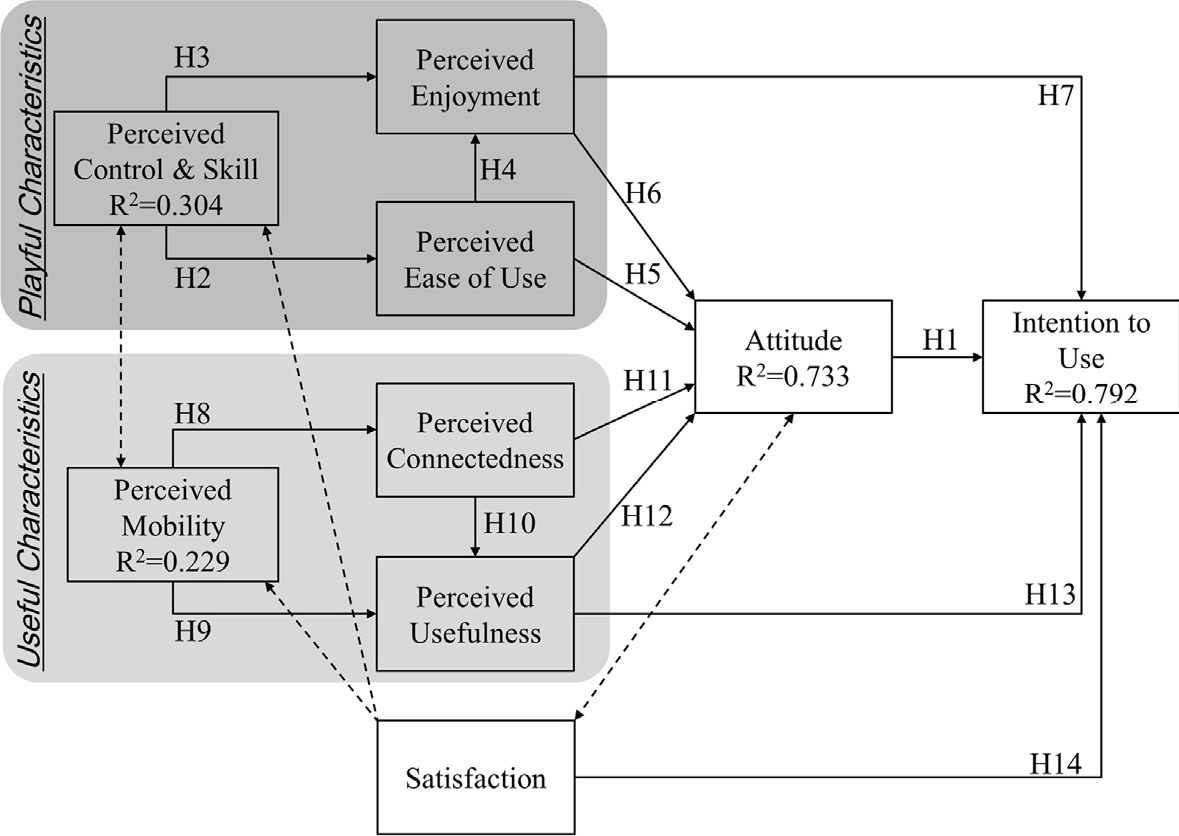 Figure 2: The updated integrated model showing Satisfaction as a central hub.
Summary & Future Outlook
Takeaway for Devs
If you are building an M-SNG, don't just focus on the graphics. Focus on Social Utility (how does this help friends connect?) and Mobility Value (can they play this effectively in a 2-minute elevator ride?).
Academic Significance
This work is one of the first to successfully merge Flow Theory with Mobility Metrics within a TAM framework. It moves the academic conversation from "Do they Use it?" to "How does the mobile context change Why they use it?"
Limitations
The study notes a demographic bias—most participants were young. Future research needs to look at "Silver Gamers" (older adults) and regional differences in how "Connectedness" is perceived across cultures.