
Turning Noise into Insight: Semantic Analysis of Social Streams for Smart Cities
Developing Smart Cities Services through Semantic Analysis of Social Streams
This paper introduces a domain-agnostic framework for the intelligent processing of social media textual streams to support Smart City services. By integrating Entity Linking, SenticNet-based sentiment analysis, and automatic text classification, the system transforms raw micro-blog data into actionable semantic insights.
TL;DR
Social networks are the "digital pulse" of a city, but extracting meaningful data from them is notoriously difficult due to slang, polysemy, and noise. This paper presents a sophisticated, domain-agnostic framework that combines Entity Linking, SenticNet-based Sentiment Analysis, and an interactive Analytics Console to turn raw tweets into strategic maps for urban developers and social scientists.
Background: The Problem with Keyword Matching
Most early social monitoring tools used simple keyword filters. The authors highlight a classic failure: searching for "L'Aquila" (the Italian city) also pulls in posts about "eagles" (the literal translation). Without Semantics, the data is too noisy for high-stakes decisions like disaster recovery or identifying zones of racial intolerance.
Methodology: The Intelligent Pipeline
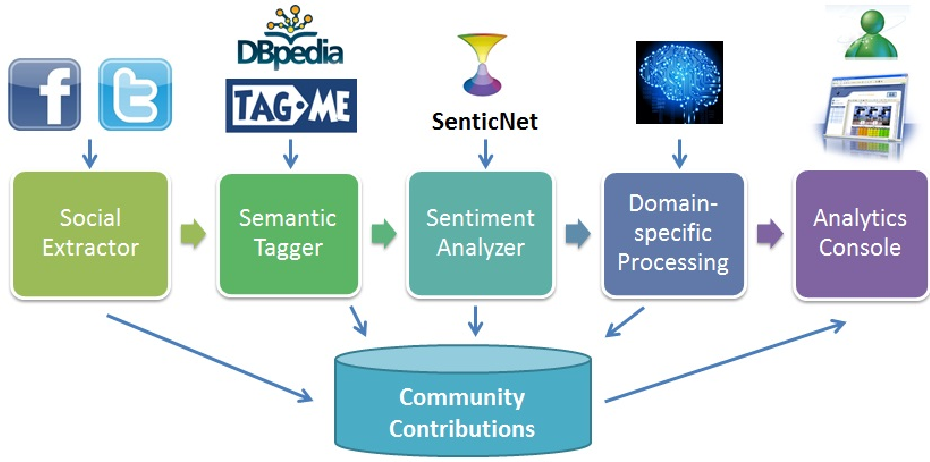
The framework operates through a series of specialized modules designed to add layers of meaning to raw text.
1. The Semantic Tagger (Disambiguation)
Instead of treating text as a "bag of words," the Semantic Tagger uses Entity Linking tools like DBpedia Spotlight and Wikipedia Miner.
- How it works: It maps the term "L'Aquila" to a specific Wikipedia entry. If the surrounding context talks about "earthquakes" or "mayors," it confirms the city entity. If it mentions "wings" or "extinction," it flags it as noise.
2. Sentiment Analysis with SenticNet
Rather than simple word lists, the authors utilize SenticNet, a common-sense knowledge base. This allows the system to understand the polarity of complex concepts (e.g., "accomplishing a goal" vs "dying") even when the words themselves aren't explicitly loaded with emotion.
Real-World Impact: Two Deep Dives
Scenario A: Recovering After an Earthquake (L'Aquila SUN)
Following the 2009 earthquake, the city used this framework to monitor "Social Capital." By classifying posts into indicators like Sense of Belonging or Trust in Institutions, city managers could identify when citizens felt abandoned and trigger specific community interventions.
Scenario B: The Italian Hate Map
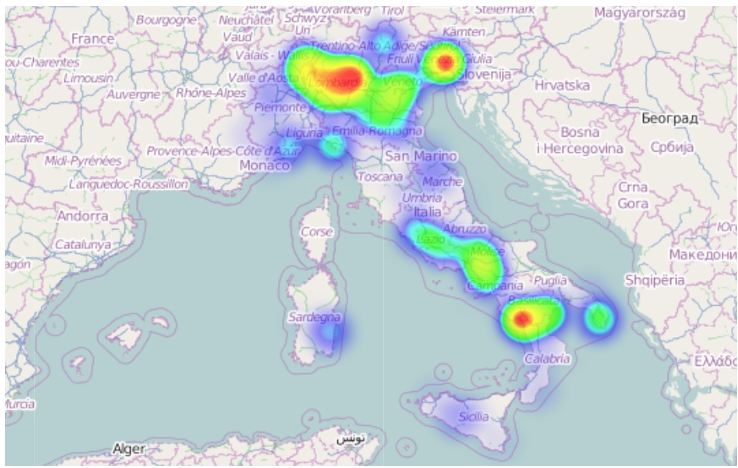
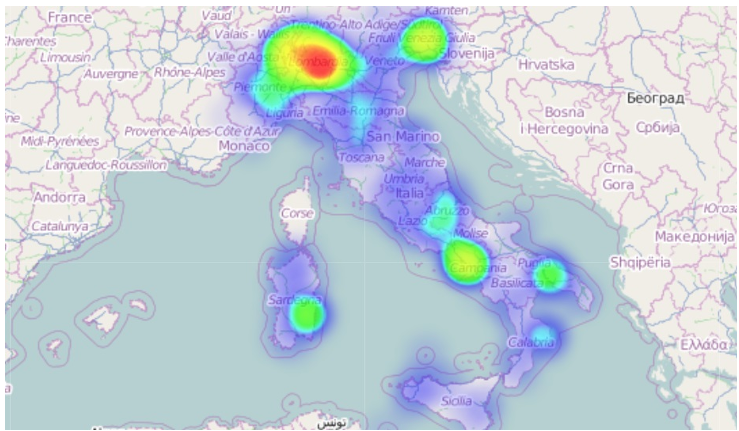
The framework was tasked with identifying "intolerance dimensions" (Racism, Homophobia, etc.). Here, semantics were vital to distinguish between a hateful slur and the same word being used in a neutral news report. The result was a heat map used by psychologists to plan prevention activities in hot spots.
Deep Insight: Why This Matters
The core strength of this work lies in its Domain Agnosticism. By decoupling the extraction logic from the semantic processing, the same engine that monitors an earthquake's psychological aftermath can be used to track political shifting or public health trends.
The paper emphasizes that transparency (knowing why a tweet was classified a certain way) is achieved through Entity Linking—every data point is tied back to a structured Wikipedia category, allowing for a level of "Explainable AI" that modern "black box" LLMs often struggle with.
Conclusion and Limitations
While the framework is powerful, it relies heavily on external APIs and Geolocation data which, as the authors note, is only available for a small fraction of users (often <10%). Future work will likely involve deeper Social Network Analysis to understand how information cascades through these smart city ecosystems.
Key Takeaway: Smart Cities aren't just about sensors in the road; they are about understanding the collective sentiment of the people who walk them.