
Bridging the Digital Divide: Transforming History into 3D VR "Games"
Development of a educational three dimensional computer game by using virtual reality utilities
This paper presents a comprehensive workflow for developing a 3D educational Virtual Reality (VR) game titled "ARCHIVE," focused on Roman historical heritage. It introduces a specialized methodology for digitizing physical artifacts via photogrammetry and optimizing high-fidelity 3D models for real-time performance in game engines.
TL;DR
Researchers from the University of Ruse have developed a workflow to turn high-density 3D scans of Roman artifacts into a performant VR educational game. By leveraging Photogrammetry and Normal Map Baking, they successfully reduced 3D model sizes by over 99% without sacrificing visual fidelity, creating an interactive "3D Puzzle" environment that increases student engagement and memory retention.
The Problem: The "Boredom" Gap in Traditional Learning
The "Digital Generation" processes information differently. Static textbooks often result in the lowest forms of knowledge retention. As shown in the paper's analysis of learning methods, reading accounts for only about 10% retention, whereas "Doing the Real Thing" or simulated experiences skyrocket that efficiency.
However, the technical barrier is high: creating a 3D world that looks "real" requires massive amounts of data. A single scanned Roman statue can consist of millions of polygons, which would crash a standard computer if rendered in a real-time game environment.
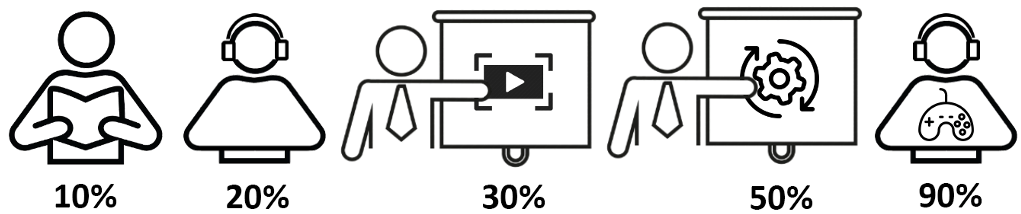
The Methodology: From Physical Artifact to Digital Game
The researchers proposed a systematic pipeline:
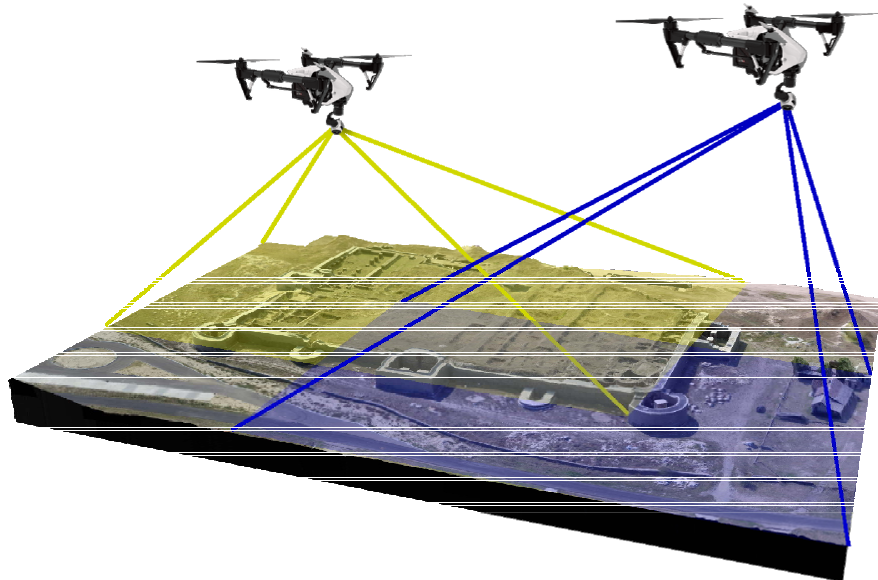
- Digitalization: Using Unmanned Aerial Vehicles (UAVs) for sites and high-res cameras for small artifacts.
- Point Cloud Generation: Using photogrammetry to create a raw, high-density 3D mesh.
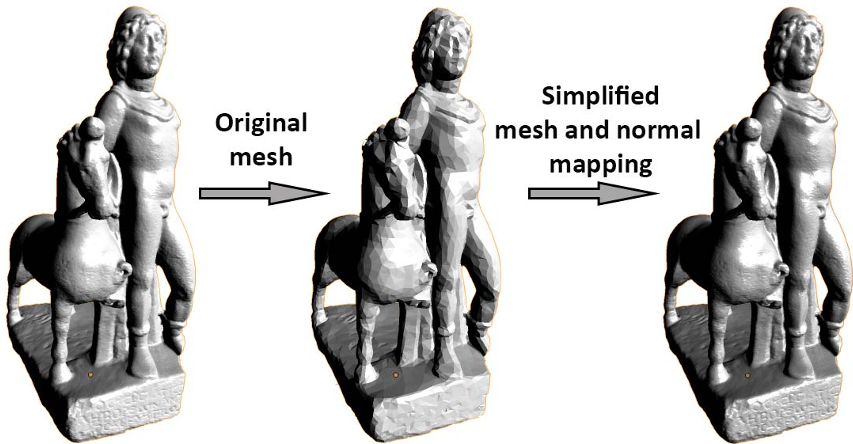
- Optimization (The Core Insight): Instead of just deleting points, which ruins the look, they used a "Bake" function.
The "Baking" Magic
To keep the game running at the required 80-100 FPS (crucial for preventing motion sickness in VR), the team decimated meshes by up to 98%.
- High-Poly Model: ~2.7 Million faces (Great for detail, terrible for performance).
- Low-Poly Model: ~12,000 faces (Fast, but looks "blocky").
- The Bridge: They "baked" the surface details (Normal Maps) from the High-Poly model onto the Low-Poly one. The result is a model that uses 99% less memory but looks nearly identical to the original.
Results & Game Design
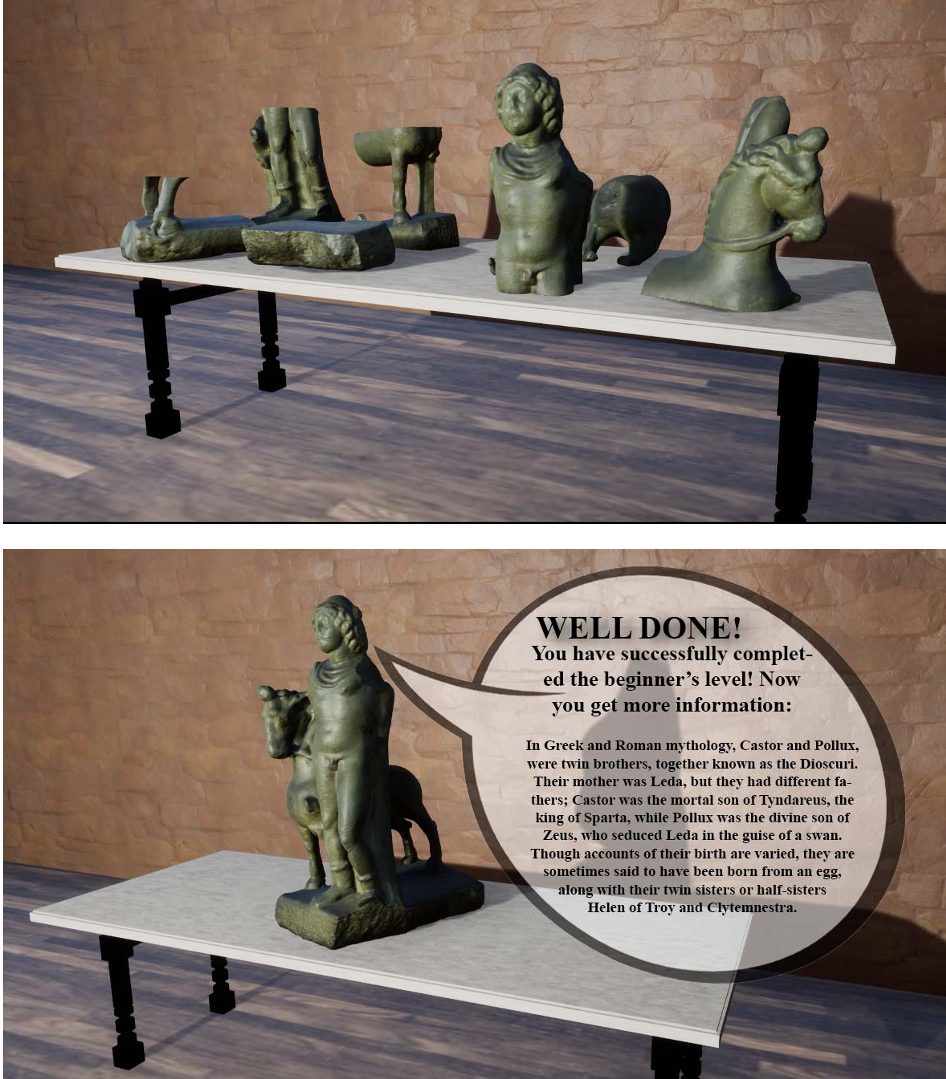
The "ARCHIVE" game functions as a 3D puzzle. Students interact with the Roman artifacts, assembling them in a virtual 3D space.
- Performance: The optimization drops file sizes from 137 MB to 620 KB.
- Engagement: By using C# scripts for interaction and a "rivalry" aspect (points and levels), the game transforms a static history lesson into an active challenge.
- Evaluation: Built-in quizzes after each level ensure that the "Gamification" translates into actual knowledge of Roman culture.
Strategic Insight: The Future of Classrooms
The significance of this work lies in its scalability. By defining a clear workflow for model optimization, the authors demonstrate that VR isn't just for specialized labs with supercomputers. With the right optimization techniques like Normal Mapping, immersive history lessons can be deployed on standard hardware, making "Time Travel" a viable pedagogical tool.
Limitations: The authors note that excessive close-ups can still break the illusion of Normal Maps (as the surface is technically flat), requiring careful camera-distance planning in game design.