
Smart Living: How the "GEWOS" Armchair Reinvents Physical and Social Health for the Elderly
Development of a Socio-technical System for an Age-Appropriate Domestic Environment
The paper presents a socio-technical Ambient Assisted Living (AAL) system designed to promote healthy aging through an interactive armchair integrated with vital sign sensors and a "Virtual Coach" platform. The system focuses on primary prevention by combining physical exercise monitoring (heart rate, SpO2, weight) with social connectivity features via a TV and tablet interface.
TL;DR
The "GEWOS" project introduces a socio-technical system that transforms a standard living room armchair into a health hub. By integrating medical-grade sensors and a Virtual Coach, the system fights the two biggest enemies of aging: physical inactivity and social isolation. It monitors vital signs and guides exercises while keeping users connected to their social circles—all through their TV.
Motivation: Fighting "The Weaker Self" and Loneliness
As we age, maintaining a regular exercise routine becomes a mental battle as much as a physical one. Statistics show a massive gap between the elderly who know they should be active and those who actually are. Furthermore, physical limitations (hearing loss, mobility issues) often lead to a "loneliness spiral" where isolation breeds depression.
Existing health platforms are often too "medical" or cumbersome. The authors argue that for a system to be accepted, it must be unobtrusive and integrated into the objects people already use—like the armchair.
Methodology: The Smart Armchair & The Virtual Coach
The system architecture rests on two pillars:
1. The Interactive Armchair (Hardware)
Instead of wearable devices that users might forget or dislike, the sensors are embedded directly into a comfortable armchair and its carrier plate.
- Strain Gauges: Integrated into the base to detect weight distribution. This allows the system to detect if a user is performing a "rowing" or "crunch" exercise with the correct posture.
- Vital Sign Suite: Measures heart rate (ECG), oxygen saturation (SpO2), and respiratory rate automatically.
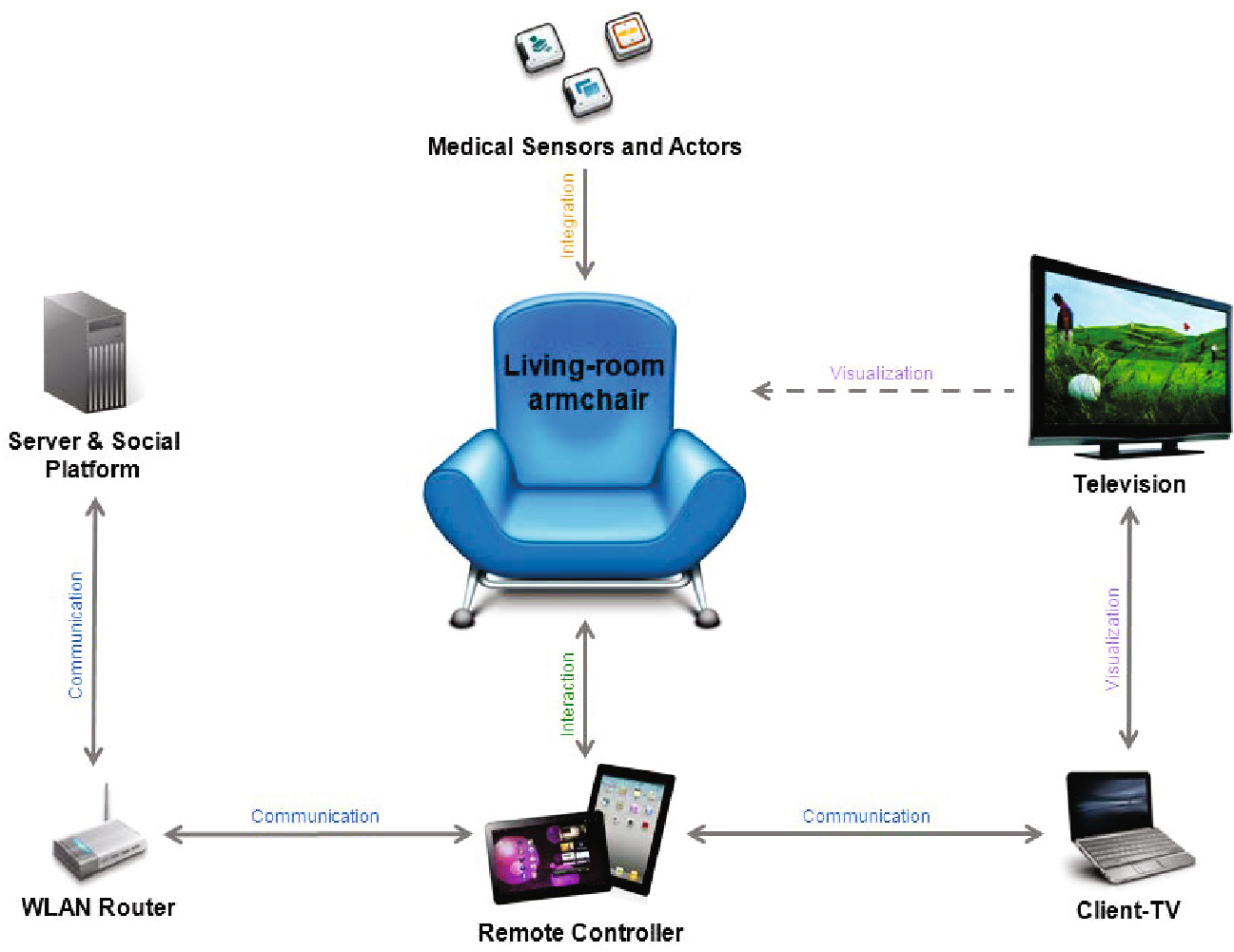
2. The Virtual Coach (Software & Social)
The "Virtual Coach" is the brain of the platform. It doesn't just display numbers; it acts as a mediator:
- Motivation: It suggests exercises based on schedules set by doctors.
- Connectivity: It links the user to social groups (e.g., "Nordic Walking" or "Chess clubs") and manages appointments with friends and family.
- Interface: The user interacts via a tablet (acting as a remote) and views content on their TV, making the tech feel like a natural extension of home entertainment.
Experiments and Expected Results
The paper outlines the technical realization of integrating sensors like strain gauges for posture correction. By monitoring weight distribution in real-time, the system provides immediate feedback to ensure safety during home workouts.
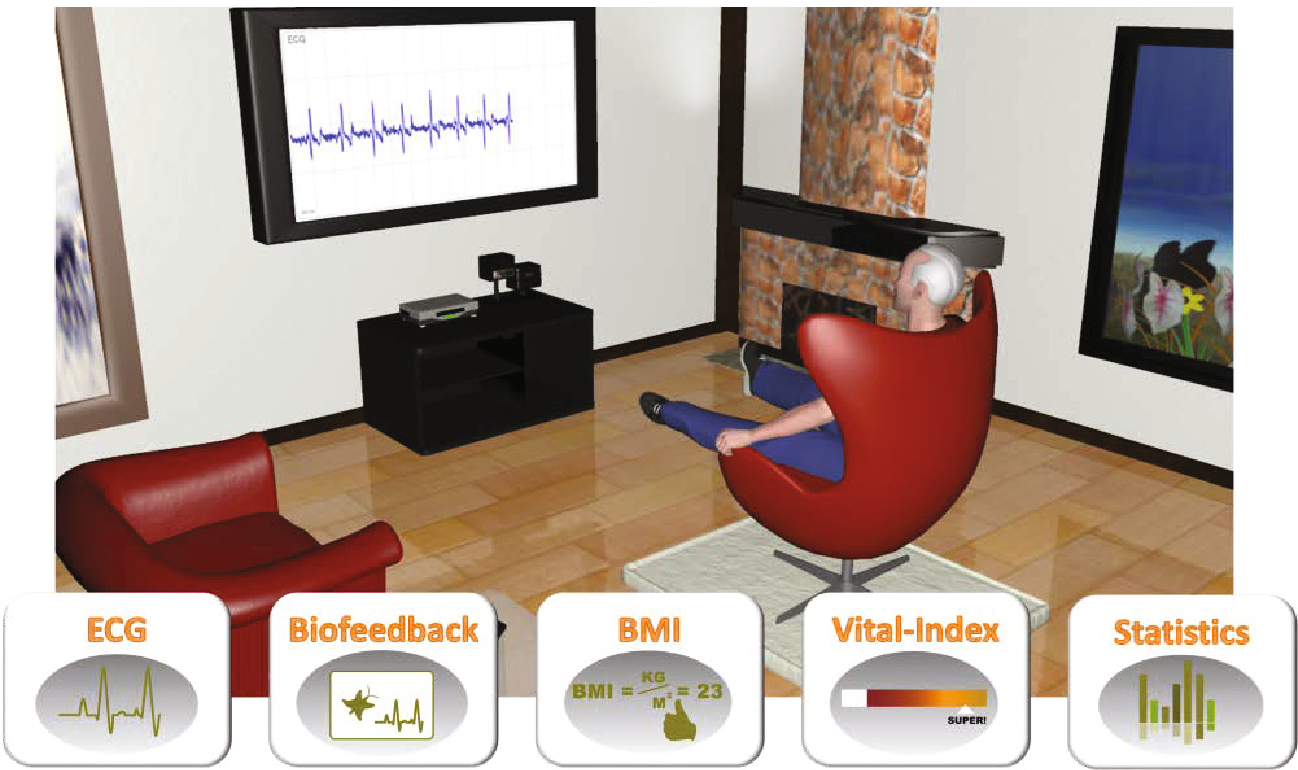
While the paper focuses on the concept and technical integration, the next phase involves pilot studies to measure:
- Acceptance: Do elderly users feel "watched" or "supported"?
- Medical Impact: Is there a quantifiable improvement in the vital signs of users over a 6-month period?
Critical Insight: Beyond Passive Monitoring
The true value of this work lies in its Socio-technical approach. Most AAL (Ambient Assisted Living) research focuses purely on the technical (how to measure a heart rate). This paper recognizes that technical success is meaningless if the user is too depressed or unmotivated to sit in the chair. By linking physical health to social rewards (e.g., meeting a friend for a concert), the GEWOS system addresses the psychological root of the problem.
Future Outlook: As we move toward 2030, technologies like this will likely integrate Generative AI to make the "Virtual Coach" even more conversational and empathetic, further bridging the gap between clinical care and domestic comfort.
Conclusion
The GEWOS armchair represents a shift from "reactive" healthcare (treating the sick) to "proactive" prevention (keeping the elderly engaged). By making the living room a site of both health monitoring and social joy, it creates a sustainable model for aging in place.