
DewMusic: Re-Architecting the Internet of Music Things with Dew Computing
DewMusic: crowdsourcing-based internet of music things in dew computing paradigm
This paper introduces "DewMusic," a novel five-tier music crowdsourcing framework that integrates Dew Computing with the Internet of Musical Things (IoMusT). It leverages localized sensing and processing to reduce reliance on constant internet connectivity while achieving SOTA efficiency in data transmission and energy consumption.
TL;DR
The paper introduces DewMusic, a hierarchical framework that injects a "Dew" layer into the traditional IoT stack. By moving musical data sensing and micro-analytics to the local level, it achieves an 89% reduction in transmission time and a 77% energy saving, effectively solving the latency issues inherent in cloud-based music crowdsourcing.
Problem & Motivation: The Cloud's Acoustic Bottleneck
In the evolving landscape of the Internet of Musical Things (IoMusT), the goal is to capture environment-specific acoustic data to drive smart music recommendations and collaborative compositions. However, existing paradigms face a "trinity of failure":
- Bandwidth Congestion: Flooding the cloud with raw audio packets is unsustainable.
- Latency: Real-time musical interaction requires sub-second response times that distant cloud data centers cannot provide.
- Internet Dependency: Traditional IoT architectures fail the moment connectivity is lost—a critical flaw for mobile musical environments.
The authors' insight is rooted in Dew Computing: if we treat local devices not just as sensors, but as independent repositories and analyzers (the "Dew"), we can maintain service continuity even in "offline" mode and drastically reduce the traffic sent to the Fog and Cloud.
Methodology: The Five-Tier Hierarchy
The core of DewMusic is its five-tier architectural model, which redistributes the computational load:
- Physical Tier: Collects raw signals from vocal and instrumental sources using sound sensors.
- Dew Computing Tier: The "secret sauce." Includes Dew Analyzers (for local scripts) and Dew Servers (for local web services), allowing for internet-independent data persistence.
- Fog Computing Tier: Orchestrates distributed processing using a "divide-and-conquer" policy across local LANs.
- Cloud Computing Tier: Handles massive data aggregation and global long-term storage.
- End-User Tier: Where composers and listeners access the final processed musical insights.
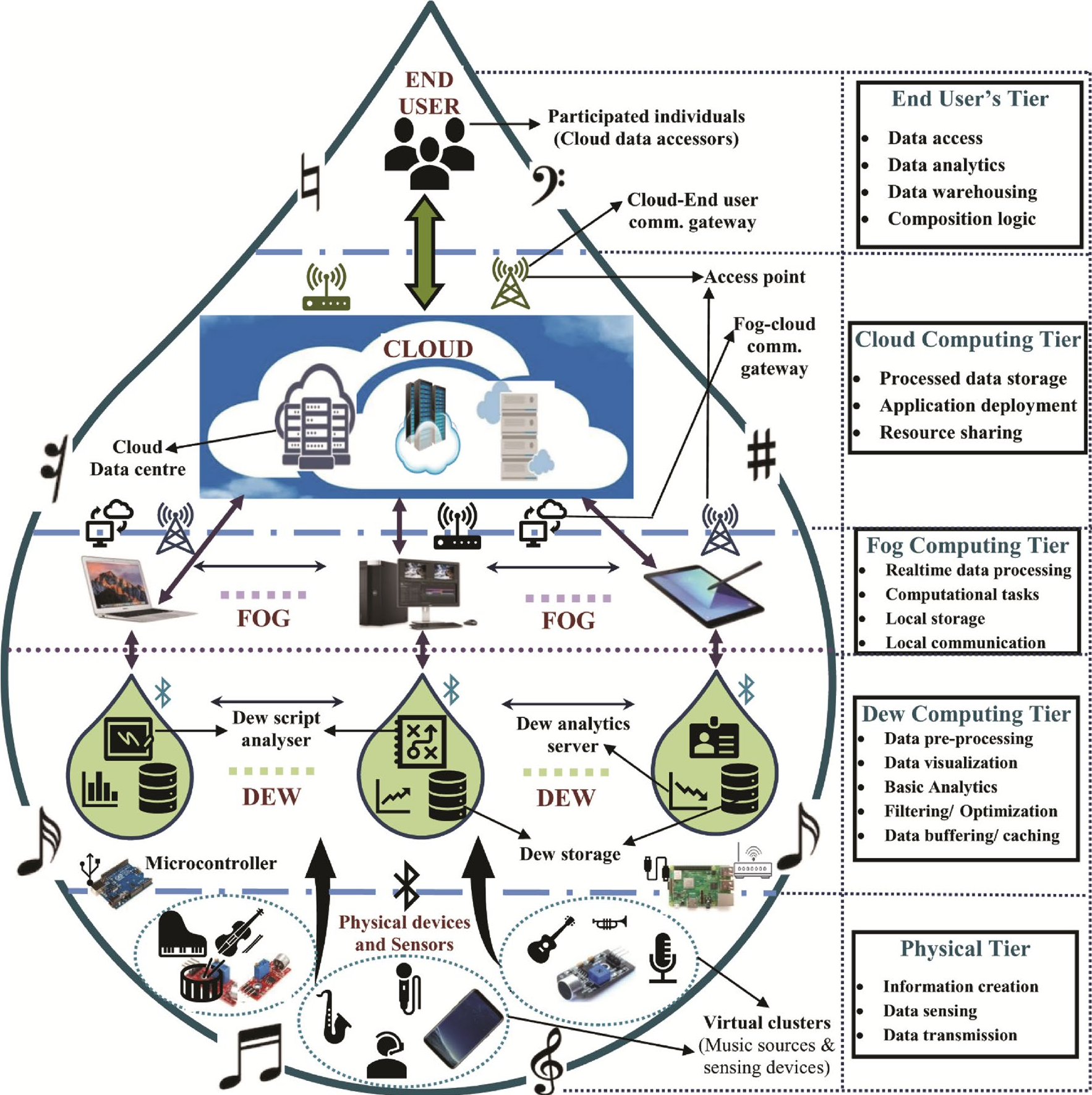 Figure 1: The proposed five-tier Dew-Cloud Music Crowdsourcing Hierarchical Schema.
The Mathematical Intuition
The authors define the mapping between layers using professional set theory. For instance, the mapping from Sound Sensors () to Dew Servers () is defined as an injective (one-to-one) relation, ensuring that data integrity is maintained at the ingestion point, while the mapping from Fog to Cloud is Many-to-One, representing the aggregation of distributed localized insights into a global model.
Experiments & Results: Quantifying the Efficiency
The researchers conducted a comparative study against a conventional Cloud-Edge scenario using 100 sequential data packets.
Transmission Speed
By processing data locally in the Dew/Fog layers, the "airtime" of data is minimized. The results show a massive gap:
- Conventional Cloud: ~7.78 seconds per packet.
- DewMusic: ~0.84 seconds per packet.
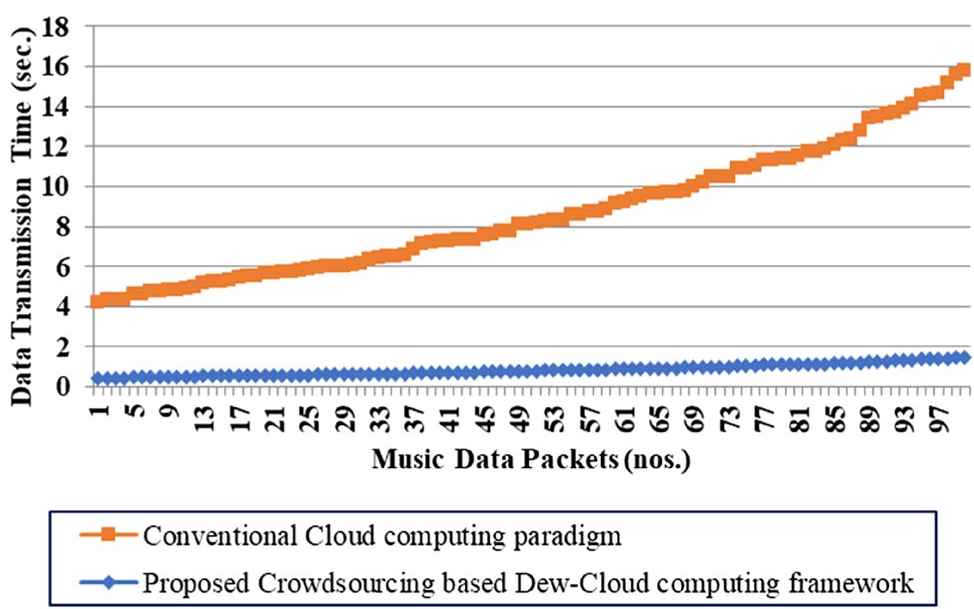 Figure 2: Drastic reduction in data transmission time compared to traditional cloud paradigms.
Energy Dissipation
Energy efficiency is a corollary of reduced transmission time. Because the radio frequency components are active for shorter durations and local processing is more efficient than long-range transmission, the mean system energy dissipation dropped from 112.97 Joules (Cloud) to 25.66 Joules (DewMusic).
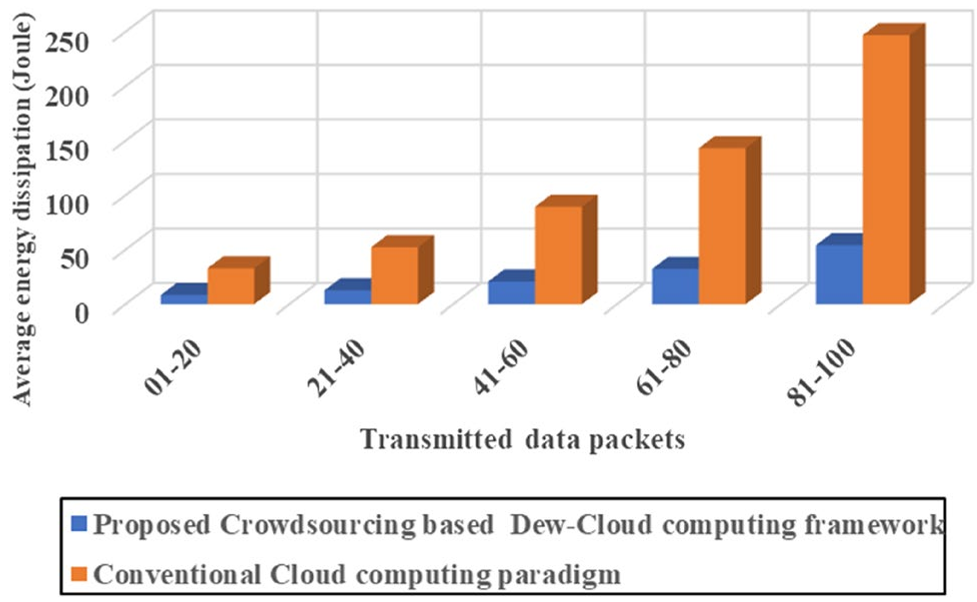 Figure 3: Comparison of average energy dissipation between hierarchies.
Critical Insight & Conclusion
DewMusic represents a paradigm shift from "connected devices" to "autonomous local ecosystems."
- Value: It proves that the "ground-level" computing layer (Dew) is not just a redundant cache but a necessary component for high-bandwidth, latency-sensitive applications like music.
- Limitations: While the paper excels in transmission and energy metrics, it leaves "Bandwidth Allocation" and "Service Virtualization" for future work. The current model assumes a relatively static set of sensors.
- Future Scope: The next frontier for this work will likely involve merging Brain-Machine Interaction (BMI) with the Dew layer, allowing for music to be sensed and processed based on neural feedback at the local level.
The "Dew" is no longer just a metaphor; in the Internet of Music Things, it is the key to true real-time, energy-efficient collaborative creativity.