
Beyond the Click: The Discursive Construction of the Civic Subject in Digital Activism
Digital Activism and the Civic Subject Position: A Study of the Ons Geld (Our Money) Citizen Initiative in the Netherlands
2017-05-01
Summary
Problem
Method
Results
Takeaways
Abstract
This paper presents a case study of the "Ons Geld" (Our Money) citizen initiative in the Netherlands, examining how grassroots activists utilize digital technologies to reform the monetary system. It highlights the transition from a dormant foundation to a successful 113,000-signature petition submitted to the Dutch Parliament, achieving a significant shift in the national policy agenda.
## TL;DR
In the digital age, we often assume technology inherently democratizes activism. However, a deep dive into the Dutch **Ons Geld** (Our Money) initiative reveals a more complex reality. While digital platforms helped the movement gather over 113,000 signatures to challenge the monetary system, the technology was primarily used as a broadcasting tool. The result? A "civic subject" defined by low-effort support (signing and liking) rather than deep democratic deliberation, largely due to the rigid requirements of the Dutch political system.
## The Illusion of Decentralization
Activists often dream of "connective action"—a world where technology acts as the organizing agent, allowing movements to grow organically without central leaders. The **Ons Geld** initiative, which sought to take money creation out of the hands of commercial banks, seems like a perfect candidate for this model.
Yet, the authors argue that the "civic subject position"—the role individuals are invited to play—is not just dictated by the app or the website. It is shaped by:
1. **Political Context**: The Dutch Parliament requires a clear, static proposal for citizen initiatives.
2. **Resource Scarcity**: Small grassroots groups lack the "techno-communication" manpower to moderate complex debates.
3. **Expertise Bias**: A desire to maintain a "regime of truth" to avoid being discredited by trolls or conspiracy theorists.
## Methodology: The Discursive Lens
The researchers didn't just look at *what* tools were used, but *how* those tools talked to the users. They analyzed the "onsgeld.nu" ecosystem through:
* **Functional Reviews**: Does the site invite you to talk or just to read?
* **Content Analysis**: Categorizing posts into *Information*, *Community Building*, or *Call to Action*.
* **Interviews**: Understanding the "Why" behind the "Submit" button.
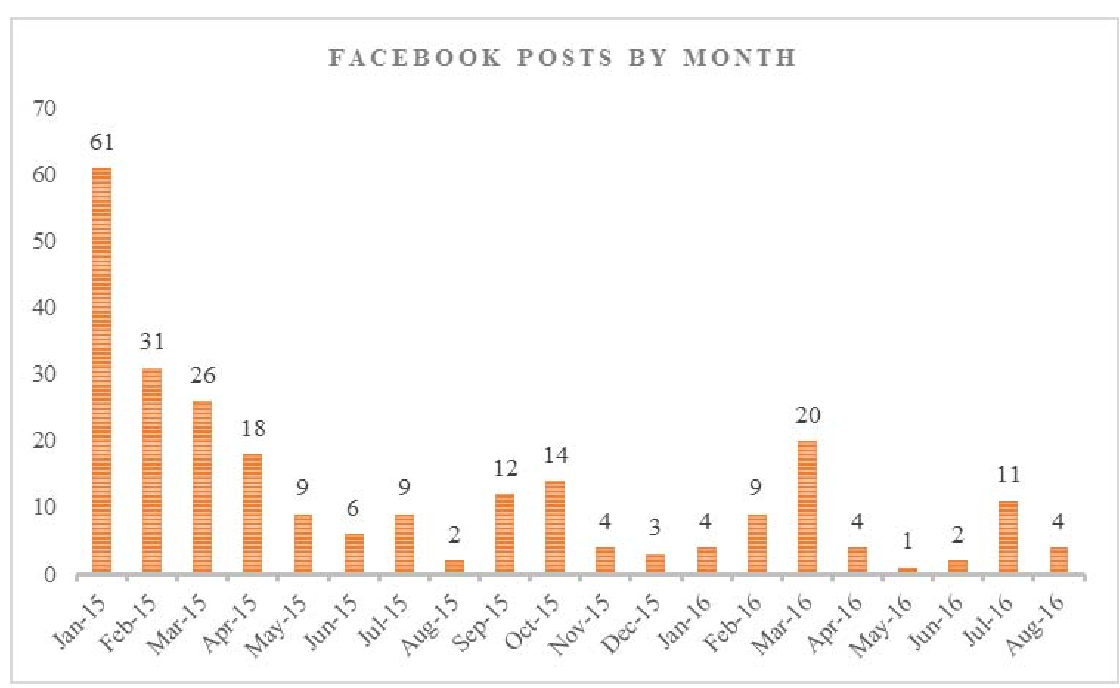
*Figure 1: The pulse of the campaign—Facebook activity peaked during the signature collection phase but remained largely a one-way communication channel.*
## The Paradox of the Digital Forum
One of the most revealing findings was the failure of the online forum. While the founder hoped for a vibrant social movement, the reality was "infinite blabbering."
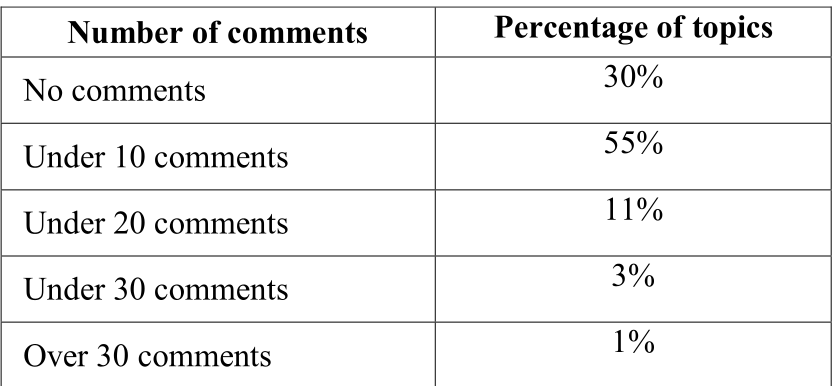
*Table 1: User engagement on the forum was minimal, with 85% of topics failing to reach double-digit comments.*
The organizers faced a dilemma: to be taken seriously by the government, they needed to present a professional, static vision. Opening the floor to debate risked introducing conspiracy theories that would damage their credibility. Consequently, they adopted a **"brochure-ware"** approach. The citizen was not a "deliberator" but a "voluntary supporter"—a fan who lends their signature but not necessarily their voice.
## Critical Analysis: The Professionalization of Grassroots Action
The success of Ons Geld is undeniable: it put a "taboo" topic on the national agenda. However, this came at a cost to the quality of participation.
* **The "Broadcasting" Trap**: By using Facebook and Twitter as PR tools, the initiative replicated top-down political structures.
* **Algorithmic Governance**: Activists felt pressured to feed the "social media logic"—creating catchy images simply to satisfy algorithms, rather than to educate.
* **Knowledge Inequality**: The complexity of monetary reform meant that non-experts were often sidelined, relegated to liking and sharing content they might not fully grasp.
## Final Takeaway
The **Ons Geld** case serves as a warning for future digital movements. Technology can lower the *cost* of entry for activism, but it doesn't automatically increase the *depth* of democratic engagement. If movements want to empower citizens, they must design for more than just signatures; they must navigate the narrow path between institutional requirements and the creative potential of collaborative networks.
Digital activism, in its current Dutch incarnation, is less of a revolution and more of a digital upgrade to the existing high-trust, elite-driven consociational model.