
TechUPWomen: Using Data Analytics to Bridge the Gender Gap in Tech
Digital Inclusion in Nothern England: Training Women from Underrepresented Communities in Tech: A Data Analytics Case Study
This paper introduces and evaluates TechUPWomen, an original digital inclusion programme designed to retrain 100 women from underrepresented communities in Northern England for technology roles. The researchers employ a data analytics nowcasting approach using Latent Dirichlet Allocation (LDA) and Network Analysis to monitor program effectiveness and participant engagement in real-time.
TL;DR
The TechUPWomen program retrained 100 women from underrepresented backgrounds for tech careers in Northern England. Using a "nowcasting" approach—analyzing Twitter and Microsoft Teams data as it happened—researchers proved that residential networking events and 1-to-1 mentoring are the backbone of digital inclusion. The study shows that "feeling inspired" is just as measurable and critical as "learning Python."
Background: Beyond the 18%
Despite the tech industry's exponential growth, women in the UK comprise less than 20% of computer science graduates. For women in underrepresented communities (BAME, those with disabilities, or dependents), the barriers are even higher. While "bootcamps" are popular, we've historically lacked the tools to see how they work in real-time. This paper addresses the gap by asking: Can we use Data Science to measure the success of a Data Science training program?
The "Nowcasting" Insight
Instead of waiting for graduation surveys, the authors used Nowcasting—a technique borrowed from economics and epidemiology—to quantify the "present moment." By scraping public hashtags (#TechUPWomen) and private learning forums, they gained a live view of the program's pulse.
Methodology: The Core Analytics
The researchers didn't just look at word counts; they looked at structure and sentiment:
- LDA Topic Modeling: By clustering words into 10 topics, they could distinguish between public-facing advocacy (Twitter) and intense technical learning (Teams).
- Network Analysis: They mapped interactions to see if the community was a "bubble" or a functioning ecosystem.
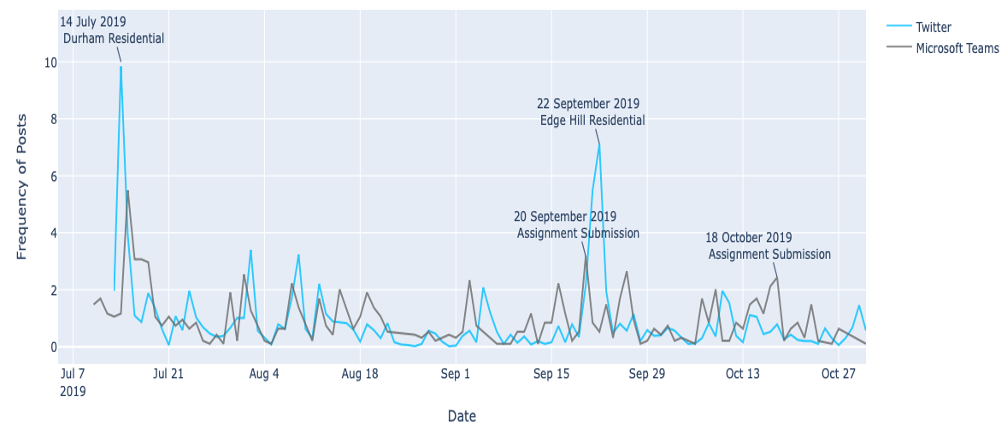 Figure 1: Temporal comparison showing how communication spikes during major program milestones.
Key Results: Community is the Catalyst
The data revealed a fascinating "divided focus":
- Twitter was a hub of positivity. Top terms included "amazing," "joy," and "proud," which the authors argue is essential for building the "soft skills" of technical confidence.
- Microsoft Teams was the "engine room." The word clouds here shifted toward "Python," "module," and "assignment," showing that participants were deeply engaged with the hard technical curriculum.
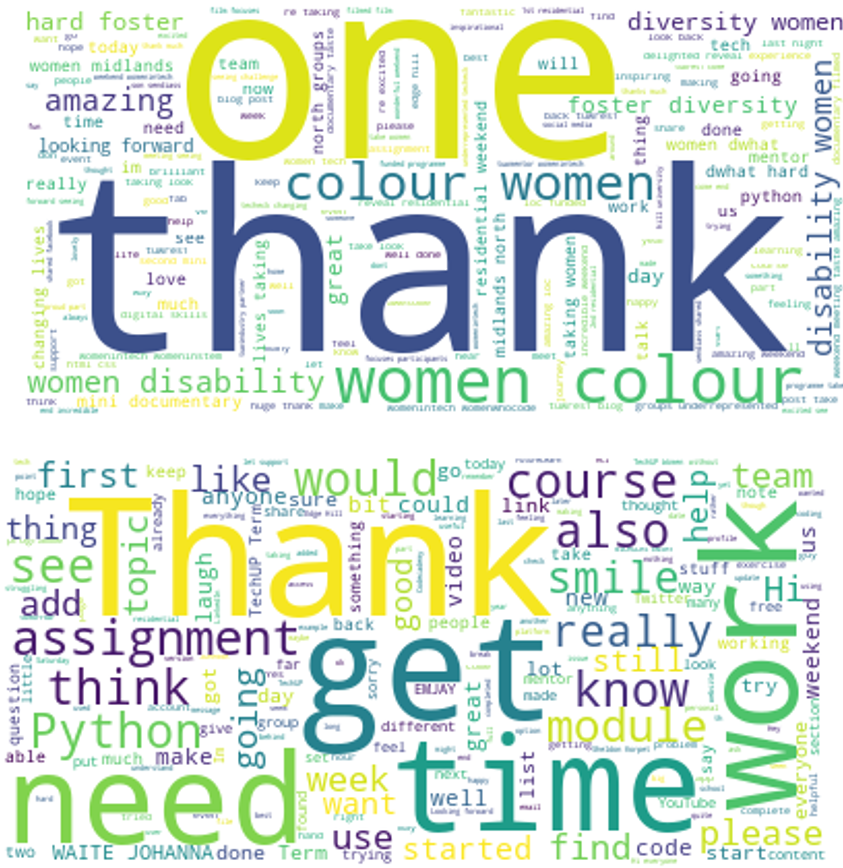 Figure 2: The contrast between public sentiment (Twitter) and internal technical work (Teams).
The Network Analysis confirmed that the "residentials" (face-to-face meetups) were the densest periods of interaction. Even in a digital-first program, physical connection significantly strengthened the virtual network, creating "hubs" of mentors and students that persisted throughout the four-month study.
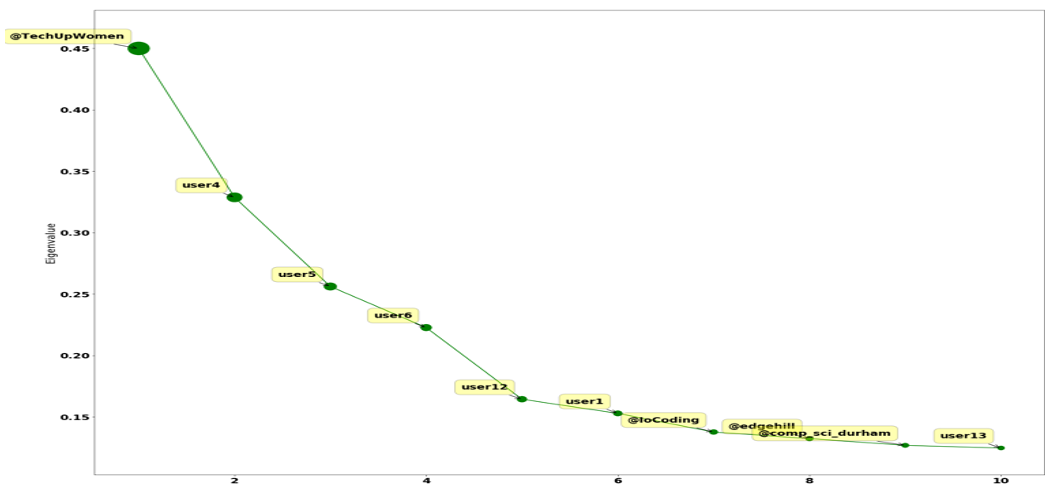 Figure 3: Eigenvalue Centrality Map showing how key organizations and individuals acted as information hubs.
Critical Insight & Future Outlook
The brilliance of the TechUPWomen study lies in its reflexivity. By measuring the program while it runs, organizers can identify "lone nodes"—students who aren't interacting—and intervene before they drop out.
Limitations: The study currently lacks deep sentiment analysis (assigning specific emotional scores to text), which the authors list as their next step.
The Takeaway for Tech Leaders: Diversity isn't just a hiring goal; it's a social network problem. If you want to train underrepresented groups, you must build high-density support networks, and you should use data analytics to ensure no one is left on the periphery.