
Mind the Gap: Why Technical Skills Aren't Enough for the Modern Digital Marketer
The digital marketing skills gap: developing a digital marketer model for the communication industries.
This research investigates the digital marketing skills gap within the communication and creative industries. Through 20 in-depth interviews and focus groups, it identifies a "Digital Marketer Model" to define essential competencies for modern practitioners.
TL;DR
Industry professionals are fluent in social media jargon but fail at strategic integration. This paper introduces the Digital Marketer Model, arguing that the real "skills gap" isn't just about knowing how to post on TikTok—it's about the architectural ability to align digital tools with business ROI and "futureproof" against a volatile tech landscape.
Contextual Positioning
Published in the transitional era of digital adoption (late 2013), this work functions as a diagnostic framework. It marks the shift from seeing digital as a "siloed technical task" to a "general management competency." It moves beyond the What (tools) to the How (integration) and Why (strategy).
The Problem: The "Add-On" Fallacy
The authors identify a recurring failure in the communication industry: treating digital marketing as a garnish rather than the main course.
- Prior Work Flaw: Most training focused on "how to use Twitter" (tactical) rather than "how Twitter alters the brand-consumer relationship" (strategic).
- The Integration Paradox: Professionals can manage a Facebook page but cannot connect those metrics to a comprehensive 360-degree marketing plan that includes offline touchpoints.
Methodology: The Digital Marketer Model
The core contribution is a holistic model derived from "listening to marketers' needs." It posits that an excellent digital marketer must balance Client Engagement, Corporate Communication, and Technical Fluency.
The Core Framework
The researchers highlight that the "Solutions Architect"—the professional who understands both the code and the commerce—is the rarest and most needed profile in the marketplace.
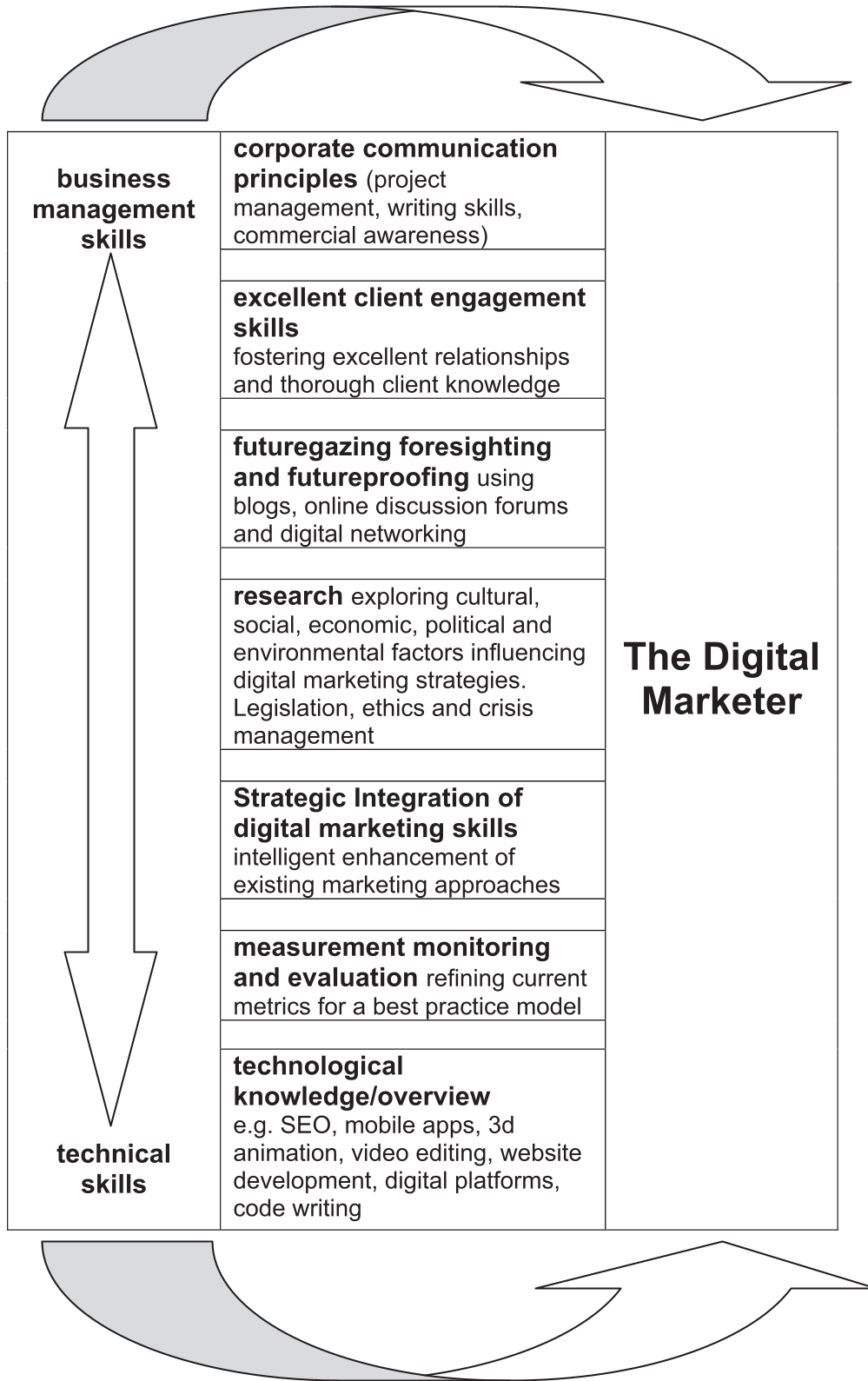 Figure 1: The Digital Marketer Model, illustrating the convergence of core skills, technical knowledge, and strategic integration.
Exploring the Future: The Foresighting Continuum
One of the paper’s most forward-thinking sections is the distinction between speculating on the future and actively preparing for it. The authors propose a three-stage continuum:
- Futuregazing: Speculation based on past experience.
- Foresighting: Evidence-based analysis of innovations.
- Futureproofing: Adopting strategic formalisms to minimize risk.
 Figure 2: The conceptual flow from speculative gazing to strategic futureproofing.
Key Results & Industry Impact
- The Strategic Void: The biggest gap wasn't "Coding" but "Business Intelligence." Industry leaders reported they cannot find marketers who speak "both tech and strategy."
- Metric Malaise: While digital is highly measurable, the industry lacks "best practice" benchmarks. Professionals are "trying things out" (a test-and-learn approach) rather than executing validated strategies.
- Academic Lag: Higher education is often lagging behind the "velocity" of industry change, prompting a call for the "Digital Marketing Major" as a fundamental, not elective, discipline.
Critical Insights & Future Outlook
The value of this research lies in its Inductive Bias toward strategy. It suggests that as technology becomes more complex (today, think AI and Algorithmic Marketing), the fundamental human skill required is Sensemaking—the ability to "fish the river of information" and derive actionable insights.
Limitations: The study is qualitative and UK-centric. However, its qualitative depth identifies "managerial mindset" issues that numbers alone cannot capture.
Future Work: For today's practitioners, the challenge is no longer just "integrating social media," but integrating Artificial Intelligence into the Digital Marketer Model. The "Solutions Architect" of 2013 is today's "AI Strategist."