
Designing for the Digital Afterlife: Best Practices for Online Memorials
Recommendations for the Design of Digital Memorials in Social Web
This paper presents a comprehensive set of design recommendations for Digital Memorials within the Social Web, focusing on the technical and cultural nuances of mourning. The authors introduce a framework for "Posthumous Interaction" and validate it through qualitative user testing and semiotic inspection, resulting in a design prototype for specialized death-related social networks.
TL;DR
In an era where our digital footprints outlive our biological existence, how should we design spaces for mourning? This paper explores the transition of mortuary rites from physical cemeteries to the Social Web. By analyzing user behavior and cultural taboos, the authors provide a checklist of recommendations for building "Digital Memorials" that respect the deceased’s reputation while providing comfort to the bereaved.
Academic Context: This work sits at the intersection of HCI (Human-Computer Interaction) and "Thanatotechnology," shifting the focus from mere data storage to a social ecosystem of posthumous interaction.
The Problem: The "Digital Limbo"
Currently, the Social Web treats the living and the dead with the same interface metaphors. A "Like" button on a mourning post can feel disrespectful, and the "Online" status of a deceased friend's profile creates what researchers call a "digital limbo." Prior systems failed because they didn't account for:
- Identity Confusion: The lack of visual distinction between living users and memorial profiles.
- Cultural Blindness: Forcing specific religious symbols (like "Heaven") on diverse global users.
- Reputation Risks: The danger of unmoderated walls or unauthorized data use after death.
Methodology: The Core Building Blocks
The authors propose that a Digital Memorial is not just a profile; it is a "Community of Interest" centered around a person who no longer interacts in real-time. They redefine 12 social elements:
- Identity & Presence: Memorials must never have an "Online" status. They need a clear "dead" marker (like a cross or other religious icon).
- Volition: The system must honor the user's pre-death wishes—who manages their account? Is it deleted or memorialized?
- Relationship Mapping: Instead of a "Friends List," the system should support "Family Trees" and "Circles of Grief."
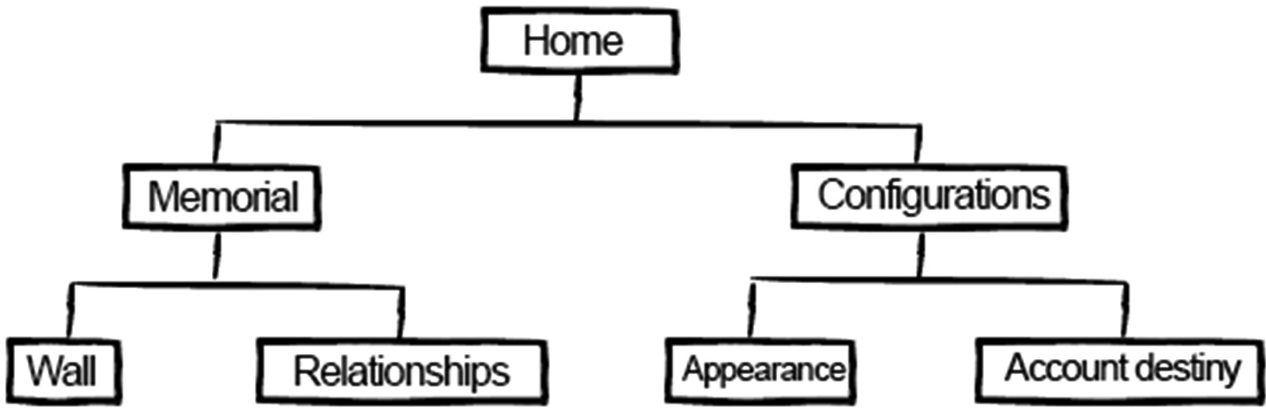 Figure: The prototype architecture highlighting reminders for death anniversaries and recommendations for connecting with shared memorials.
Experiments & Visual Evidence
Through semiotic inspection (analyzing symbols and meanings), the researchers found that material objects from the physical world—flowers, candles, and tombstones—must have digital metaphors.
The user testing (n=29) revealed a "reputation economy" for the deceased. A memorial's status grows based on the quality of tributes on its Wall. However, the authors caution against "gamifying" death; buttons for "praying" or "liking" need high levels of customization to avoid being perceived as frivolous.
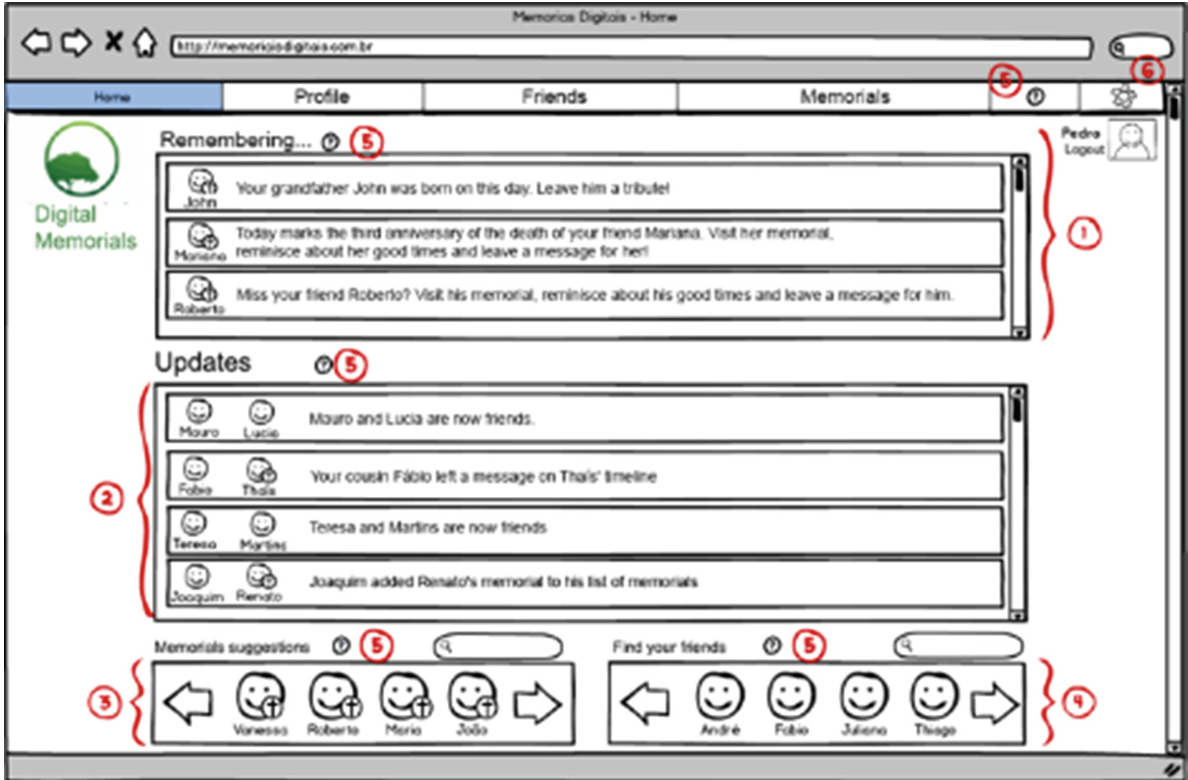 Figure: The memorial profile prototype. Note the "Cross" identifier and the distinct sections for life biography vs. mourning space.
Critical Insights: Why This Matters
The most striking takeaway is the concept of "Posthumous Interaction." We aren't just looking at a photo gallery; we are participating in a network where one node is silent but active in the memories of others.
Key Recommendations:
- Content Curation: Unlike standard blogs, memorial walls require "collaborative administration" to prevent spam or disrespectful content.
- Interface Customization: Users should be able to swap religious icons (e.g., replacing a cross with a non-religious marker) to reflect the deceased’s actual beliefs.
- One-Way Chat: Implementing private messaging to a memorial provides symbolic value for the living, acting as a "letter to the beyond."
Future Outlook & Limitations
While the paper provides a strong UX framework, it acknowledges the "hostage to a single source" problem—where one administrator controls a person's entire legacy. Future work must look at decentralized administration and the legal "terms of use" that specifically address digital inheritance.
Ultimately, this research proves that as we move toward a digital-first society, the "Cemetery 2.0" must be designed with the same gravity and cultural nuance as the Cathedrals of the past.